Theth Travel Guide: The Albanian Alps, Honestly Done
Updated June 2026 — Marcus Webb has lived in Tirana for four years and has hiked the Theth-Valbona trail three times, getting it right on the second attempt. Prices verified June 2026.
Theth is a mountain village in northern Albania that takes effort to reach and delivers proportionally. The road from Shkoder is 50km of progressively deteriorating surface that ends at a cluster of guesthouses, a 19th-century church, a medieval blood feud tower, and some of the best walking terrain in the Balkans. If you’re planning the Theth-to-Valbona hike — the trail that crosses the Valbona Pass at 2,030 metres — this is where you start. Budget at least two nights: one to recover from the road, one to do the hike.
What Theth Actually Is
Theth (pronounced TETH) sits in the Theth Valley in the Albanian Alps — the range also called the Bjeshkët e Namuna, which translates as the Accursed Mountains, a name that apparently stuck after centuries of feuds, hard winters, and roads that test the character of anyone who uses them.
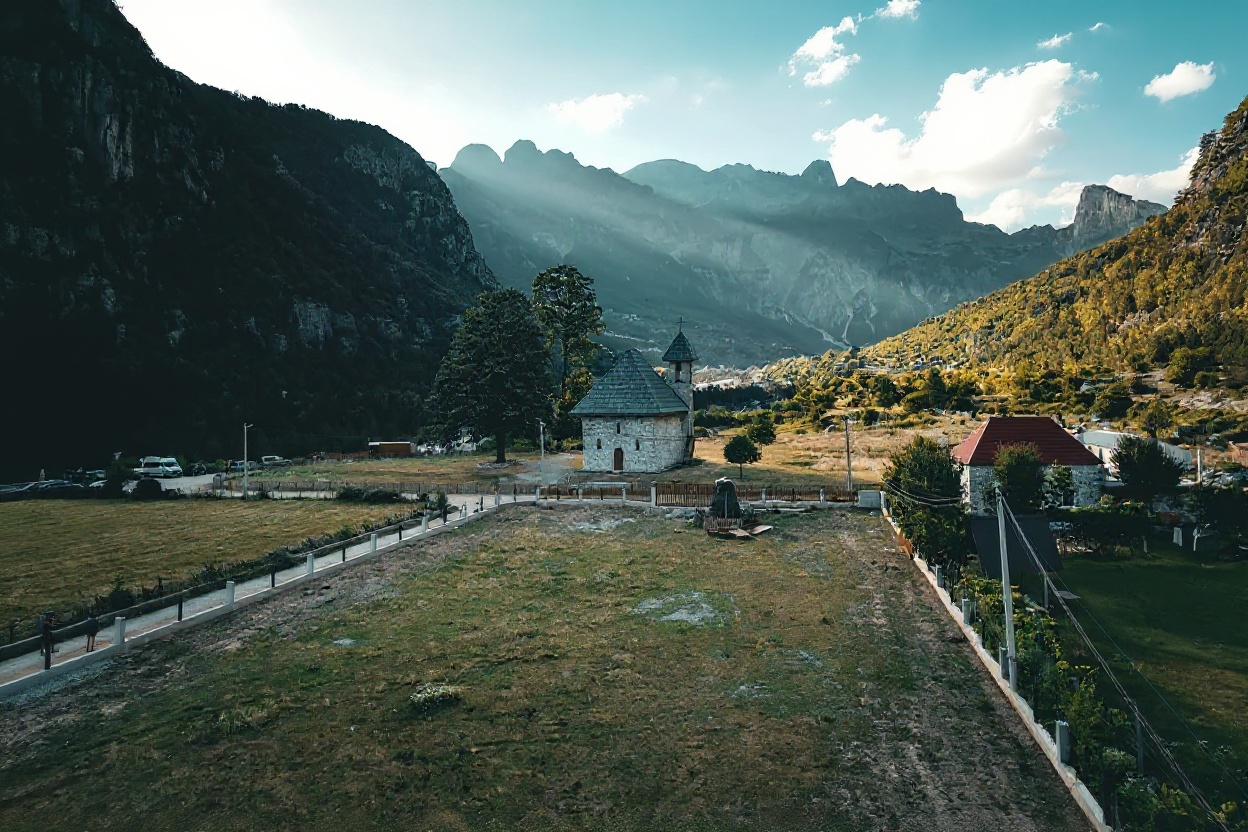
The village is small — a few hundred permanent residents, mostly farming families who have run guesthouses for trekkers since the 1990s when the first hikers started arriving. The infrastructure is basic: no ATMs, unreliable electricity, occasional mobile signal. These are features, not bugs, depending on your priorities.
What Theth has: a spectacular valley surrounded by peaks above 2,400 metres, a famous day hike to Valbona, a cold-water swimming hole in the Shala River, the best cornbread I’ve eaten in Albania, and the kind of silence at 6am that reminds you cities are a relatively recent invention.
The Lock-In Tower (Kulla): Albania’s Most Unusual History Lesson
The Kulla e ngujimit (say: KOO-la ay ngoo-YEE-mit — Lock-In Tower) is a 17th-century stone tower in the centre of Theth that was used as a refuge during blood feuds. Under the Kanun — the traditional Albanian customary law code — a man who had killed someone in a feud could take refuge inside the tower. The opposing family couldn’t touch him there. He could stay indefinitely. Sometimes he stayed for years.
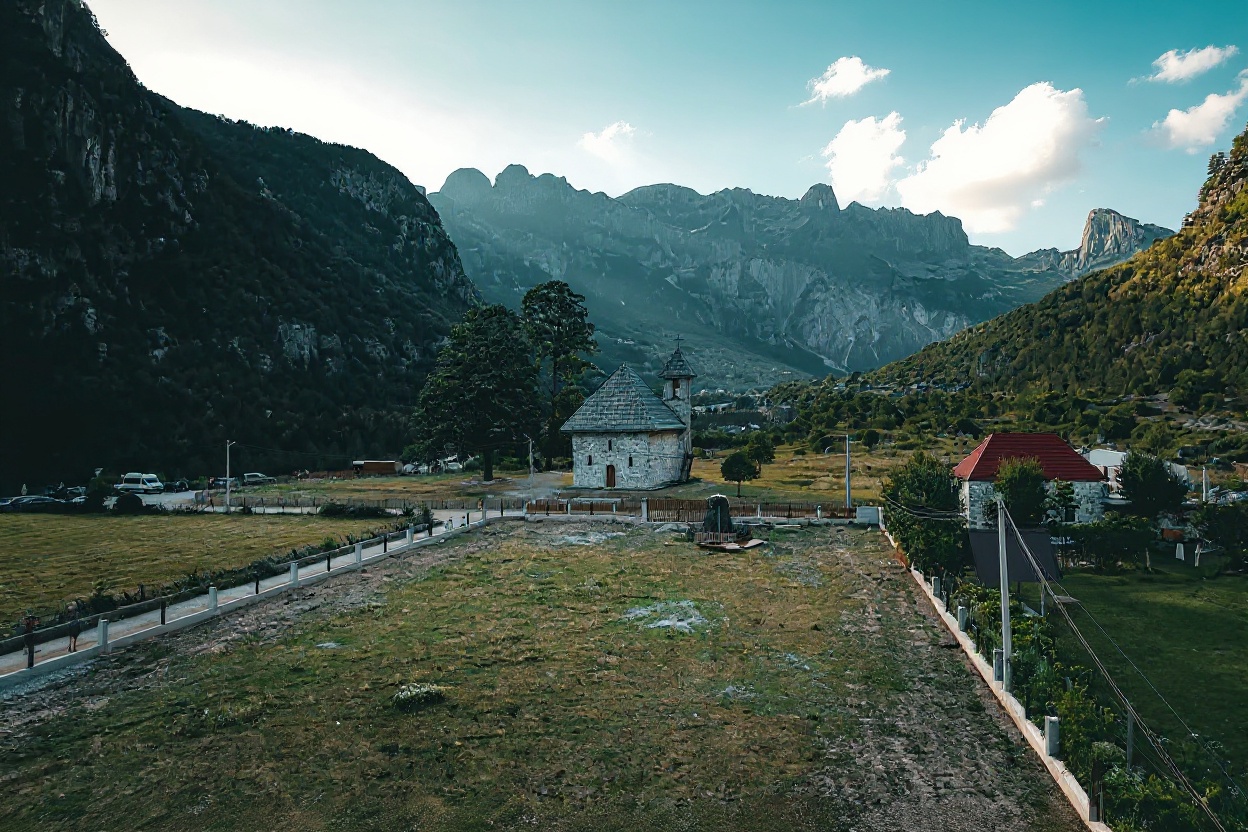
This is not a historical curiosity. The Kanun governed life in northern Albania for centuries and blood feuds in the region continued into the 1990s. The tower is now a small museum with exhibits on the Kanun, the feud system, and the social structures of highland Albanian life. Entry: 200 ALL (€1.60). Worth 45 minutes.
The building itself is remarkable — rough limestone walls two metres thick, a single narrow door, arrow slits for windows on the upper level. The tower was built to be impenetrable and it looks it. The museum adds context that makes Theth feel like more than just a hiking base.
MARCUS’S PICK: Go to the Kulla on your first afternoon in Theth, before the hike. The exhibit on the Kanun’s reconciliation ceremonies — the process by which feuds were officially ended — is genuinely fascinating and it gives you a frame for understanding the villages and the isolation. The Accursed Mountains were called that by people who knew them from the outside. The people inside them built a complete legal and social system.
Grunas Waterfall: 30 Minutes, Worth It
The Grunas Waterfall is a 30-minute walk from the village centre up a marked trail through pine forest. The waterfall drops about 30 metres into a pool at the base — swimming is possible in summer, cold enough to take your breath away in June. The walk is easy and family-appropriate.
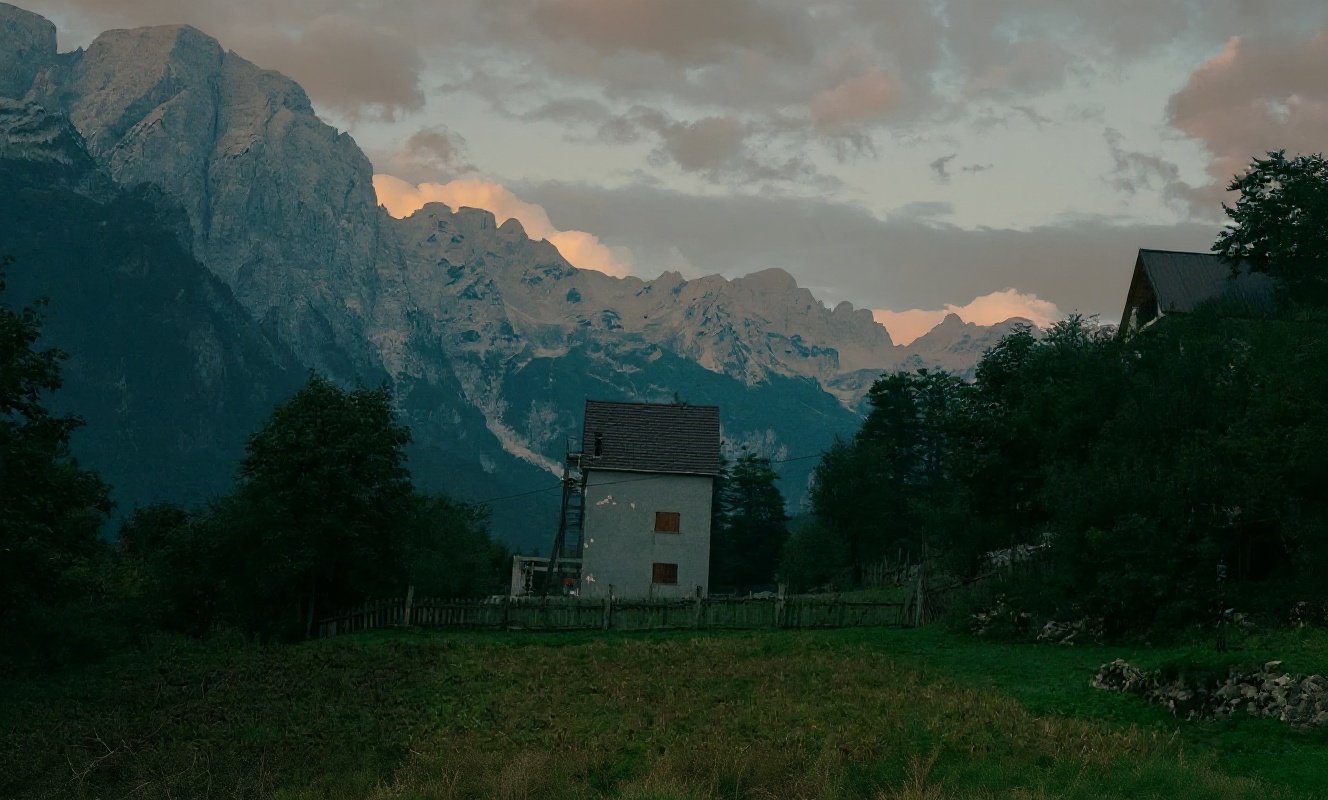
No entry fee. The trail is signposted from near the church. Go in the morning before the midday heat — the forest is pleasant but the exposed section near the waterfall gets direct sun from about 11am. Bring water.
The Blue Eye of Theth
There are two Blue Eyes in Albania — the famous one near Saranda on the coast and a smaller one near Theth. This one is less dramatic than its southern cousin (which genuinely looks like an alien spring) but it’s cold, blue, and about 20 minutes’ walk from the village on a flat track along the river.
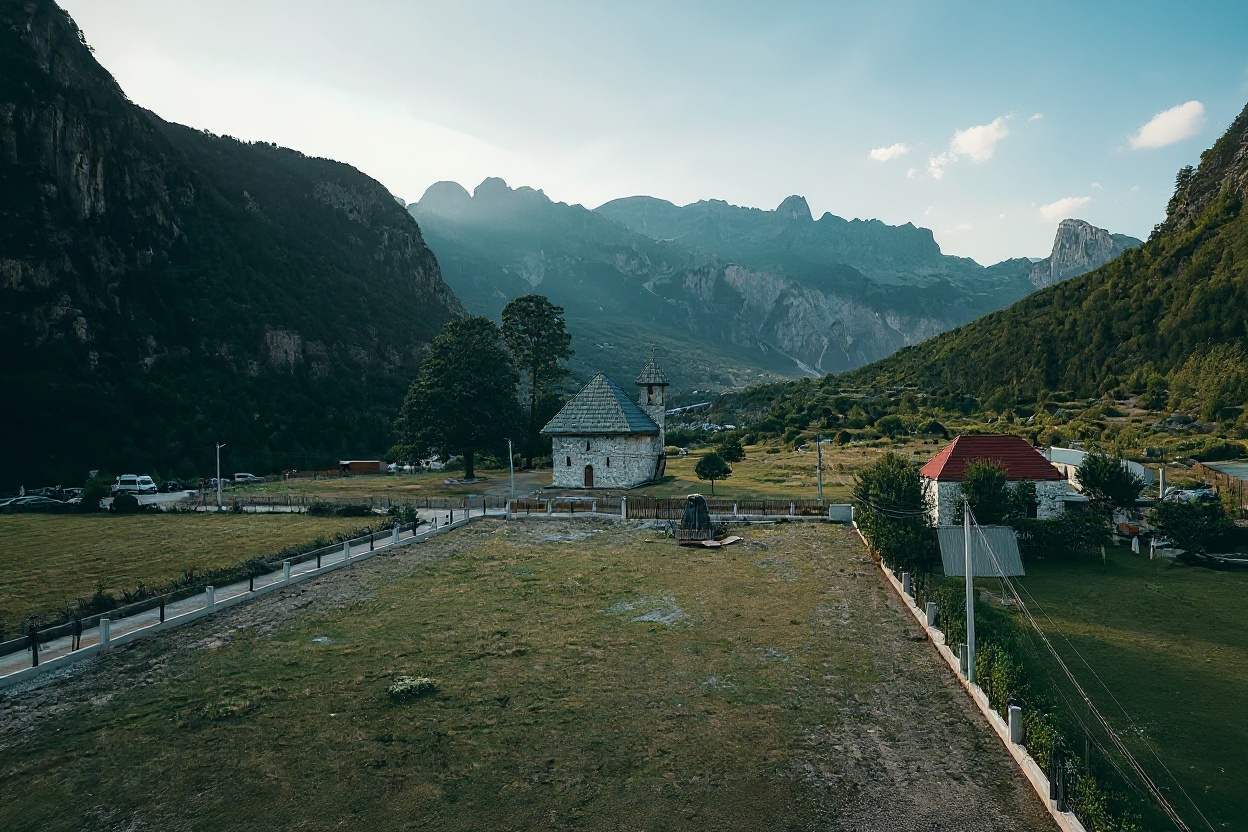
The spring is a natural karst feature — cold groundwater bubbling up through limestone, deep enough that the colour shifts from turquoise at the edges to dark blue at the centre. In summer the local kids swim here. The water temperature is cold enough year-round to register as a shock. Entry: free.
| Theth at a Glance (2026) | |
|---|---|
| Distance from Shkoder | 50km — 2–2.5 hours on rough road. Get there before dark. |
| Getting there | Furgon from Shkoder Old Bazaar: 800–1,000 ALL (~€8–10), 7–8am daily in summer |
| Theth → Valbona hike | 19km, Valbona Pass at 2,030m — 6–8 hours. Start by 7am. |
| Kulla (Lock-In Tower) | 200 ALL (€1.60) — museum, essential |
| Guesthouse (half board) | 1,500–2,500 ALL per person (~€15–25) — includes dinner + breakfast |
| Cash | No ATM in Theth — bring enough from Shkoder |
| Best time | June–September. Road can be snow-blocked until late May. |
| Currency | ALL — 1 EUR ≈ 100 ALL ≈ £0.87 |
The Theth-to-Valbona Hike: What You Actually Need to Know
The trail from Theth to Valbona crosses the Valbona Pass (Qafa e Valbonës) at 2,030 metres and covers about 19km. Most people do it in one direction — Theth to Valbona is the standard route. It’s 6 to 8 hours depending on pace and stops. It is the best day hike in Albania and one of the genuinely good ones in the Balkans.
The Route
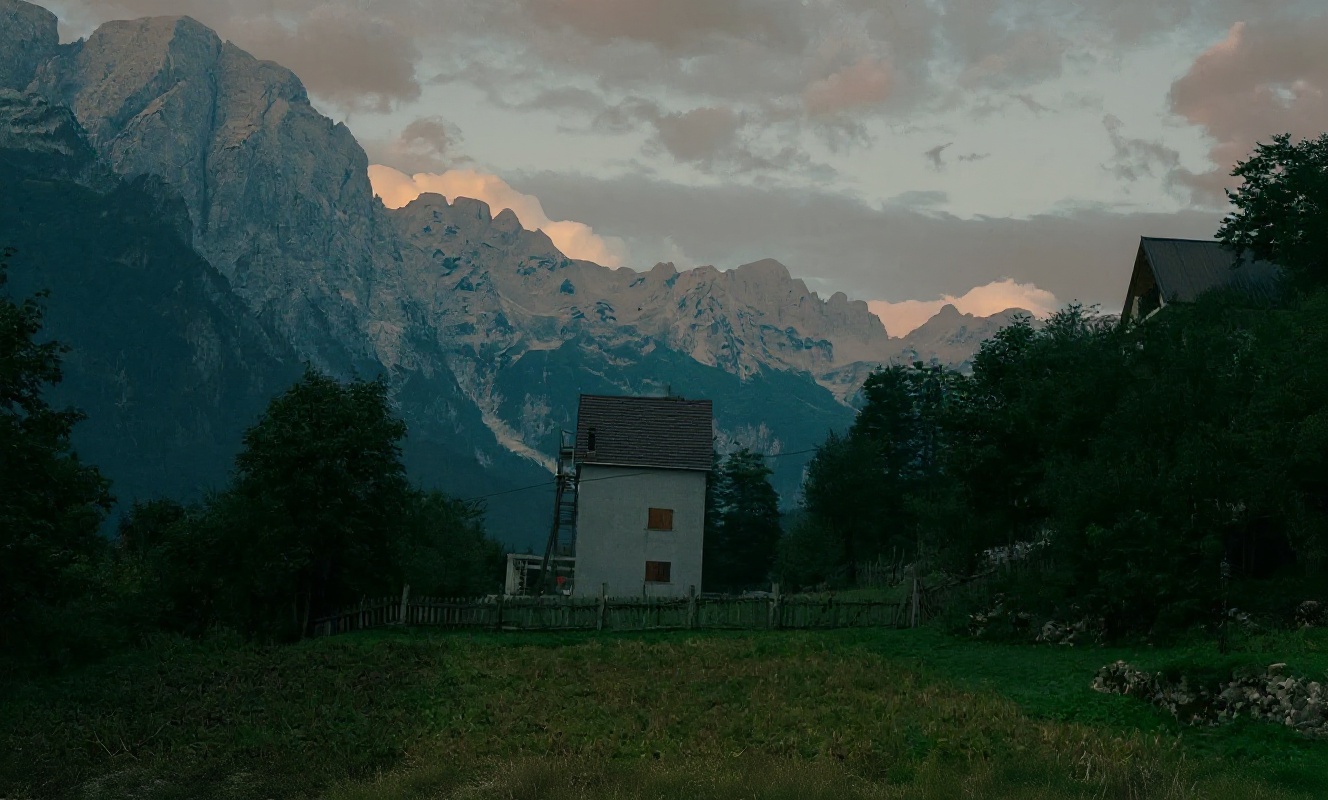
The trail starts from the edge of Theth village and climbs steadily through beech forest for the first 3–4 hours. The forest smells of damp earth and pine resin in the early morning; later in the day it smells of whatever sun does to old leaves. At around 1,700 metres the trees thin out and you’re in alpine meadow with views back down the Theth Valley and, on a clear day, a sight line to the peaks above Valbona to the north.
The pass itself is a saddle between limestone peaks — cold even in July, often windy, frequently cloudy by early afternoon. From the pass the descent into Valbona is steeper and longer than the ascent — about 8km down into the valley, through forest and eventually to the first guesthouses at the bottom.
The total elevation change: roughly 1,100m up, 1,300m down. Trekking poles help on the descent. Waterproof layers are not optional — mountain weather in Albania can turn fast and the pass is exposed.
REAL TALK: I started the Theth-Valbona hike at 9am on my second attempt. By 1pm I was at the pass in a thunderstorm that came from nowhere. I spent an hour sheltering under a beech tree at 1,900 metres while lightning made the decision-making easy. Made it to Valbona eventually, soaked, at 5pm. The people who left at 6:30am were dry and eating dinner when I arrived. Start before 7am. The mountains care nothing about your morning preference.
Logistics
You need to arrange your Valbona accommodation before you set off — there’s no walking into the valley and finding a bed in summer. Book the Valbona guesthouse from Theth the evening before (your Theth host will help with the phone call).
From Valbona, to continue back to Shkoder or Tirana: a furgon leaves Valbona village to Bajram Curri at around 8am, then connections to Shkoder via Fierze and the Komani Lake ferry (the most spectacular return route) or a long bus via Kukes. The Valbona Valley guide has the full logistics for the Komani connection.
If you want to do the trail in reverse (Valbona to Theth), the ascent is slightly more gradual and the descent into Theth is shorter. Either direction works — the views from the pass are the same in both. Most guided groups go Theth-to-Valbona.
You do not need a guide for this trail in clear weather. The route is marked with red-and-white paint blazes and a downloaded trail from Wikiloc or Mapy.cz covers the navigation. In poor visibility or off-season, a local guide (available through guesthouses in either village, 3,000–5,000 ALL / €30–50) is sensible.
Other Walking in Theth
The Theth-Valbona hike gets all the attention but there are shorter walks worth doing if you have extra days.
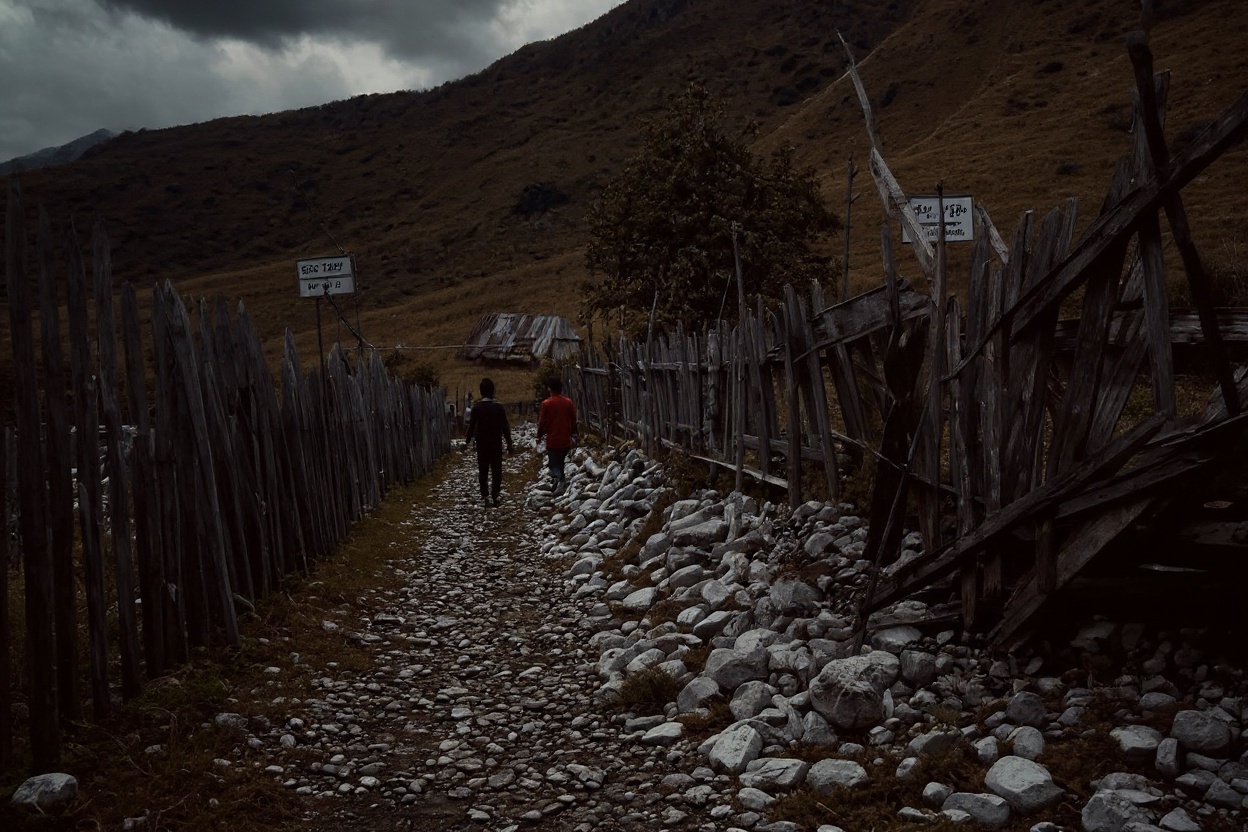
Theth valley floor walk — a 2-hour loop along the Shala River, past the church, through the lower village, and back. Flat, easy, and the best way to understand how the village is laid out. The river crossings are on wooden bridges in summer.
Peaks above Theth — the ridges above the village have scramble routes to 2,200–2,400 metres with views over both the Theth Valley and the peaks toward Kosovo. These require route-finding ability and a full day. Ask your guesthouse host which is in condition — in early June some routes still have snow.
Ndërlysaj viewpoint — a 3km walk from the village to a highland meadow at about 1,400 metres with views back down the full length of the Theth Valley. Takes 90 minutes return. No technical difficulty. Good for the morning before the main hike, or the afternoon after arrival.
Where to Eat and Stay in Theth
The guesthouse model in Theth is standard for northern Albania: a family rents rooms, serves dinner, serves breakfast, and provides a base for the hike. Most are priced per person at 1,500–2,500 ALL (€15–25 / £13–22) including both meals. This is good value — the food is home-cooked and the portions follow the logic that people walking over mountain passes need a lot of it.
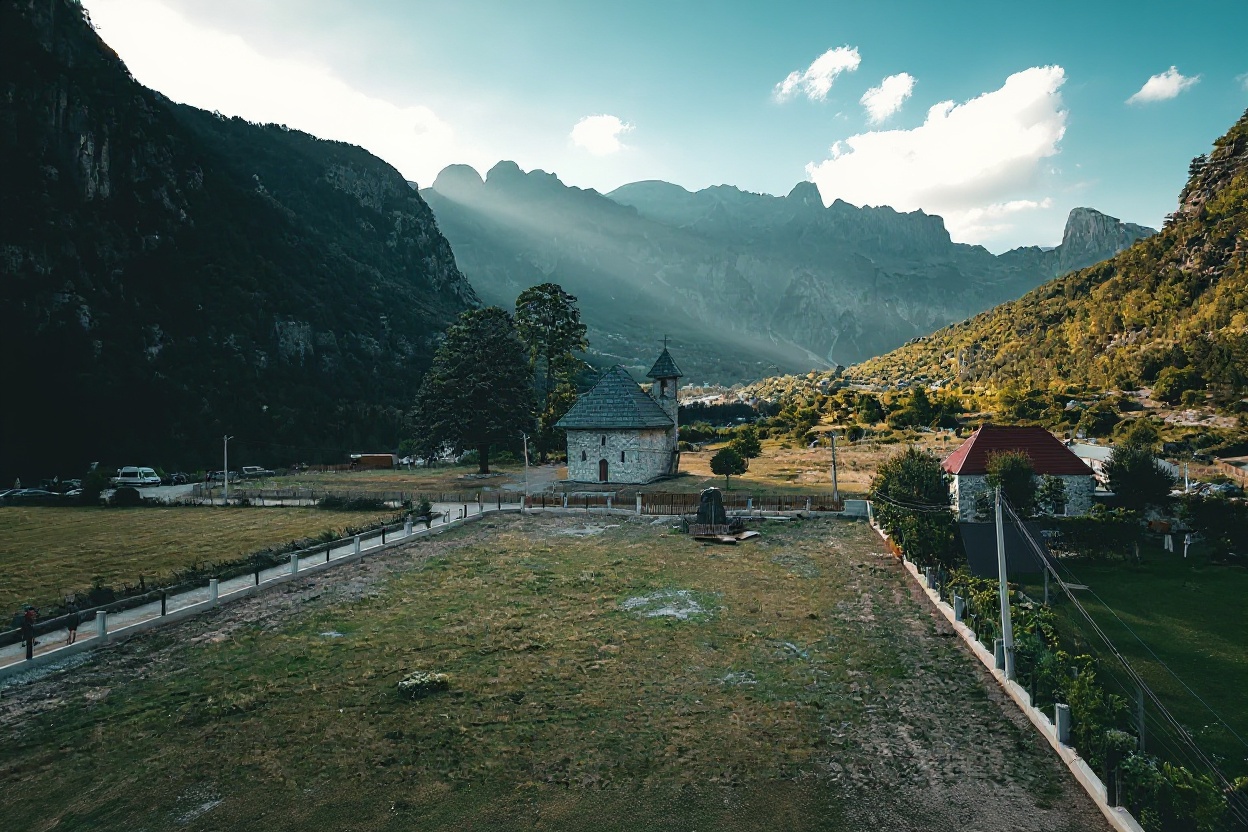
Guesthouse Ndoka (central Theth, near the church) — the most consistently recommended option and the one most foreign trekkers end up at by reputation. Clean rooms, solid dinners (roasted lamb, polenta, wild herb salad, fresh cheese), a host who speaks workable English and knows the trail conditions. Book by WhatsApp two weeks ahead in July and August.
Guesthouse Polia (a short walk from the Kulla) — slightly smaller, family-run, excellent sour yogurt at breakfast that I have thought about on multiple subsequent mornings. 1,500–2,000 ALL per person with meals. Less well-known internationally, which means slightly easier to get a room in peak season.
Food in Theth is almost uniformly good in the same specific way: it’s highland Albanian food made by people who’ve been making it for generations. Roasted lamb from animals that grazed above the village. Cornbread (bukë misri — say: BOO-kuh MEE-sri) baked in a wood oven. Wild herbs collected from the slopes. Goat’s cheese made on site. Raki distilled by the host’s father. There is no menu — you eat what’s on the table. This is not a complaint.
INSIDER TIP: Bring enough cash from Shkoder. There is no ATM in Theth. Most guesthouses accept only cash. The nearest ATM is in Shkoder, 50km away. Running out of money in Theth is an embarrassing and entirely avoidable situation that I have seen happen to other people at least twice.
Getting to Theth from Shkoder
The furgon from Shkoder to Theth leaves from near the Old Bazaar area of Shkoder (ask your accommodation for the current departure point — it shifts occasionally). Daily in summer, usually 7–8am, 800–1,000 ALL (€8–10 / £7–9). Journey: 2 to 2.5 hours, depending on road conditions and how many stops the driver makes.
The road is paved for the first 30km out of Shkoder and then becomes increasingly adventurous. The final 20km is unpaved mountain track — fine in a standard car in summer but slow. In a furgon it’s simply a furgon journey: bumpy, scenic, occasionally alarming at the switchbacks, exactly what you signed up for.
By private car: doable in a standard car in summer. In spring or after heavy rain, a 4WD is strongly advisable. The road can wash out. Check with your Shkoder accommodation for current road conditions before setting off.
From Tirana: most people take the furgon from Tirana to Shkoder (600–800 ALL, ~2 hours from near the Train Station), stay one night in Shkoder, and continue to Theth the next morning on the early furgon. This is the most logical sequence. The Shkoder guide has accommodation and logistics for the stopover.
When to Go to Theth
June: The road opens properly after snowmelt, wildflowers are at peak on the alpine meadows, the Theth-Valbona trail has lingering snow patches on the upper section (manageable, add 30 minutes), and the village is quiet. Excellent month.
July and August: Peak season. The guesthouses fill up, the trail has a steady stream of hikers, and the valley temperature reaches 30°C in the afternoon. Book accommodation a month in advance. Still worth it — the hike is still the hike.
September: The best month. Crowds thin after mid-August, the light in the valley goes golden by 4pm, the forest starts turning on the lower slopes, and the pass is usually clear and dry. The guesthouses have availability mid-week. This is when I prefer to go.
October onward: The road can close with snow. Some guesthouses shut for winter from October. Don’t plan Theth in October without checking current conditions.
For the full picture on seasonal timing across Albania — the Riviera, Berat, Tirana — the Albania best time to visit guide has the regional breakdown.
Is Theth Safe?
Yes. The historical context of blood feuds and the Kanun is just that — historical. Theth is a guesthouse village full of families running tourism businesses and hikers doing one of Europe’s better mountain trails. The safety concerns are the normal ones for mountain environments: weather, terrain, and not starting the Valbona Pass at 9am.
The Albania safety guide covers the country-wide picture. Theth specifically: fine. The biggest risk is a turned ankle on the descent into Valbona. Take the trekking poles.
- How hard is the Theth to Valbona hike?
- Moderate-to-difficult. 19km with 1,100m of ascent and 1,300m of descent, crossing a 2,030m pass. You need to be comfortable with a full day’s hiking on uneven terrain. Not technical — no ropes, no scrambling on the standard route — but it’s a long day and the descent into Valbona is steep. Trekking poles recommended.
- Do I need to hike Theth to Valbona in one day?
- Yes — there’s no accommodation on the pass or in the middle section of the trail. You start in Theth and finish in Valbona. It’s done as a full day’s hike. Some people camp on the pass but this requires equipment and weather awareness. Book Valbona guesthouse before you leave Theth.
- Can I get to Theth without a car?
- Yes. The furgon from Shkoder runs daily in summer at around 7–8am from near the Old Bazaar. 800–1,000 ALL (~€8–10). Takes 2–2.5 hours. From Tirana: take the furgon to Shkoder first (2 hours, 600–800 ALL), stay overnight, and catch the Theth furgon the next morning.
- Is there an ATM in Theth?
- No. The nearest ATM is in Shkoder. Bring enough cash before you leave — guesthouses are cash-only, the furgon is cash, the Kulla museum is cash. 5,000–10,000 ALL (€50–100) covers two nights comfortably including meals and the hike day.
- Can I do the Theth-Valbona hike in reverse?
- Yes — Valbona to Theth works fine. The ascent from Valbona is more gradual, the descent into Theth is shorter and steeper. Most people do Theth-to-Valbona so the trail is slightly better worn in that direction, but the reverse is absolutely viable.
- What’s the difference between Theth and Valbona?
- Both are mountain villages in the Accursed Mountains, connected by the trail over the Valbona Pass. Theth has the Lock-In Tower museum, the Blue Eye spring, and the Grunas Waterfall. Valbona has wider valley views and easier access from the Komani Lake ferry route. They’re complementary stops on the same journey — most people do both.
Theth vs Valbona: Which to Base Yourself In?
If you’re doing the Theth-Valbona hike, you’ll be in both villages regardless. But if you have time for only one and you’re not doing the full trail, the choice matters.
Theth makes more sense if you want more to do in the village itself — the Kulla, the Blue Eye, the Grunas Waterfall, and the shorter day walks give you two full days of activity without needing to hike the pass. The road in from Shkoder is the main logistical overhead.
Valbona is easier to reach (via the Komani Lake ferry from Shkoder, then a short drive), has a wider valley floor for walking, and is slightly more accessible for families and less experienced hikers. The valley is broader and the views of the surrounding peaks are more open. Our Valbona Valley guide covers it in full.
If you have five or more days and the fitness for the hike: do both. Fly or take a furgon to Shkoder, continue to Theth, spend two nights, hike to Valbona, spend one or two nights in Valbona, return to Shkoder via Komani Lake. That’s the complete northern Albania mountain circuit and it’s excellent.
For help budgeting the whole Albania trip — transport, guesthouses, food — the Albania budget per day guide has the current numbers broken down by travel style.
Packing for Theth: What You Actually Need
Theth has no shop. No pharmacy. No outdoor equipment rental. Whatever you need for the hike and the stay, you bring from Shkodër.
For the Theth–Valbona hike specifically: hiking shoes with ankle support (the descent into Valbona is steep and rocky — trainers will work until they don’t), at least 2 litres of water capacity (there are springs on the trail but treat any water before drinking), a proper lunch for a 7–8 hour day (the pass is the midpoint and there is nothing to buy there), a wind and rain layer (the pass at 2,030m generates its own weather even in August), and trekking poles if you own them. The descent into Valbona is where you’ll want the poles.
For the village stay: a power bank (electricity in Theth is reliable but the guesthouses sometimes have limited socket access), cash in ALL (enough for two nights half-board plus the furgon back to Shkodër — 10,000–15,000 ALL / €100–150 covers it comfortably), sunscreen (the valley gets direct sun from about 9am and the UV at altitude is stronger than the temperature suggests), and an offline map downloaded before you leave Shkodër signal range.
One thing I’d add that nobody mentions: a small head torch. The paths between guesthouses in Theth after dark are unlit and uneven. The gap between your guesthouse and the outdoor toilet, or a walk to the spring, is much more civilised with a head torch than without one.
Theth earns its reputation honestly. The road there is exactly what the guidebooks say it is. The hike is exactly as long as the time says it will be. The guesthouses feed you properly. And the Valbona Pass at 7am on a clear morning, with the beech forest below you and the peaks above and nobody else there yet — that part nobody can really explain. You go. You see. That’s the lot. Questions in the comments.