
Last updated: June 2026 — logistics verified June 2026.
Valbona Valley is a flat valley floor backed by sharp limestone peaks, with a river you can drink from and guesthouses that serve dinner at long wooden tables with other travellers who’ve just survived the same journey to get there. It is, in the honest opinion of someone who has been four times, the best part of Albania that most tourists don’t see — because most tourists don’t attempt the journey. That journey is the point.
The Albanian Alps — the Accursed Mountains, the Prokletije — are shared between Albania, Kosovo, and Montenegro. The Albanian side is the least visited and, arguably, the most spectacular. Valbona Valley sits at the heart of it, a protected national park with no paved roads through its core, no chain hotels, and no obvious way to get there quickly. This guide explains how to do it properly.
Why Go at All
Right, let’s address this directly, because the question comes up.
Valbona is remote, expensive to reach relative to the coast, and requires a full travel day just to get there. The Komani Lake ferry — the most scenic route — runs once in the morning and requires you to be in Shkodër the night before. The road from Fierza to Valbona village is 90 minutes of unpaved mountain track.
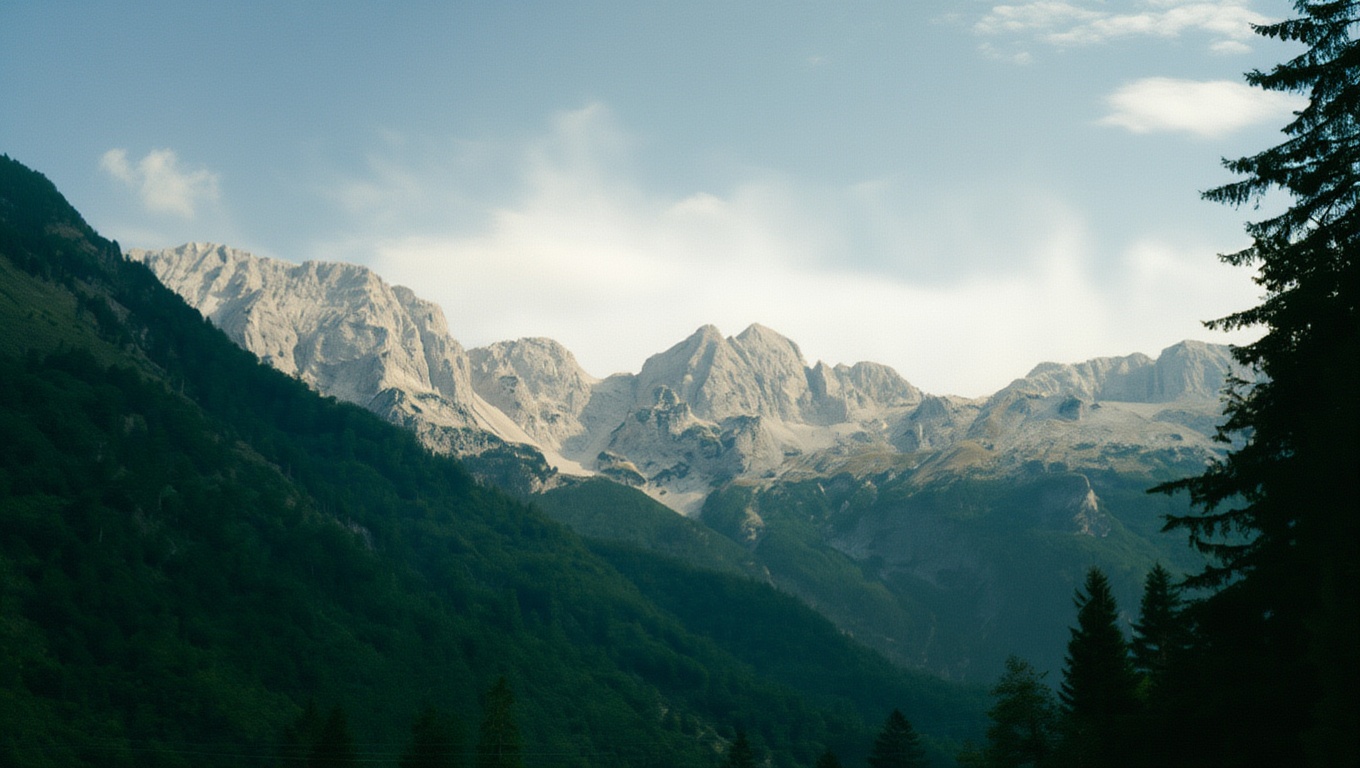
Here’s why it’s worth it: the landscape. The Valbona Valley is a flat green floor enclosed by walls of limestone that drop almost vertically from peaks above 2,500 metres. The river through the valley is cold enough that you can drink directly from it and clear enough that you can see the riverbed from the bank. The guesthouses are run by local families who have been doing this for generations, the food is mountain food — lamb, vegetables, cheese, rakı — and the hiking is among the best in the Balkans.
If you’re spending a week in Albania and only going to Tirana and the Riviera, you’re missing the part of the country that’s actually extraordinary. Valbona is that part.
Getting There: The Komani Lake Route (Recommended)
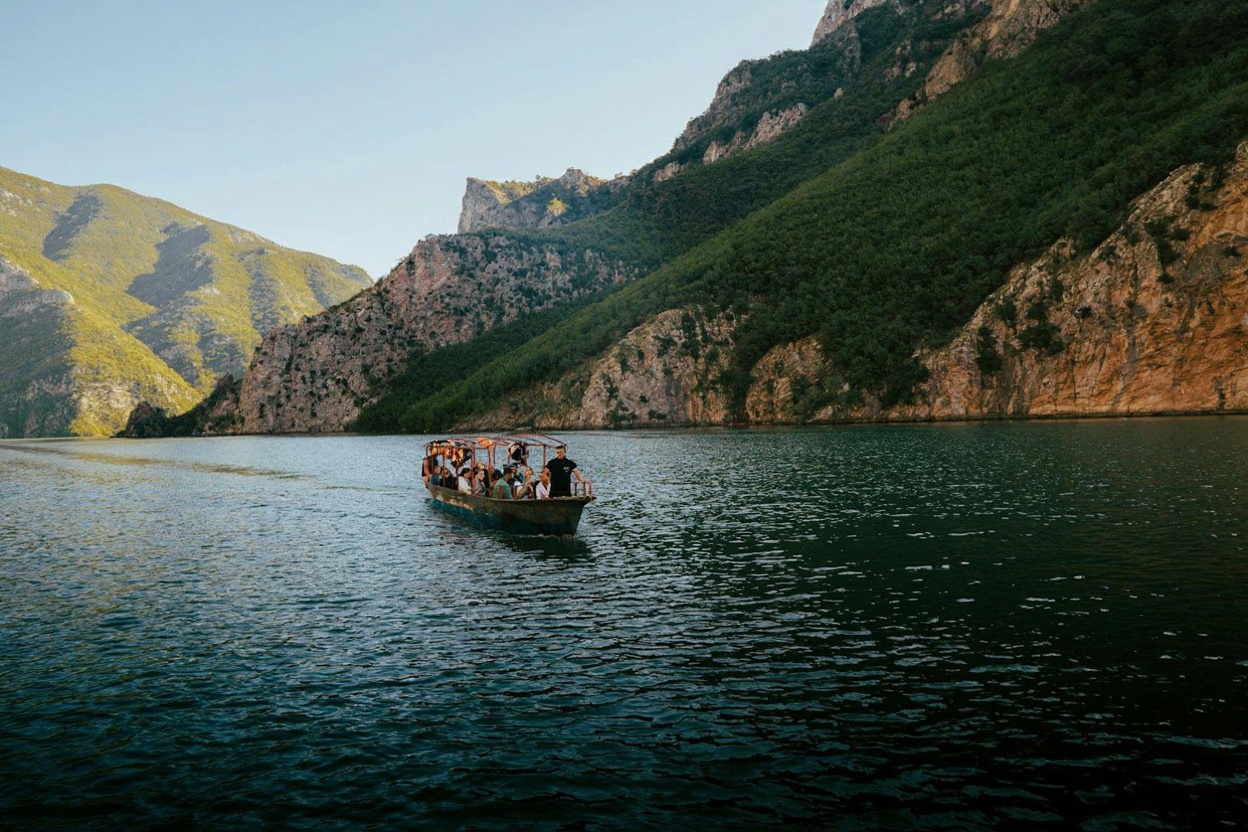
The classic and correct way to reach Valbona. It takes a full day from Shkodër, involves a three-hour ferry through a flooded canyon, and is genuinely one of the best travel days in the Balkans.
Step 1: Shkodër to Komani (departure ~7am)
The ferry departs from the Komani pier, roughly 45 minutes east of Shkodër. Most travellers arrange a transfer from Shkodër city centre to the pier — this costs 500–700 ALL (~€5–7) per person in a shared minibus, or 2,000–3,000 ALL (~€20–30) for a private taxi. The minibuses leave from near the main square in Shkodër at around 6:30–7am. Book the night before through your guesthouse or directly with the operators (Rozafa Travel is the main one).
Step 2: Komani to Fierza (ferry, ~3 hours)
The ferry departs at approximately 9am and runs to Fierza, the far end of the lake. The fare: 500 ALL (~€5) per person. Cash. Buy tickets at the landing.
The journey is the thing. Komani Lake is an artificial reservoir created by a hydroelectric dam, which means the valleys were flooded and the resulting landscape — cliff faces rising straight from still water, villages visible partway up the canyon walls, the occasional waterfall — is genuinely extraordinary. Sit on the roof deck. Bring food and water. The three hours goes fast.
Step 3: Fierza to Valbona (furgon, ~1.5 hours)
At Fierza, shared furgons (minibuses) meet the ferry and run to Valbona village. Cost: 500 ALL (~€5) per person. The road is unpaved for significant stretches and passes through scenery that continues what the ferry started. Arrive in Valbona village late morning or early afternoon.
Total cost: ~1,000–1,200 ALL (~€10–12) per person from Shkodër.
⚠Real Talk
The 9am ferry is the only one. There is no later option. Missing it means renting a private boat (expensive — 15,000–20,000 ALL) or taking the long road route. My first trip to Valbona nearly ended at the Komani pier because I arrived at 8:55am. The boat was there, the passengers were boarding, the crew was visibly unimpressed. Get to Komani by 8:30am at the latest.
Getting There: The Road Route (Alternative)
If you have a car and don’t want the ferry faff: drive from Shkodër via Koplik, Bajram Curri, and then the mountain road to Valbona village. Total distance: approximately 150km. Total time: 5–6 hours, depending on road conditions and how often you stop for the views.
The roads range from decent to challenging. The section from Bajram Curri to Valbona is the roughest — narrow, unpaved in places, with sheer drops that are not for the faint-hearted. A regular car can manage it in dry conditions. After rain, a vehicle with higher clearance is strongly preferable.
The advantage of driving: you can stop at Bajram Curri for supplies, visit the Fierza bridge viewpoint, and arrive in Valbona whenever you like rather than being locked to the ferry schedule.
Where to Stay: Guesthouses in Valbona
Valbona village is small — a scattered community of family guesthouses along the valley floor, without a proper village centre. There are no hotels. The accommodation is uniformly family-run, and the quality is almost uniformly good.
What guesthouses offer: Most provide a private or shared room, dinner (the evening meal, traditionally lamb, vegetables, soup, and bread), and breakfast (eggs, bread, local cheese, honey, yoghurt). Half-board rates: €20–30/person/night. This is the way to do it — the food cooked by the families running these places is genuinely better than anything you’d get in a restaurant.
Specific guesthouses worth knowing:
Guesthouse Margjeka — one of the original Valbona guesthouses, run by the Hoxha family. The family has been hosting travellers since before it was a destination. Reliable, good food, knowledgeable about hiking routes. Budget about €25/person half board.
Rragami Guesthouse — slightly higher up the valley, with better views from the terrace. More expensive than Margjeka (€30–35/person) but the location is exceptional.
Book ahead for July and August. Valbona has a fixed number of beds and the peak season fills up. A message via email or phone (WhatsApp is widely used) a week ahead is sufficient for June and September. For July and August, book at least 2–3 weeks in advance.
Off-season: Some guesthouses close from November to May. Check before you go.
The Valbona to Theth Hike
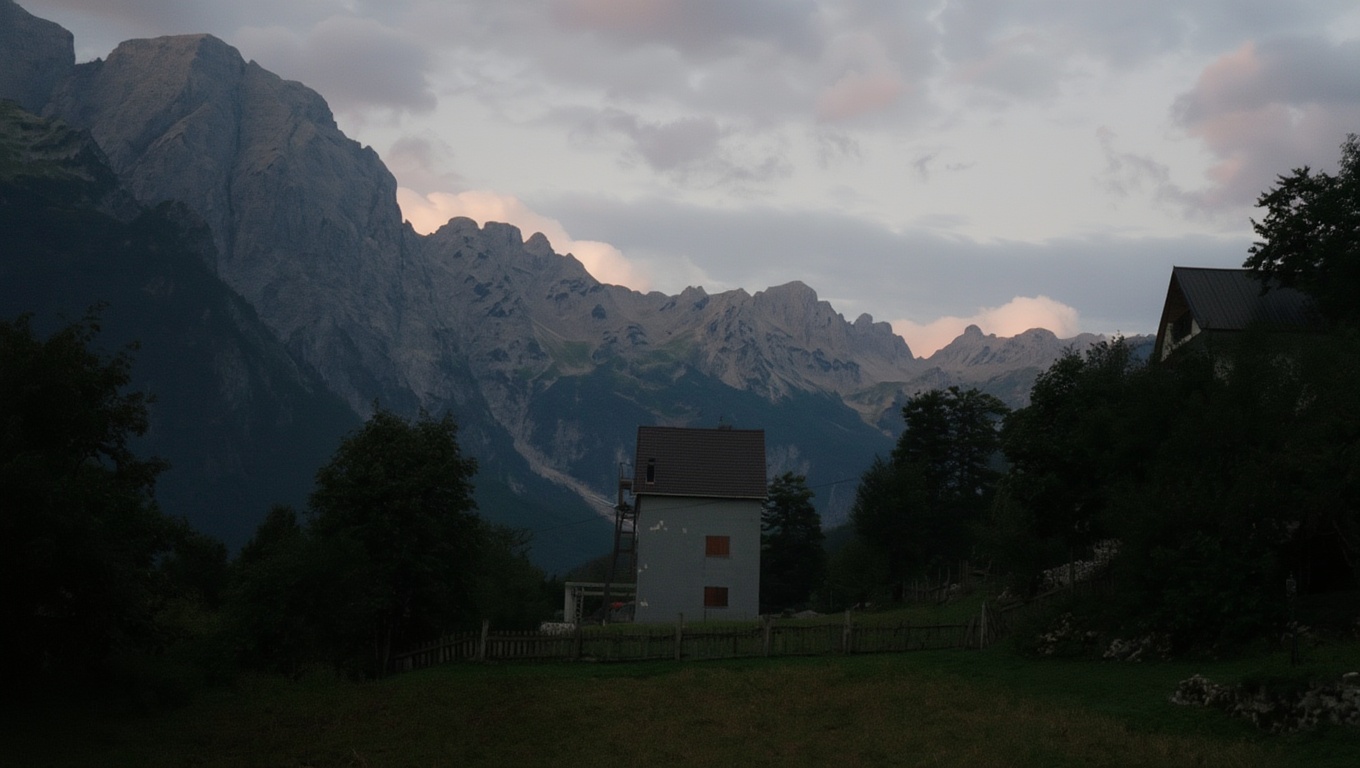
This is the main event for most people who come to the Albanian Alps. The trail crosses the Valbona Pass at 1,795 metres and descends to Theth village on the other side — one of the great day hikes in the Balkans, and increasingly well-known as such.
Stats:
– Distance: 12.7km point to point
– Elevation gain: approximately 1,100 metres (Valbona village is at ~900m, the pass is at 1,795m)
– Time: 6–8 hours, depending on pace and how much time you spend at the pass
– Difficulty: strenuous. Continuous ascent for the first 3–4 hours, then descent. Rocky, exposed terrain near the pass.
The route: From Valbona village, the trail follows the valley floor for the first 2km, then begins climbing through forest and alpine meadow. The final approach to the pass is rocky and steep, with some scrambling sections. At the pass, the view opens to both sides — Valbona Valley behind you, the Theth Valley ahead. Descend to Theth village (900m) in 2–3 hours on a well-marked trail.
One-way vs return: Most hikers do this point-to-point — one night in Valbona, one night in Theth, or vice versa. This requires either a prearranged furgon or walking out from Theth to the main road (2–3 hours additional). If you want to return to Valbona the same day, the return hike adds another 4–6 hours — a very long day that requires an early start.
When to hike:
– June to October is the reliable window. The pass is often snow-covered in May.
– July and August the trail is busy — start before 7am to be ahead of the day-tour groups.
– September is the best month: stable weather, cooler temperatures, fewer people.
What to bring:
– Water: at least 2 litres. There are springs on the trail but treat any water before drinking.
– Food: a proper lunch. The pass is 3–4 hours from either end and there is nothing to buy on the trail.
– Layers: the valley floor is warm; the pass can be cold and windy even in summer.
– Hiking shoes: the trail requires ankle support. Trainers will work for most of it; the final rocky section benefits from proper boots.
– A guide: optional but worth considering if this is your first alpine hike. Local guides from Valbona village cost 30–50 EUR/day. Useful for route-finding in poor visibility.
•MARCUS’S PICK
The pass in clear weather at 8am — before the day-tour groups and before the clouds build — is the best thing I’ve done in Albania. Two hours of steady climbing, then a ridge with the limestone peaks of the Prokletije on three sides and the two valleys dropping away below. Worth the early alarm call.
Other Hikes in Valbona Valley
The Valbona–Theth crossing gets all the attention, but the valley has other options worth knowing.
The Valley Walk (easy, 2–4 hours): Follow the Valbona River upstream from the village. No significant elevation. The river scenery is excellent and the trail ends at a series of pools where you can swim in meltwater cold enough to be briefly agonising and then wonderful. Free. No guide needed.
Rragami to the Upper Valley (moderate, half day): Head south from Rragami guesthouse into the upper valley, away from the main hiking corridor. Quieter than the Theth trail. Good views back down to the valley floor. Some route-finding required — ask at your guesthouse for directions.
Jezerca Peak (serious alpine, full day): For experienced hikers with the right equipment, Jezerca (2,694m) is the highest peak in the range and can be reached from Valbona as a very long day. Requires a guide and good mountain weather. Not a casual day out — this is proper alpine terrain.
What to Eat and Drink in Valbona
The guesthouse food is the food. Valbona is not a restaurant destination — there are no cafés, no restaurants independent of the guesthouses, and nothing to buy in the valley that resembles a shop. Plan accordingly.
The standard dinner: lamb or veal (often slow-cooked in a djath i bardhe — clay pot in embers), fasule (white bean soup), salad from the garden, bread, and local cheese. Quantities are generous. You will not go hungry.
Rakı: the local spirit, distilled by most guesthouse families from grapes or plums. Offered before dinner. It is impolite to refuse the first glass. After the first glass, you can judge for yourself how the rest of the evening goes.
Bring your own supplies for hiking: there is genuinely nothing to buy on the trail to Theth, and the village does not have a shop in the conventional sense. Stock up in Shkodër before you arrive — nuts, energy bars, fruit, enough for the hike and any time between meals.
Swimming in the Valbona River
The Valbona River runs through the valley floor and is cold enough that the first few seconds of immersion are genuinely alarming. By the third visit, you look forward to it.
The river water is snowmelt-fed and drinkable directly — this is not something you experience in many places in Europe, and it’s worth taking seriously as a marker of how clean the ecosystem here actually is. The swimming pools are deepest in the upper valley, above the main guesthouse cluster. Wade in slowly unless you enjoy the dramatic approach.
Swimming is best in late July and August when the river level has dropped from spring melt and the air temperature makes the cold water actively pleasant rather than just survivable. In June, the river is running fast and high — swimming is possible but the current is stronger. By September, the pools are calmer and the light through the valley in the afternoon turns everything gold.
There is no equipment needed and no one to pay. The river is the free version of everything the valley has to offer.
Practical Notes
Phone signal: limited to non-existent in the valley. Telekom Albania has the best coverage in northern Albania but it’s still patchy. Plan for a digital detox.
Currency: Albanian lek (ALL). 1 EUR ≈ 100 ALL. Guesthouses typically accept euros or lek. No card payments — everything is cash. Withdraw in Shkodër before you go.
Weather: mountain weather in the Albanian Alps changes fast. Afternoon thunderstorms are common in summer — if you’re hiking to the pass, start early and be off the exposed ridge by midday. The morning is more stable than the afternoon.
Bears and wolves: the Prokletije range has populations of both. They are very rarely seen by tourists and there have been no attacks on record involving visitors. Guesthouse owners will tell you the same. It’s worth knowing they exist in the ecosystem; it’s not worth worrying about.
Entrance to Valbona Valley National Park: there is a nominal entrance fee (€2–3 per person). It may or may not be collected depending on when you arrive and whether the collection point is staffed. Pay it if asked.
Photography: the valley is extraordinary in the golden hour — both morning and evening. The limestone peaks catch light differently through the day, and the valley floor in late afternoon has a quality that makes otherwise mediocre photographers produce good photographs. The river in direct morning sunlight is the shot; the pass at midday in full sun is the shot that comes out blue and flat. Timing matters.
What to do on a rest day: if you’re staying two nights and not hiking to Theth both days, the valley walk upstream is the obvious option. Alternatively, ask your guesthouse about local routes — there are shorter trails not marked on the main maps that lead to viewpoints above the valley floor with views back down the full length of Valbona. The guesthouse families have been walking these hills since before anyone wrote them down.
Getting back: the return journey reverses the arrival. The furgon from Valbona to Fierza leaves early morning — ask your guesthouse to confirm the current schedule (it changes seasonally). The ferry from Fierza to Komani departs mid-morning. The full return takes a full day.
What Not to Miss on a Rest Day in Valbona
If you’re staying two nights in Valbona — which you should be — the second day doesn’t have to be the Theth hike. Some people arrive and discover their legs have a different plan. Here’s what a rest day in the valley actually offers.
The river valley walk upstream from the guesthouse cluster is 2–4 hours of flat walking along the Valbona River. The river widens and narrows as the valley opens and closes. At the upstream pools, in late July and August, the water is cold enough that swimming is a serious activity rather than a casual one — glacier-fed, bone-cold, completely clean. Float on your back and look at the limestone walls above you. This is free and requires no planning.
Further upstream, past the swimming pools, the valley narrows into a gorge. Most people don’t walk this far. The gorge section — about 45 minutes from the guesthouse cluster — is quiet enough that on a September weekday I went an hour without seeing another person. The sound is just water on limestone and the wind off the peaks. Worth the extra kilometre.
The guesthouse owners in Valbona also know trails that aren’t on any map — shorter ridge walks, viewpoints above the valley floor, routes through the meadows above the treeline that don’t require a full alpine day. Ask specifically: “A ka ndonjë shteg tjetër?” (ah kah nyon-yuh SHTEG TYEH-ter — “Is there another path?”). You’ll usually get directions to something that isn’t on Wikiloc and is better for it.
One final thing worth doing on a rest day: nothing. Sitting on the terrace of the guesthouse at 4pm, watching the light change on the peaks as the sun drops behind the western ridge, drinking whatever the host pours. The peaks change colour over about 90 minutes — grey limestone to pale gold to something that doesn’t have a clean name. The guesthouse families have watched this every evening for their entire lives and they don’t seem bored of it. You won’t be either.
The Loop: Komani–Theth–Valbona or Valbona–Theth–Komani
Most people who do the Albanian Alps properly do a loop rather than an out-and-back. The classic circuit:
Option 1 (Valbona first): Shkodër → Komani ferry → Fierza → Valbona (2 nights) → Theth hike → Theth (1 night) → return to Shkodër via furgon
Option 2 (Theth first): Shkodër → Theth via bus (4–5 hours, rough road) → Theth (2 nights) → Valbona hike → Valbona (1 night) → Fierza ferry → Komani → Shkodër
Full loop including Komani: 5–7 days. This is the version that shows you everything the Albanian Alps have to offer.
The choice between the two depends partly on timing. The Komani ferry is the scenic highlight of the journey — most people prefer to do it on the way in so it sets the tone, rather than as the anticlimactic final leg.
- How do I get to Valbona Valley from Shkodër?
- The best route is via the Komani Lake ferry: take a shared minibus from Shkodër to the Komani pier (500–700 ALL/person), board the 9am ferry to Fierza (500 ALL, 3 hours), then a shared furgon to Valbona village (500 ALL, 1.5 hours). Total cost: ~1,000–1,200 ALL per person. The alternative is driving via Bajram Curri — 5–6 hours on roads ranging from decent to rough. The ferry route is slower but significantly more scenic.
- Is the Valbona to Theth hike difficult?
- Strenuous, not technical. The trail is 12.7km with 1,100 metres of elevation gain, taking 6–8 hours point-to-point. The first 3–4 hours are continuous uphill through forest and alpine meadow, with a rocky scrambling section near the 1,795m pass. Good hiking shoes are required for the final section. No ropes or specialist equipment needed in summer conditions. The main requirement is fitness — plan to be moving by 7am and take the ascent steadily.
- When is the best time to visit Valbona?
- June through October. The Valbona Pass is often snow-covered through May and the ferry/furgon schedule is reduced before June. September is the optimal month — stable weather, cooler hiking temperatures, fewer tourists than July and August. Peak season (July–August) the valley is busy by Albanian Alps standards; guesthouses fill up and the Theth trail has day-tour groups. Book accommodation 2–3 weeks ahead for July–August visits.
- How much does Valbona cost per day?
- Guesthouse half board (room + dinner + breakfast): €20–30/person/night. Getting there from Shkodër via ferry: ~€10–12/person. Entrance fee: €2–3. If you’re hiking to Theth, no additional costs on the trail — bring your own food. Budget €40–60/day total for accommodation, meals, and local transport. Everything is cash; withdraw in Shkodër before arriving as there are no ATMs in the valley.
- Do I need a guide for the Valbona to Theth hike?
- Not strictly necessary in good weather. The trail is well-marked with cairns and red/white paint blazes, and the main route is well-worn enough that losing it requires effort. A local guide from Valbona village (€30–50/day) is worthwhile if you’re unfamiliar with alpine terrain, if weather is uncertain, or if you want to know more about the landscape and ecology you’re walking through. In poor visibility, the guide becomes genuinely useful — the pass section in cloud requires confident route-reading.
- Can I visit Valbona without the Komani Lake ferry?
- Yes — by driving via Bajram Curri (5–6 hours from Shkodër) or by coming from Theth after the hike. The driving route works fine in dry conditions in a regular car, though the final section to Valbona village has rough stretches. The ferry route is strongly recommended if it’s your first visit — the three-hour journey through the Komani canyon is one of the best travel experiences in the western Balkans and sets up the whole trip correctly.
