Last updated: June 2026 — prices and logistics verified June 2026.
That said: I did drive to the wrong castle entrance and add 40 minutes and a very embarrassing three-point turn on a cobbled lane. The correct entrance is on the north side. You’re welcome.
What Gjirokaster Actually Is
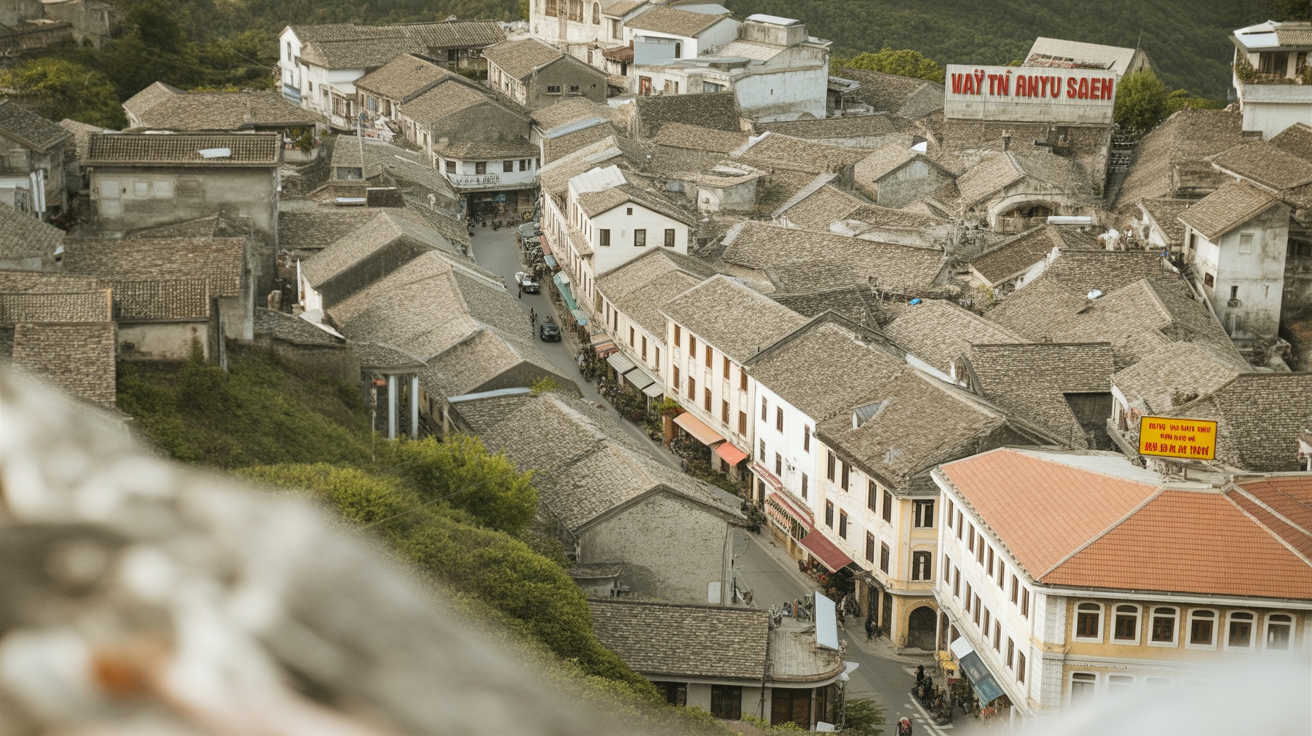
Gjirokaster (say: gee-roh-KAS-ter, or just ‘Gjiro’ once you’ve been here five minutes) is a UNESCO World Heritage Site in southern Albania — a city built almost entirely of grey stone that climbs a steep hill above the Drino Valley, with a fortress at the top that’s been there in various forms since the 12th century.
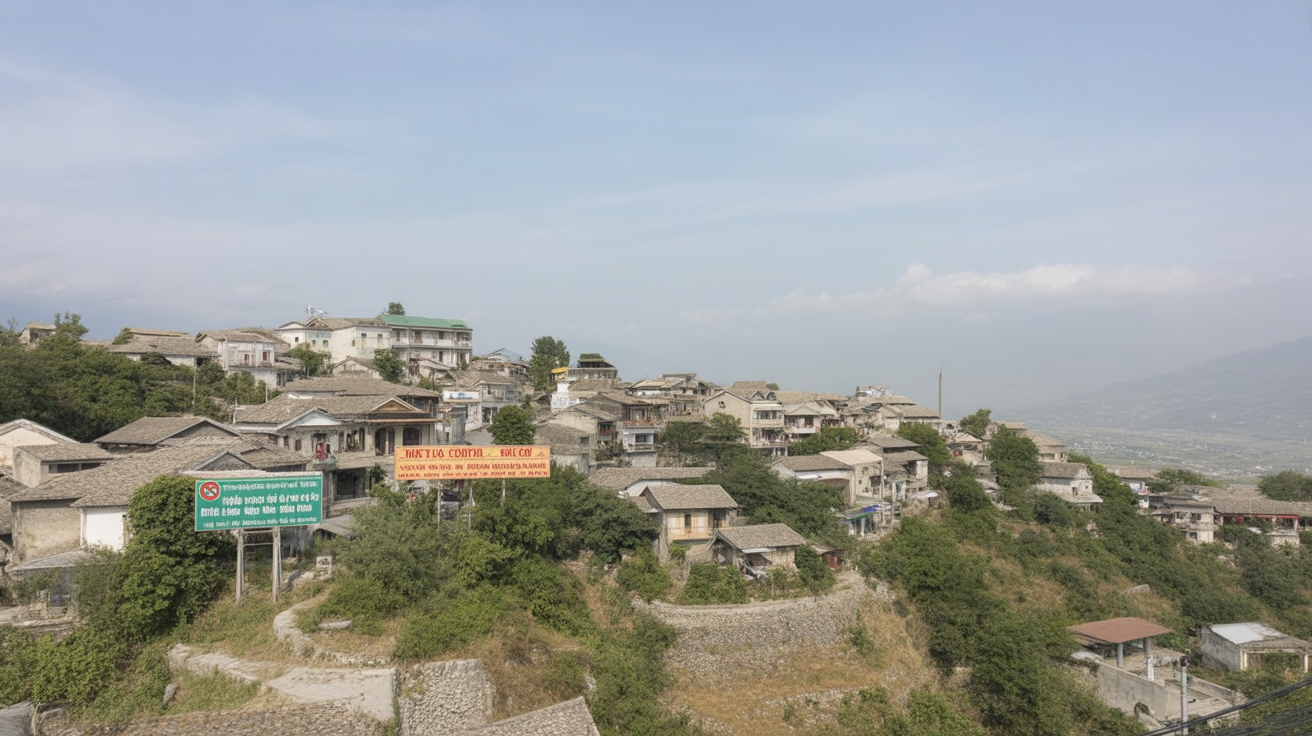
It’s been called the “Stone City” for obvious reasons. The houses, the streets, the walls — all of it is the same grey-blue limestone, which gives it a visual unity that most Albanian towns, rebuilt chaotically after communism, completely lack. Add an Ottoman bazaar that’s still functioning (selling tools and food, not keychains), two extraordinary mansion houses, a castle with genuine historical weight, and a Cold War tunnel that gives communism a physical form you can walk through. That’s the city. It’s not small talk.
Population is around 20,000. It’s not a large place. You can walk the entire old town in a morning. The appeal is depth, not breadth.
Getting to Gjirokaster
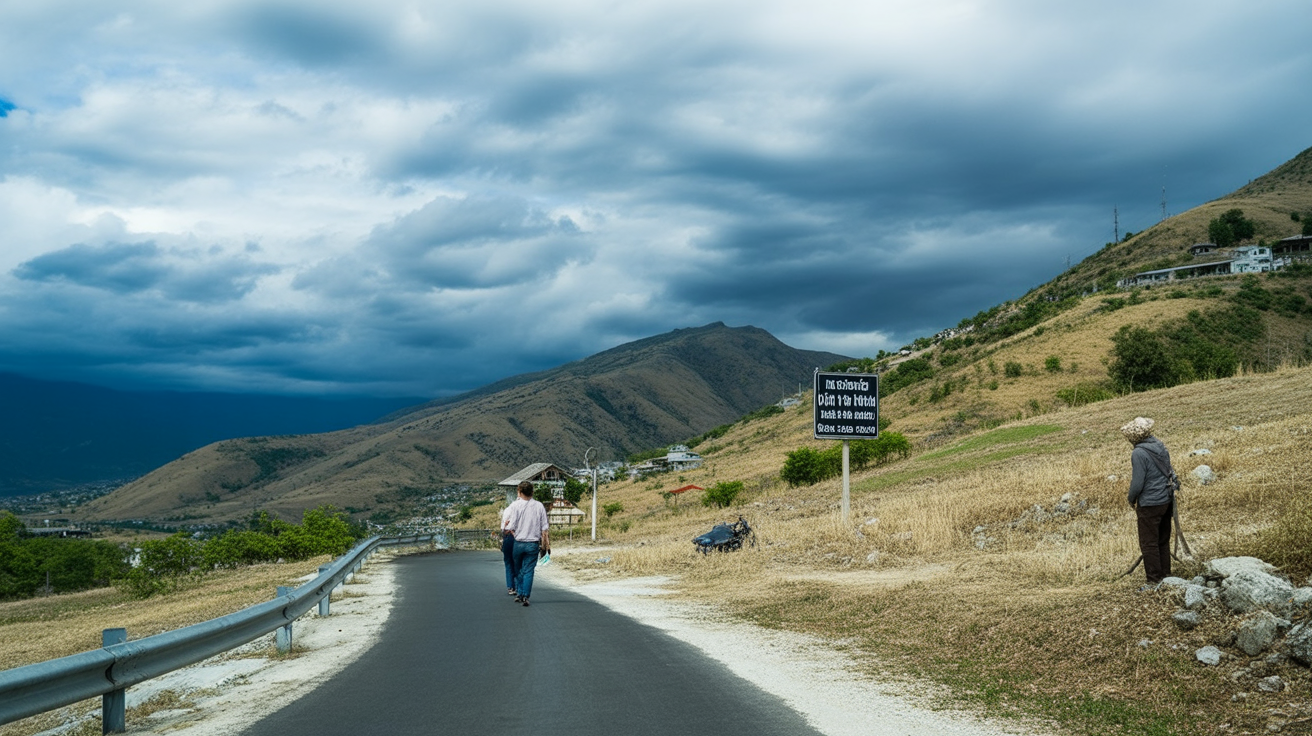
From Tirana: Bus from the South Bus Terminal (not the main terminal — this catches people out; the south terminal is on Rruga Mine Peza, a furgon ride from Blloku). At least 10 buses daily from 5am, cost 800–1,000 ALL (~£7–9 / ~€8–10), journey time roughly 4 hours. Book the ticket at the window when you arrive; they fill but not dramatically.
From Sarandë: Best connection in the south. Buses run roughly every hour from 5am until the afternoon, cost 300 ALL (~£2.60 / ~€3), 1 hour journey. If you’re on the Albanian Riviera and doing a day trip — this is the calculation. Leave Sarandë at 8am, you’re in Gjirokaster by 9am, plenty of time.
From Ioannina (Greece): For those coming via the Greek border, there’s a direct bus — approximately €8, around 2 hours including the border crossing at Kakavijë. One of the more interesting entry points into Albania.
By car: The road from Tirana is straightforward — the SH4 south, decent condition. From Sarandë it’s a mountain road with good tarmac but tight bends. Regular car, no problem. Parking in the old town area requires some patience — the streets are designed for a time before cars.
ℹKnow Before You Go
The old town climbs steeply. If you have significant mobility restrictions, some of the cobbled lanes and castle approaches will be difficult. The bazaar and lower streets are more accessible; the castle approach involves a proper uphill walk.
Gjirokaster Castle: The Main Event
The castle dominates the city from above and delivers in person. Entry is 400 ALL (~£3.60 / ~€4) — there are two additional museums inside the complex that charge extra, which caught me out the first time (budget another 400–600 ALL if you want everything).
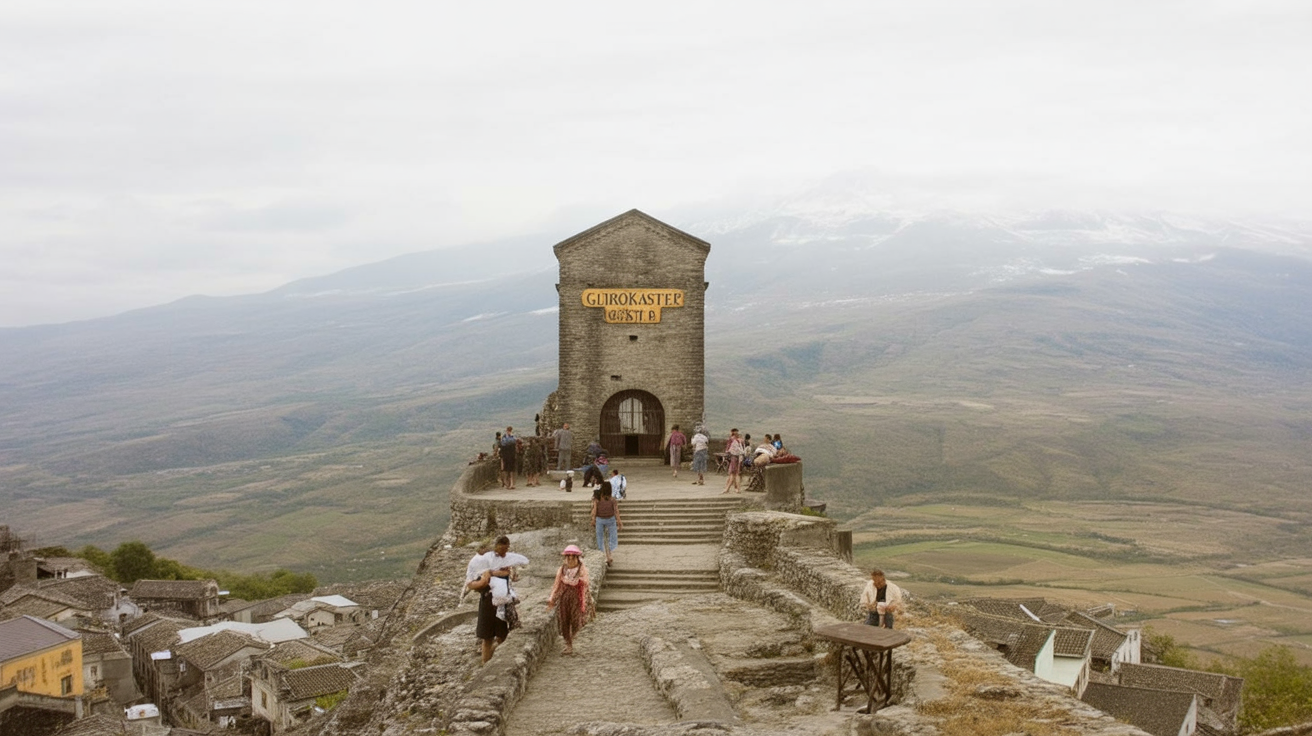
The castle itself is a proper fortress — massive walls, multiple towers, courtyards, the kind of scale that makes you understand how it was never taken militarily. The weapons museum inside has an eccentric collection of Ottoman arms, communist-era military hardware, and what appears to be a captured US Air Force reconnaissance plane (it is — a Lockheed U-2 forced down in 1957; the Albanians kept it). The combination of Ottoman, communist, and Cold War history in a single castle complex is genuinely unusual.
The views from the walls across the Drino Valley and the mountains are the best high point in southern Albania. Go on a clear morning.
The Cold War Tunnel
This is the part most visitors don’t know exists until they’re already there. Underneath the castle, Enver Hoxha’s government built a tunnel complex designed to shelter senior officials during a nuclear attack. Entry is 200 ALL (~£1.80 / ~€2), guided tour only, runs about 20 minutes.
Start at the tourist information centre in the bazaar — they’ll send you to the correct entrance. Don’t try to find the tunnel independently; the access is through the castle complex and requires the guide.
The tunnel itself is exactly what you’d expect from Albanian communist-era construction: bare concrete, dim lighting, a faint smell of damp stone, and the specific heaviness of a space designed for an event that never happened. The guide explains what each section was for. It’s odd and fascinating in equal measure.
•MARCUS’S PICK
Do the castle and the tunnel in the same visit — morning, before 10am when the tour groups from Sarandë arrive. The castle at 9am in the early light, the tunnel after, coffee in the bazaar at 11am. That’s the correct order. The castle takes 45 minutes to an hour if you’re doing it properly; the tunnel is 20 minutes plus the walk.
The Ottoman Mansions: Skenduli House and Zekate House
Gjirokaster’s wealthy families built mansions during the Ottoman period that are among the best-preserved examples of Ottoman domestic architecture in the Balkans. Two are open to visitors.
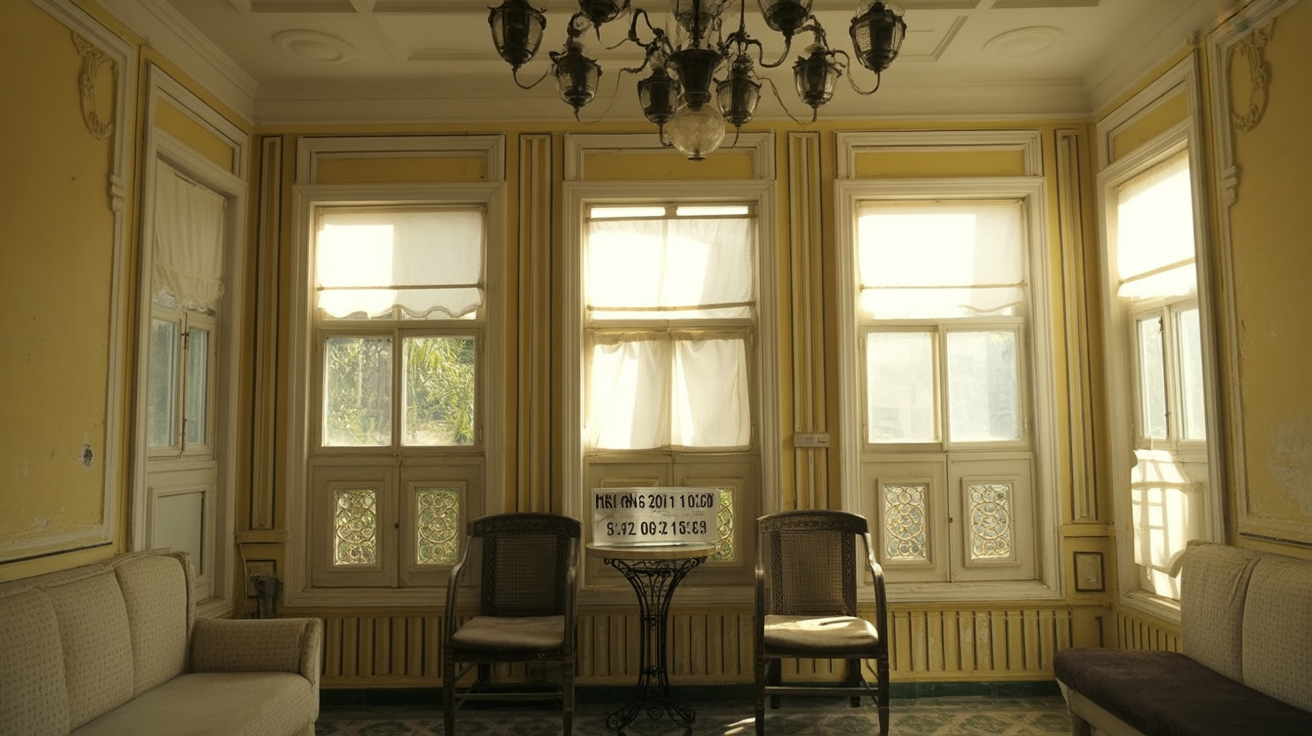
Skenduli House: Entry 200 ALL (~£1.80 / ~€2), guided tour included. An 18th-century mansion house with original interiors — carved wooden ceilings, the dividing architecture between men’s and women’s reception areas, the specific layout that tells you how wealthy Ottoman Albanian families actually lived. The family still owns it; the guide is a family member. This gives the tour a quality that no museum can replicate.
Zekate House: Entry 300 ALL (~£2.70 / ~€3). Larger than Skenduli, more formal, perched on the edge of the hill with views down into the valley. The upper floor has an oriel window that projects over the street — a design feature across Gjirokaster’s old town that you’ll notice once you know to look for it. Two towers, original woodwork, and a defensive ground floor that tells you even wealthy families were building with security in mind.
Both are worth doing. If you’re tight on time, Skenduli first — the family element makes it the more memorable experience.
The Bazaar
The old bazaar of Gjirokaster runs along the main street beneath the castle — a covered arcade of shops that is not, to its credit, primarily tourist-facing. You’ll find hardware, food, clothing, and the kind of everyday commerce that most Albanian bazaars have lost as they pivoted to selling keychains and magnet sets.
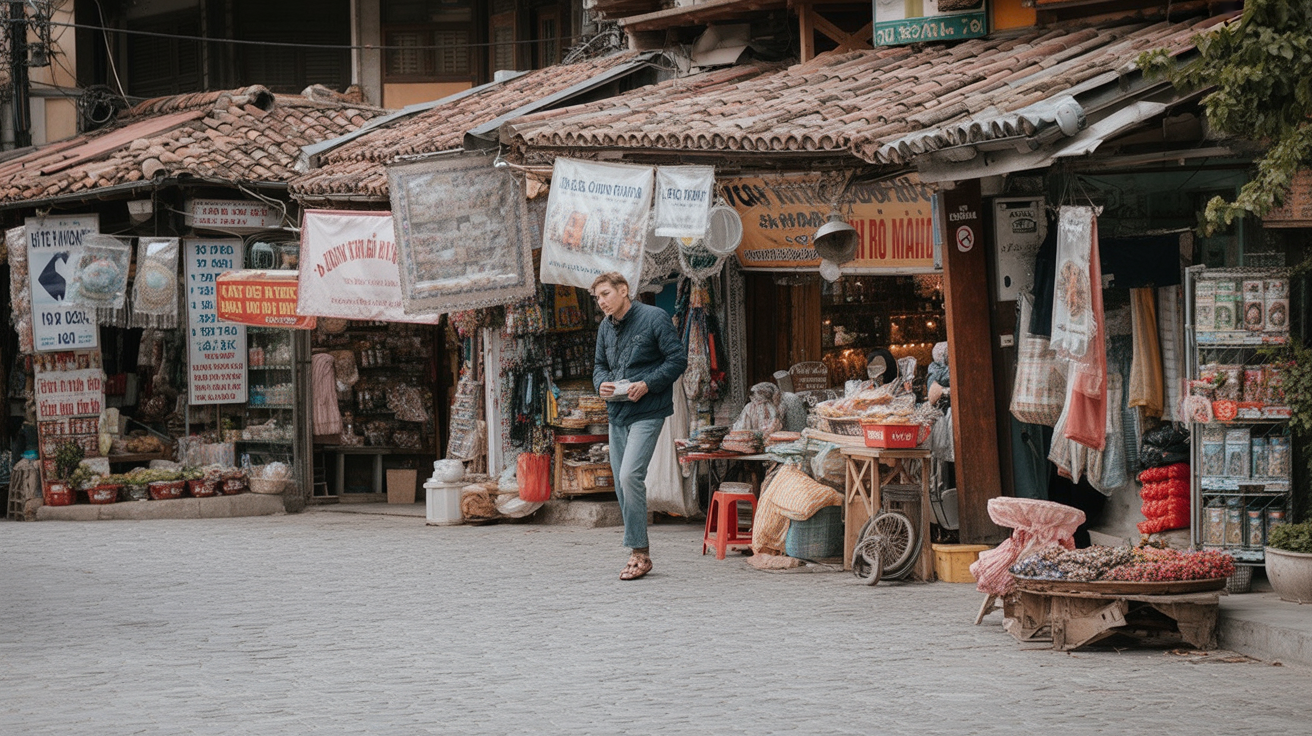
The tourist presence is real — there are souvenir shops, and you should expect them. But the ratio of tourist shops to working shops is better here than in Berat or Krujë, and the physical space — stone arches, a sloped lane, the castle visible at the top — is as good as anywhere in the south.
Coffee: €1–2 for an espresso or cappuccino at any qaxe (say: CHA-zeh — that’s a café) in the bazaar. Albanian coffee is strong and served in small cups and absolutely correct for a mid-morning break after the castle.
Wine by the glass runs about €2. If you’re staying for dinner, the restaurants around the bazaar — particularly Kujtimi and Restaurant Traditional Odaja — are honest Albanian cooking at honest Albanian prices: expect to spend €10–15 per person for a full meal with wine.
Where to Stay in Gjirokaster
The old town area is where you want to be — walking distance to everything, the castle visible from your window if you’re lucky, the bazaar five minutes away.
Budget: Grandpa’s Home (homestay near the bazaar, good location, local breakfast) and Friends’ Guesthouse & Hostel (private rooms available, standard hostel setup, works for solo travellers). Budget guesthouses in Gjirokaster typically run €20–30/night for a private room.
Mid-range: Alsara Guesthouse is the one with the rooftop bar — views over the valley, comfortable rooms, a step above the basic guesthouse in both price and atmosphere. Expect €40–60/night. Stone Sky Hotel is higher up the hill, more of a trek to the bazaar but with the best views from the terrace. Worth it if the views matter more to you than the walk.
Apartment: There’s a well-regarded apartment near the stadium that has come up repeatedly in traveller accounts as genuinely good value at around €38/night — more space than a guesthouse room, kitchen access, and a location that works for exploring the whole city. Worth checking Booking.com listings with that as a reference point.
Gjirokaster is not a place where you need to book three months ahead — except in August, when it gets busy with Albanian diaspora, and for the Gjirokaster National Folklore Festival (held every 5 years, next edition 2027 — if that timing aligns with your visit, book months ahead).
Day Trips from Gjirokaster
Gjirokaster is a good base for the southern Albania circuit. The two main options:
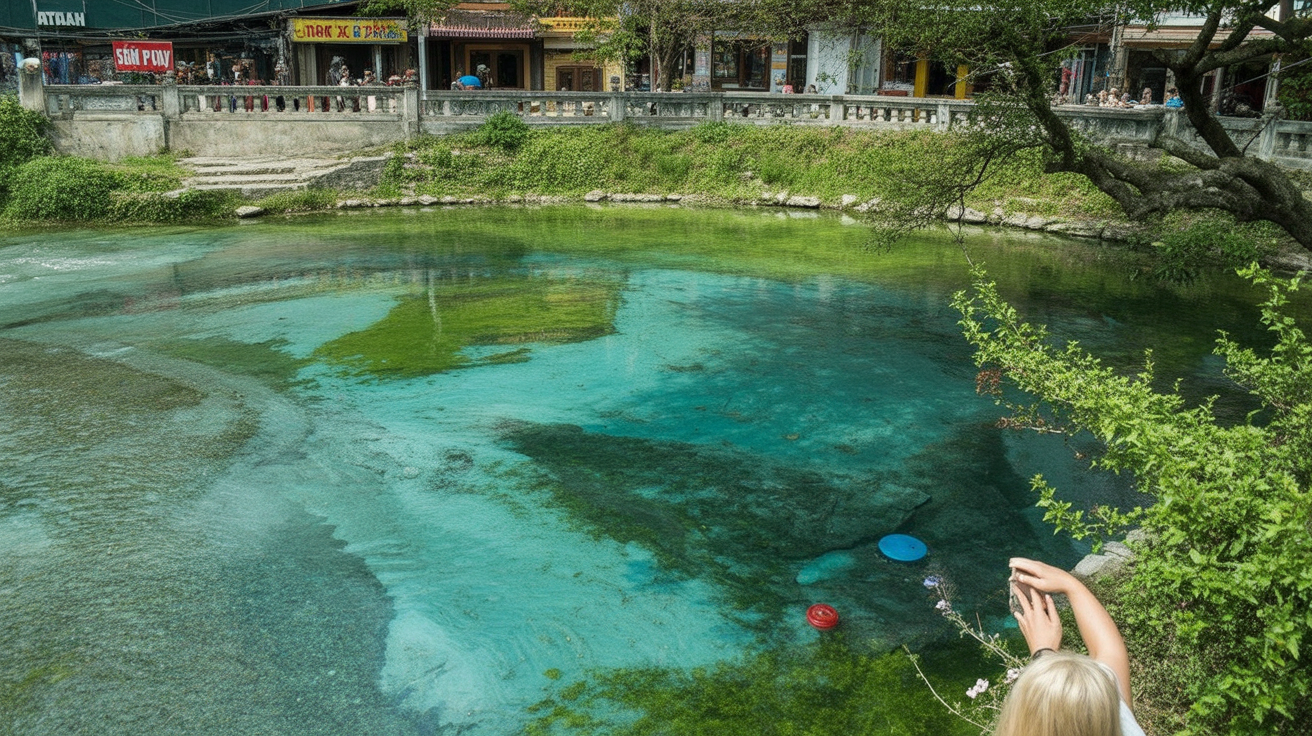
Blue Eye (Syri i Kaltër): A natural spring where water wells up from unknown depth, creating a circular pool of deep blue that fades to turquoise at the edges. Entry 400 ALL (~€4). Access by bus: from Gjirokaster toward Sarandë, get off at the Blue Eye junction, about 45 minutes, cost around 200 ALL — though note that some buses now charge the full Sarandë fare of 400 ALL, so budget accordingly. Alternatively, taxi from Gjirokaster costs approximately 1,500–2,000 ALL return including waiting time. The site is genuinely good, the photos are accurate, and it’s busy in summer. Go early morning if you’re visiting July–August.
Përmet and the Lengarica Canyon: The Permet area (90km east of Gjirokaster) has hot springs and canyon swimming that sees almost no international tourism. The road is decent; the experience — thermal pools in a limestone gorge — is the kind of thing that makes you feel like you’ve found something. Worth a full-day car hire if you have the flexibility. Not on public transport realistically.
Gjirokaster vs Berat: Which to Visit
The question comes up constantly, and I’ve covered it fully in the Berat vs Gjirokaster comparison. Short version: Berat is slightly more photogenic from a distance; Gjirokaster has the better castle and the more interesting museum content (the Cold War tunnel tips it). If you’re only doing one and you’re interested in history and architecture, Gjirokaster. If you want the iconic river-valley-white-houses photograph, Berat.
Best answer: do both. They’re 90km apart on the SH73. A one-night stop in each on the way north or south takes nothing away from either city and gives you the full southern Albanian UNESCO experience.
How Long to Spend in Gjirokaster
One full day is doable. Two nights is better. Here’s how the time actually breaks down:
Day 1: Castle + Cold War tunnel in the morning (2.5–3 hours), lunch in the bazaar, Skenduli House in the afternoon, wander the old town until dinner. That’s a full day and it doesn’t feel rushed.
Day 2: Zekate House in the morning (you’ll appreciate it more after Day 1 has given you context), Blue Eye day trip by noon, back for dinner. Or rent a car and do the Permet hot springs.
The city is genuinely pleasant to just be in. The stone streets, the cats, the specific quiet of 7am before the day starts — if that matters to you, give it two nights. It’s cheap enough that there’s no reason to rush.
What to Eat in Gjirokaster: A Short, Honest List
Gjirokaster has the best food in southern Albania. This is not a low bar — the rest of southern Albania does a solid job — but the proximity to Greece, the elevation, and the tradition of serious home cooking in the Ottoman household tradition produce something noticeably better than the coast.
Lamb. Specifically, slow-cooked lamb in a clay pot (tave kosi — the national dish, baked lamb with egg and yoghurt) or grilled lamb ribs from a wood-burning grill. The lamb in southern Albania has been on the hills above the city. Budget 600–900 ALL (~€5.55–8.30) for a main course at a local restaurant, 900–1,400 ALL at a tourist-facing place.
Local cheese (djathë i bardhë — dyath ee BAR-dheh). White, salty, made from sheep’s milk, available at the bazaar cheese shop for 200 ALL/100g (~€1.85). This is the default accompaniment to everything — bread, wine, raki before dinner. Buy it from the shop in the bazaar rather than ordering it at a restaurant; you’ll pay a third of the price and get a better product.
Gjirokaster wines. The restaurants in the bazaar area stock local Albanian wine from the Berat and Permet wineries at 200–300 ALL per glass (~€1.85–2.80) or 600–900 ALL for a carafe. The Çobo winery’s Shesh i Zi (a local red grape variety) is worth asking for specifically. Not remarkable in the way that Georgian wine is remarkable, but honest and cheap and correct with the food.
The bazaar bakery (bottom of the castle hill, opens from 6am) sells sesame bread rings (simite — see-MEE-teh) for 30–50 ALL each. Buy two, eat them while walking. This is the Gjirokaster morning.
Restaurants worth knowing: Kujtimi (in the bazaar, decades of track record) and Restaurant Traditional Odaja (up the hill, better atmosphere). For a full meal with wine, budget 1,000–1,500 ALL per person at either. Avoid the restaurants directly in front of the castle entrance — tourist tax applies.
FAQ: Gjirokaster Travel Guide
- Is Gjirokaster worth visiting?
- Yes, genuinely. The castle + Cold War tunnel combination is the best historical site in southern Albania. The Ottoman mansions are among the best-preserved in the Balkans. The stone old town has a visual unity that most Albanian cities lack. It’s smaller than people expect and takes one full day to see properly — which is the right amount.
- How do I get from Tirana to Gjirokaster?
- Bus from the South Bus Terminal in Tirana (on Rruga Mine Peza — not the main terminal), 800–1,000 ALL (~€8–10), 4 hours, at least 10 buses daily from 5am. Book at the window when you arrive. By car, the SH4 south is straightforward — 2.5–3 hours depending on traffic through the mountains.
- How much does Gjirokaster cost?
- Entry fees: Castle 400 ALL (~€4), Cold War Tunnel 200 ALL (~€2), Skenduli House 200 ALL (~€2), Zekate House 300 ALL (~€3), Blue Eye 400 ALL (~€4). Coffee €1–2, wine €2/glass, dinner €10–15/person. Budget guesthouses €20–30/night. Mid-range €40–60/night. A full day of sightseeing with accommodation and meals sits around €50–70 for a budget traveller, more for mid-range.
- How many days do you need in Gjirokaster?
- One full day covers the castle, Cold War tunnel, one Ottoman mansion, and the bazaar without feeling rushed. Two nights allows you to add the Blue Eye day trip or a second mansion, and to actually enjoy the city at 7am before the tour groups arrive. If you’re coming from Tirana, one night minimum to make the journey worthwhile.
- Is Gjirokaster or Berat better?
- Different strengths. Gjirokaster has the better castle and the Cold War tunnel — more historical depth. Berat has the more iconic visual composition (white houses on a river cliff) and is slightly more accessible from Tirana. Both are UNESCO sites; both are worth visiting. If you can only do one and you care about history, Gjirokaster. If you want the photograph, Berat. Full comparison: /berat-vs-gjirokaster.
- Can I visit Gjirokaster as a day trip from Sarandë?
- Yes, easily — 1 hour by bus (300 ALL / ~€3), buses run roughly hourly from 5am. Leave Sarandë at 8am, arrive 9am, you have a full day before the last buses back in the late afternoon. Combine with a Blue Eye stop on the way if you want — it’s on the Sarandë route and adds 45 minutes each way.
Planning Basics
Currency: Albanian Lek (ALL). Most restaurants and guesthouses take cash; some mid-range hotels take card. ATMs in the city centre work reliably. 1 EUR ≈ 100 ALL approximately — easy maths.
Language: Albanian. English is spoken at guesthouses and most restaurants; not always elsewhere. A few words of Albanian (faleminderit — fa-le-MIN-deh-reet — thank you) go a long way.
Best time: April–June and September–October. July–August is busy and hot; the city works but the 35°C+ makes the uphill walks less enjoyable. Winter is quiet, cold, and atmospheric if you don’t need crowds.
Safety: Gjirokaster is one of the most straightforward cities in Albania for visitors. The tourist infrastructure works, the locals are used to foreign visitors, and the main irritants are the cobblestones (uneven, take sensible shoes) and the hill (steep, take your time). Full safety context: Is Albania Safe? The honest answer.
What to Know About Getting Around Once You’re There
Gjirokaster’s old town is walkable — but the word “walkable” in a city built on a steep hillside means something specific. The castle is at the top; the bazaar is in the middle; the lower new town is at the bottom. You will walk uphill. You will walk downhill. You will do this multiple times in a day and your calves will notice.
The old town streets are cobbled limestone — attractive, historically appropriate, and absolutely not suitable for wheeled luggage. If you’re staying in the old town (which you should be), pack accordingly. Backpack works. Trolley suitcase is a minor catastrophe on these streets.
Taxis are available for the main routes — from the bus station to the old town costs around 300–500 ALL (~€3–5). From the city to the Blue Eye is 1,500–2,000 ALL return including waiting time (negotiate before you get in; ask the guesthouse to help if your Albanian isn’t functional yet). There’s no rideshare app in Gjirokaster the way there is in Tirana — taxis and furgons are the options.
Walking times within the old town: bazaar to castle entrance is about 20 minutes on foot, uphill. Castle to Zekate House is 10 minutes. Bazaar to the bus station (for departure) is 15–20 minutes downhill, or 500 ALL by taxi if you have luggage. Leave more time than you think — the cobblestones slow you down.
One specific note about the castle: there are two approaches — north and south. The correct tourist entrance is on the north side. The south approach exists but it’s not the main entrance and you will end up doing a cobbled three-point turn in a narrow lane if you go that way. I know this because I did exactly that. North entrance. Always.
Wi-Fi: Every guesthouse has it. The bazaar cafés mostly have it. Signal in the upper parts of the castle complex is patchy — download offline maps before you head up.
You’ve got everything you need. Don’t drive to the wrong castle entrance. Go.