Shkoder Travel Guide: Albania’s North, Honestly Explained
Updated June 2026 — Marcus Webb has been living in Tirana for four years and has been to Shkoder more times than he can count, mostly because it’s on the way to everything else in the north. Prices verified June 2026.
Shkoder is Albania’s fourth-largest city, the gateway to the Accursed Mountains, and genuinely one of the more interesting urban stops in the country. Most people drive through on their way to Komani Lake or Valbona. That’s a reasonable call, but you’d be missing the Marubi Museum, the Mes Bridge, and a pedestrian boulevard café scene that will keep you longer than you planned. Budget at least a full day — ideally two.
What Shkoder Actually Is (Not a Pit Stop)
Shkoder (also spelled Shkodra or Shkodër — all the same city) is the largest city in northern Albania, population around 120,000, and historically one of the most important in the Balkans. The Illyrians built a fortress here in the 4th century BC. The Venetians held it for a century. The Ottomans took it in 1479 and kept it for 400 years. The communist period paved over most of what remained. What’s left is a city with a slightly battered dignity and more to see than the two-hour pit-stop crowd ever discovers.
Two things set Shkoder apart from the rest of Albania. First: it’s heavily Catholic. Unlike Tirana or the south, where religious identity is a complicated mix of Muslim-majority history and communist-era atheism, Shkoder has a strong Catholic tradition — you’ll hear church bells, see crucifixes on building walls, and find the Cathedral of Saint Stephen (rebuilt after Hoxha turned it into a sports hall, then a basketball court) open and active in the city centre. It changes the atmosphere in a way that’s hard to put your finger on until you notice it.
Second: Shkoder is the jumping-off point for the Accursed Mountains — the Albanian Alps — and for the Komani Lake ferry, which is one of the genuinely spectacular things you can do in this country. If you’re planning either, you’ll be passing through here regardless. The question is whether you slow down long enough to actually see it.
Rozafa Castle: Get Up Early
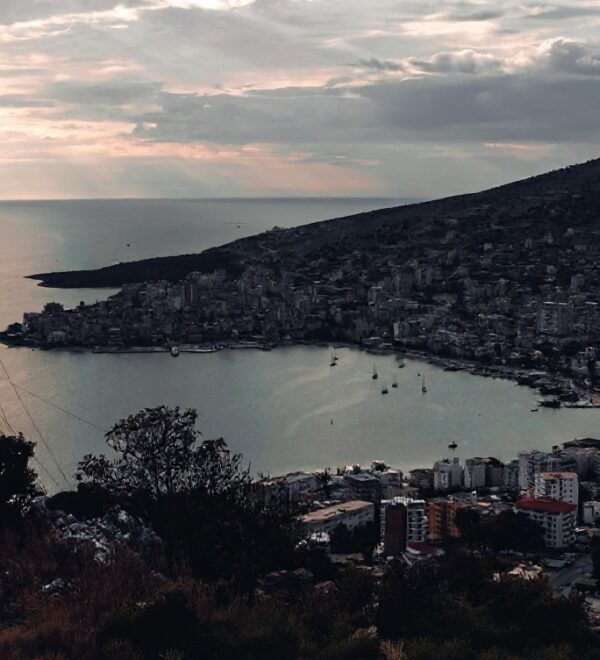
Rozafa Castle sits on a rocky hill above the city with views across Lake Shkodra, the Drin River, and on a clear day the Montenegro mountains across the water. It’s ancient — Illyrian foundations, rebuilt and expanded across two thousand years of occupation — and it’s the most dramatic thing to look at from anywhere in the city.
Entry: 200 ALL (about €1.60 / £1.40). Open daily 9am–7pm in summer, shorter hours in winter. The site is large — allow 90 minutes to walk it properly, more if you want to explore the lower defensive walls.
The legend attached to Rozafa is one of the more disturbing ones in Albanian folklore: three brothers building the walls kept watching their work collapse overnight, were told by a wise man they needed to entomb a wife alive in the foundations to make it hold. Two brothers warned their wives; one didn’t. His wife agreed to be buried alive on the condition that holes be left for her eyes, her breast, and her hand — to see and nurse her son after death. The castle still stands. There’s a small section of the wall where you can see the supposed burial site. Albanians will tell you this matter-of-factly, like a historical footnote.
MARCUS’S PICK: Go at opening time, 9am. The castle gets tour groups from 10am onwards and the combination of narrow paths and selfie sticks makes it unpleasant. At 9am you’ll have the ramparts largely to yourself, the morning light is good on the lake, and a cup of coffee at the castle café costs 100 ALL (80p). Worth the early alarm.
The views from the top tower take in three things at once: the old city of Shkoder below, the grey-blue expanse of Lake Shkodra stretching into Montenegro, and the line of the Accursed Mountains to the northeast on a clear day. The scale of the lake surprises most people — at 368 square kilometres it’s the largest lake in the Balkans, and most of it is invisible until you’re up high enough to see it properly.
Marubi National Museum of Photography: Don’t Skip This One
Right, here’s what most people miss. The Marubi National Museum of Photography on Rruga Kolë Idromeno is, without qualification, one of the best small museums I’ve been to anywhere in the Balkans. I nearly skipped it because I wasn’t in the mood for a museum that afternoon. Four hours later, I had to be told it was closing.
The Marubi dynasty set up the first photography studio in Albania in 1856 — Pietro Marubbi, an Italian revolutionary exile, arrived in Shkoder and started documenting the city. His adopted son continued. Then his son. Three generations of photographers, covering Shkodra from the mid-19th century through the early communist period, leaving an archive of 150,000 glass-plate negatives and prints. The museum opened in a restored Ottoman house in 2016 and the curation is, frankly, excellent.
What you’re looking at: portraits of Albanian men in traditional white fez and embroidered jackets, 1870s. A family outside a church, 1890s. Street scenes of Shkoder that no longer exist. Ottoman-period markets. Early 20th century soldiers. Then, eventually, the communist period — different aesthetic, same building, different world. The progression across 150 years is quietly devastating in the way that very good documentary photography always is.
Entry: 200 ALL (€1.60 / £1.40). Open Tuesday–Sunday, 9am–5pm. The building itself — a restored historic house with a shaded courtyard — is worth the visit separately from the collection. Combined: essential.
| Shkoder at a Glance (2026) | |
|---|---|
| Distance from Tirana | 100km — 1h30m by car / 2 hours by furgon |
| Getting there | Furgon from Tirana North Terminal: 600–800 ALL (~€5–7) |
| Rozafa Castle entry | 200 ALL (~€1.60) — open daily 9am–7pm |
| Marubi Museum entry | 200 ALL (~€1.60) — Tue–Sun 9am–5pm |
| Mes Bridge | Free — 7km east of Shkoder, 10min taxi (~500 ALL) |
| Komani Lake ferry | Leaves from Koman (35km east) — 7am departure, book ahead |
| Budget accommodation | €15–20 hostel dorm / €40–60 guesthouse double |
| Best time to visit | May–June and September–October. July–August is hot and crowded. |
| Currency | Albanian Lek (ALL). 1 EUR ≈ 100 ALL ≈ £0.87 |
The Pedonale: Where the City Actually Lives
Rruga Kolë Idromeno — the Shkodra pedestrian boulevard, locally called the Pedonale — is the main artery of city life and the place you should spend your evenings. It runs through the centre for about 800 metres, lined with cafés, the odd restaurant, phone shops, and a continuous parade of the entire city’s population doing the xhiro (say: JEE-ro — the Albanian evening stroll, a deeply committed cultural institution).
The xhiro in Shkoder is more traditional than in Tirana — families walking in groups, older men on benches, kids everywhere. It feels less like a tourist promenade and more like what it actually is: Albanian urban life running on its own schedule. By 7pm in summer it’s busy; by 9pm it’s at capacity. Join it or sit outside a café and watch. Either works.
Coffee on the Pedonale costs 80–120 ALL (€0.80–1.20) for a macchiato — the standard Albanian order, short and strong. Don’t ask for a flat white. The Shkodra xhiro crowd has firm opinions about this.
The Pedonale also puts you in reach of the Cathedral of Saint Stephen (rebuilt 1995, worth a look for the interior) and the Ebu Bekr Mosque (19th century, small, quietly impressive) within a few minutes’ walk. The coexistence of active Catholic and Muslim places of worship a few streets apart from each other is distinctly Shkodra — the city’s historically mixed religious identity is visible in a way it isn’t in Tirana.
Mes Bridge: The One Most People Drive Past
The Ura e Mesit (say: OO-ra ay MEH-sit — Bridge of Mes) is 7km east of Shkoder on the old road toward Koman. It’s a 13-arch Ottoman stone bridge from the 18th century, built across the Kiri River, and it is one of the best-preserved Ottoman structures in Albania. It’s also free, it takes about 20 minutes to walk across and back, and most people drive past it en route to the Komani ferry without stopping.
Don’t drive past it.
The bridge is 108 metres long and rises into a single central arch high enough to let river traffic pass. The stone is the same rough-hewn pale limestone you see in Gjirokaster and Berat — the Ottomans apparently had a consistent supplier. There’s no admission, no café, no souvenir stall. Just a 300-year-old bridge over a clear river with the Albanian mountains behind it and usually about three other people there.
A taxi from Shkoder centre to Mes Bridge and back runs about 1,000–1,200 ALL (€10–12). You can also rent a bicycle in the city — the road is relatively flat and the 14km round trip takes about 90 minutes at a relaxed pace. The route out passes through a small village and some good agricultural land. The mountains get bigger as you go. It’s a decent morning’s ride.
REAL TALK: I’ve been to Mes Bridge four times. Three of those times were because I was driving to Koman for the ferry and stopped on the way — takes 20 minutes maximum. The fourth time I went specifically for it with a mate who’s an architecture nerd, and we spent 45 minutes there. Both approaches work. The point is: stop. You’ll kick yourself if you don’t.
Lake Shkodra: Big, Underrated, Worth the Walk
Lake Shkodra (Liqeni i Shkodrës) is the largest lake in the Balkans — 368 square kilometres, about half in Albania and half in Montenegro. It’s 4km from the city centre, and the lakefront is accessible by bicycle or a 20-minute walk from the Pedonale.
The lake itself is quiet, scenic in the grey-blue way of big freshwater lakes, and best seen from either Rozafa Castle (where you get the full scale) or the lakefront promenade near the Shiroka restaurant strip. Shiroka village, 8km from Shkoder on the lake road, has a handful of restaurants doing lake fish — koran trout is the local speciality, grilled simply, eaten outside. Lunch at Shiroka for two people with fish, salad, and wine runs 2,000–3,000 ALL (€20–30 / £17–26). The setting — tables on a terrace above the water, Montenegro mountains visible across the lake — is considerably better than the bill suggests.
Birdwatchers: the lake and its surrounding marshes are a stopover for migratory species from October to March. The Dalmatian pelican overwinters here in numbers — seeing 50 of them take off from the reed beds simultaneously is, I’ll admit, something to write home about.
Shkoder as a Gateway: The Komani Lake Ferry
If you’re going to the Komani Lake ferry — and you should be, it’s one of the most impressive things in Albania — it departs from Koman, 35km east of Shkoder on a road that starts reasonable and ends enthusiastic about pot holes. The ferry leaves at 7am and takes about 2.5 hours through the Drin River canyon to Fierze, where connections continue to Valbona Valley.
Staying in Shkoder the night before is the practical move — the alternative is leaving Tirana at 4am, which sounds like something I’d recommend in the abstract and regret in practice. The ferry is genuinely spectacular: narrow limestone canyon walls, the colour of the water shifting from grey to green as the light changes, occasional villages accessible only by the boat. We’ve written a separate guide to the Valbona Valley with the full Komani logistics — what to book, what the trail is like, where to stay.
If you’re not continuing to Valbona, the ferry to Fierze and back as a day trip is also worth considering — it turns around immediately and the return journey has different light. The round trip takes a full day from Shkoder and costs about 1,500 ALL return per person (€15 / £13).
Where to Eat in Shkoder
Shkoder’s food scene punches above its size, partly because of the strong local food culture in northern Albania and partly because the café scene on the Pedonale has raised the standard for what people expect.
Taverna Tradita (near the Old Bazaar area, off Rruga Pjeter Bogdani) — the most reliable option for traditional northern Albanian food. Lamb spit-roasted, byrek made fresh, home-distilled raki that will end your afternoon. The decor is deliberately traditional — wooden beams, agricultural implements on the walls — and the crowd is a mix of Shkodrans and tourists who’ve done their homework. Mains 600–1,200 ALL (€6–12 / £5–10). Cash only.
Restaurant Çuka (lakefront road toward Shiroka) — if you want lake fish, this is where the Shkodrans go. Koran trout, eel, carp — all from the lake, all priced by weight. Ask what came in that morning. Budget 800–1,500 ALL per person (€8–15 / £7–13) depending on what you order.
Birra Korca brewery tap (Pedonale area) — Albania’s best mass-market beer, brewed in Korça, served cold everywhere. Shkoder has several spots on the Pedonale serving it in half-litre glasses for 200 ALL (€2). It’s not craft beer. It’s reliable, cold, and exactly right after a hot afternoon at Rozafa Castle.
For breakfast: byrek from a street stall near the Pedonale, bought warm, eaten standing up, 100–150 ALL (€1–1.50). The spinach version (byrek me spinaq) is the Shkodra standard. The cheese version (byrek me djathë) is also acceptable. I have opinions about this. The spinach wins.
INSIDER TIP: If you’re driving north from Tirana and passing through the Lezhë area, Mrizi i Zanave (about 65km south of Shkoder, near Fishtë village) is the best farm-to-table restaurant in Albania — Slow Food listed, ingredients from the property, genuinely extraordinary. Book ahead. It’s 20 minutes off the main road and worth every minute of the detour.
Where to Stay in Shkoder
Shkoder has a solid range of options for a city of its size, from budget hostels in converted houses to decent mid-range guesthouses a walk from the centre.
Wanderers Hostel (central, near the Pedonale) — the best-reviewed budget option in town, consistently. Dorms from €15–18, private rooms €35–45. The staff know the city, the breakfast is better than it needs to be, and they’ll sort your Komani ferry booking if you ask. Often full in summer — book two weeks ahead for July and August.
Hotel Colosseo (Rruga 13 Dhjetori, 10 minutes from the castle) — the default mid-range pick. Clean, reliable, pool in summer, breakfast included. Doubles 4,500–7,000 ALL (€45–70 / £39–61) depending on season. It’s not going to appear in any architectural photography. But it works.
Vila Rozafa (near the castle area) — smaller guesthouse option with better views from the upper rooms. €40–55 for a double, family-run, the kind of place where the host’s grandmother will appear at breakfast with additional food. This is not a complaint.
Booking note: Shkoder fills up on weekend nights in June and September when the Komani ferry crowd overlaps with the summer festival season. Book Thursday to Sunday stays at least a week in advance. Mid-week in the same periods: usually fine to book two to three days out.
Getting to Shkoder from Tirana
The furgon (FOOR-gon — shared minibus) from Tirana to Shkoder leaves from the informal terminal near the Train Station in Tirana’s city centre. Departures run roughly every 30–45 minutes from about 6:30am to 4pm. Fare: 600–800 ALL (€6–8 / £5–7). Journey time: 1h45m–2h15m depending on traffic and how many stops the driver decides to make.
The furgon drops you at the Shkoder bus station on the southern edge of the city — 10 minutes’ walk or a 200-ALL taxi to the Pedonale. There’s no booking required; you show up, pay the driver, get in when it’s full. It leaves when it’s full. This is how Albanian public transport works. It’s fine.
By car: 100km on the SH1/A1 motorway, 1h20m–1h40m depending on Tirana exit traffic. Park near the Pedonale — there are several free spots on the side streets east of the boulevard, and a paid car park (100–200 ALL/hour) near the castle approach. Regular car is fine for Shkoder. If you’re continuing to Koman for the ferry, the road is increasingly adventurous past the village of Rragam — manageable in a regular car but the potholes are determined. A 4WD is not required but a car with some suspension travel is preferable.
If you’re planning the Albania budget for this trip, factor in that Shkoder is noticeably cheaper than Tirana for accommodation and food — you’ll spend less per day in the north.
When to Go
May and June are the best months for Shkoder. The temperature sits between 22–28°C, the lake is high and the colour is good, the castle has reasonable visitor numbers, and the city is running at its natural pace without the summer tourist overlay.
September and October: equally good, arguably better for the mountains. The Accursed Mountains are at their clearest in late September, the harvest is in, and the Pedonale café scene has a different, more local energy after the summer crowds leave.
July and August: Shkoder itself is manageable — it’s a city, not a beach, so the summer crowds are less intense than on the Riviera. The castle gets hot and crowded midday. The Komani ferry fills up and you’ll need to book the onward accommodation in Valbona weeks in advance. Doable. Not ideal.
November to March: cold, quiet, and not recommended for the outdoor elements. The Marubi Museum is excellent year-round. The castle in winter is fine if you’re dressed for it. The furgon to Tirana gets delayed by snow on the mountain sections occasionally. If you’re here out of season, plan accordingly.
For the full picture on timing an Albania visit — including the Riviera coast, Berat, and the mountains — the Albania best time to visit guide has the regional breakdown.
Is Shkoder Safe?
Yes. Shkoder is a normal Albanian city with the usual caveats that apply everywhere in the country: watch your bag in crowded places, don’t hire the first taxi that approaches you (negotiate the fare before you get in), and be aware that the road quality on some northern routes is not what you’re used to at home.
The city has a reputation — mostly from outdated sources — for being rough. This is not current reality. The north of Albania had a difficult period in the 1990s during the pyramid scheme collapse and subsequent unrest, and some of that reputation has stuck despite being 30 years out of date. Shkoder in 2026 is a quiet northern Albanian city. It’s fine. The Albania safety guide covers the full picture, including solo travel and specific situations, if you want more detail.
- How far is Shkoder from Tirana?
- 100km on the A1 motorway — 1h30m by car, 2 hours by furgon. The furgon costs 600–800 ALL (€6–8) and leaves from near the Train Station in Tirana. You don’t book — you just show up and get on when it departs.
- Is Shkoder worth visiting for a day trip from Tirana?
- It works as a day trip but you’d be rushing. Rozafa Castle, the Marubi Museum, the Mes Bridge, and a proper lunch — that’s a full day if you do any of them properly. If you’re also planning the Komani Lake ferry, an overnight makes much more sense.
- What is the Komani Lake ferry and how do I get on it?
- The Komani Lake ferry runs from Koman (35km from Shkoder) through a narrow river canyon to Fierze, connecting to Valbona. Leaves at 7am, takes 2.5 hours, costs about 700–800 ALL (€7–8) per person. Stay in Shkoder the night before — leaving Tirana at 4am for the 7am departure is technically possible and genuinely unpleasant. Book your Valbona accommodation well ahead in summer.
- Do I need a 4WD for Shkoder and the surrounding area?
- For Shkoder town, Mes Bridge, and Lake Shkodra — no, a regular car is fine. For the road to Koman beyond Rragam village — manageable in a regular car but the surface gets rough. For Valbona and Theth — a 4WD is strongly recommended. The difference between “fine” and “stranded” is meaningful in the Albanian mountains.
- What language do people speak in Shkoder?
- Albanian (specifically the Gheg dialect, which sounds different enough from standard Albanian that even Albanians from the south notice). English is widely spoken by younger people and anyone in tourism. Italian is commonly understood — Albania has a large Italian-speaking population from the decades when Italian TV was the main media source. If you have Italian, use it; it’ll get you further than Albanian for complex conversations.
- Is Shkoder Catholic or Muslim?
- Both, and meaningfully so — Shkoder is historically more Catholic than most of Albania, with a significant Catholic minority that remained active even through the communist period. The Cathedral of Saint Stephen in the centre is a working Catholic church. The Ebu Bekr Mosque is a few streets away. Both see regular congregation. It’s one of the more genuinely mixed religious cities in the Balkans and the coexistence is real rather than performative.
Shkoder rewards the people who stay long enough to find it. The castle is an hour. The Marubi Museum is another hour — or four, depending on how you feel about photography from 1856. The Mes Bridge is 20 minutes that most people don’t spare. All together: a proper day, possibly two, and you’ll leave with a better sense of what the north of Albania actually is before you head into the mountains. Questions in the comments. I check most days.