Last updated: June 2026 — prices and observations from four years in Tirana.
Besnik, who runs the qaxe on the corner of Rruga Sami Frashëri, has been making me the same macchiato for four years. He’s never asked what I want. He already knows. This is the correct relationship to have with a café. It takes time to earn. Start now.
The Albanian Coffee Ritual: What You’re Actually Doing
In Albanian culture, “going for a coffee” (të pimë kafe — tuh PEE-muh KAH-feh) doesn’t mean what it means in London or Manchester. It’s not about the caffeine. The coffee is the excuse for the social event — a structured way to spend time with someone that carries its own implicit duration, rhythm, and set of unspoken rules.
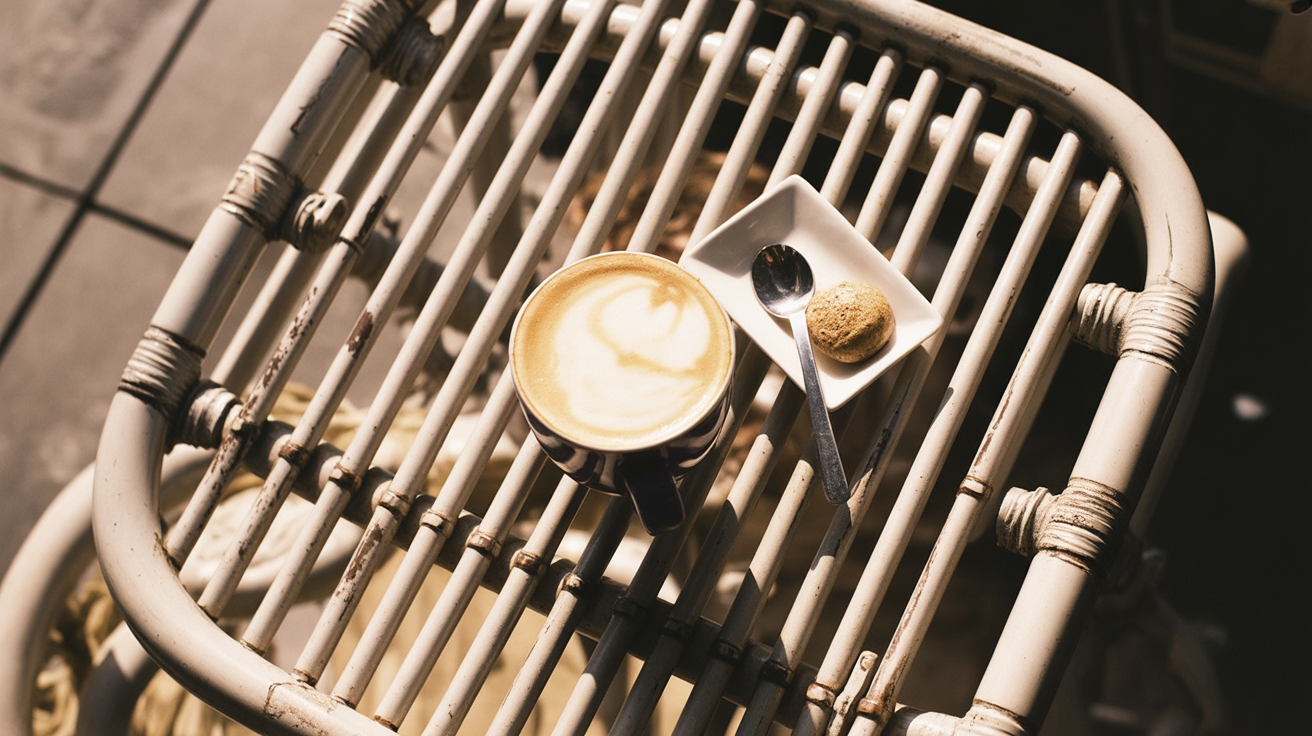
The rules, as I’ve understood them after four years:
Don’t rush. Albanians take coffee seriously as a ritual of slowness. A 30-minute coffee visit is nothing. An hour is normal. Two hours is fine if the conversation is good. There is no signal that you should leave.
Don’t bring your laptop. The qaxe is not a co-working space. Sitting with a laptop open in a traditional Albanian café marks you as someone who doesn’t understand what the place is for. There are modern third-wave cafés in Tirana where this is acceptable; the traditional qaxe is not one of them.
Don’t get it to go. Takeaway coffee exists in Albania but it’s a concession to imported habits, not a native practice. The traditional qaxe doesn’t do cups with lids. The coffee is made for the cup and the cup is for the table.
Coffee is hospitality. If an Albanian offers you coffee in their home, or if an Albanian café owner sends over a coffee unrequested, this is a gesture with weight. Refusing coffee lightly is considered rude. If you can’t drink coffee, say so clearly — that’s accepted; absent-mindedly declining is not the same thing.
What to Order: The Albanian Coffee Menu
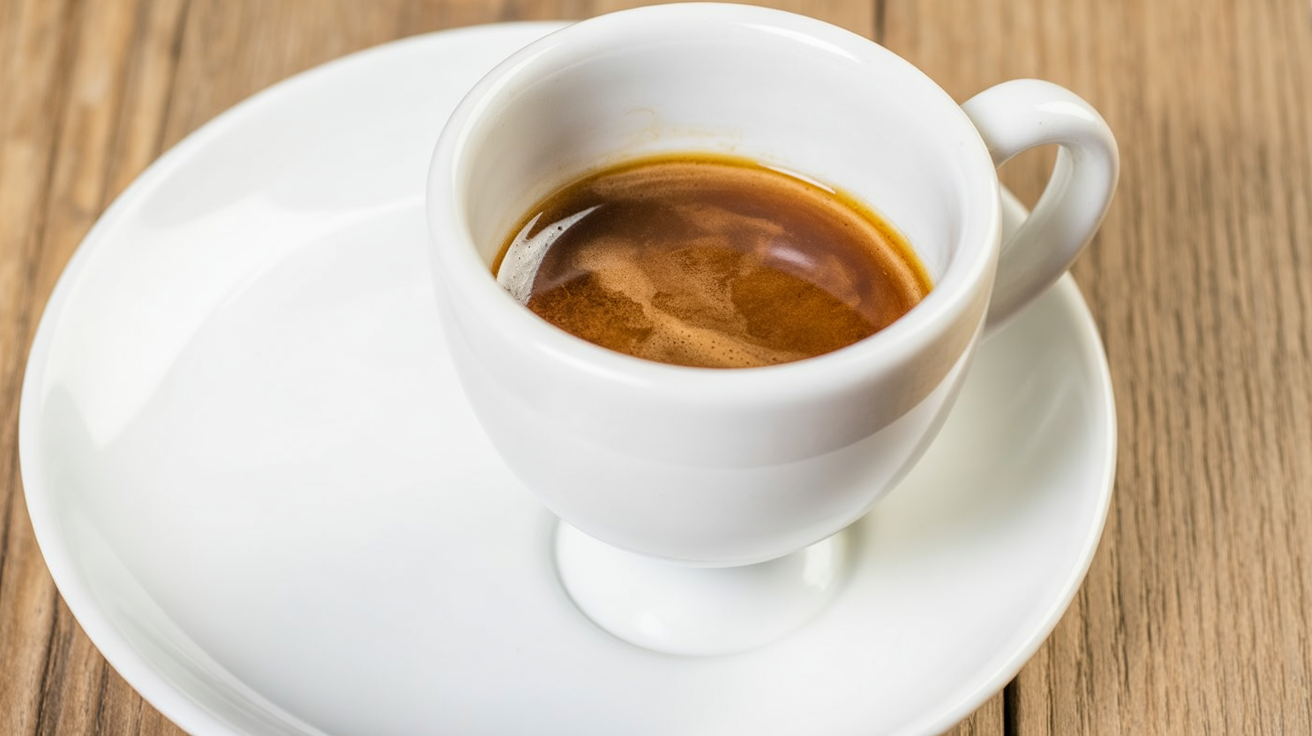
Albanian coffee culture runs on espresso. The menu is short and honest.
Kafe espreso (espresso): The foundation. A shot of espresso, served in a small ceramic cup, often with a small glass of water on the side. Strong, short, no ceremony. Cost: approximately 80–100 ALL (~£0.70–0.90 / ~€0.75–1).
Macchiato: The default Albanian order. A shot of espresso with a small amount of milk — not the large Italian macchiato, not a latte, not a flat white. A proper small macchiato, served in the same cup as the espresso. When Besnik makes mine without asking, this is what appears. Cost: approximately 90–120 ALL (~£0.80–1.10 / ~€0.85–1.10).
Kafe turke (Turkish coffee): The older, deeper tradition. Finely ground coffee brewed directly in a small copper pot (xhezve — ZHEZ-veh), poured into the cup with the grounds, and drunk slowly as the grounds settle. Thicker, more intense, more bitter than espresso. Still found at traditional qaxes, less common in modern Tirana cafés. The taste is different from espresso in a way that rewards patience — it has a cardamom-adjacent warmth that hits in the second sip. Cost: approximately 80–100 ALL.
Iced coffee (kafe ftohtë): In summer, iced coffee becomes ubiquitous — strong espresso poured over ice, often with a little milk, drunk through a straw. This is the one exception to the slowness rule; Albanians drink iced coffee more casually than hot coffee, and you’ll see it everywhere from June through September. Cost: approximately 150–200 ALL (~£1.35–1.80 / ~€1.40–1.90).
Cappuccino / café au lait: Available, increasingly common in urban cafés. Still not the default. If you ask for a cappuccino in a traditional qaxe the owner will make it, but you’ll get a look that suggests mild surprise.
⚠Real Talk
Don’t ask for a flat white. Don’t ask for an Americano. Don’t ask if they have oat milk. These things exist in the third-wave coffee shops along Rruga Myslym Shyri and around Blloku district — places that have self-consciously imported Western coffee culture. The traditional qaxe doesn’t have them, doesn’t need them, and the request marks you as someone operating in the wrong register. Get the macchiato. It’s better anyway.
The Qaxe: What It Is and How It Works
The word qaxe (also spelled kafé or kafe) comes from the same root as “café” but describes something specific to Albanian culture. In most cities, the qaxe is the social infrastructure — the place where men gathered historically to conduct business, trade gossip, and spend time. Today it’s more mixed (Tirana’s café culture is young, urban, and genuinely gender-integrated), but the social-hub function remains.
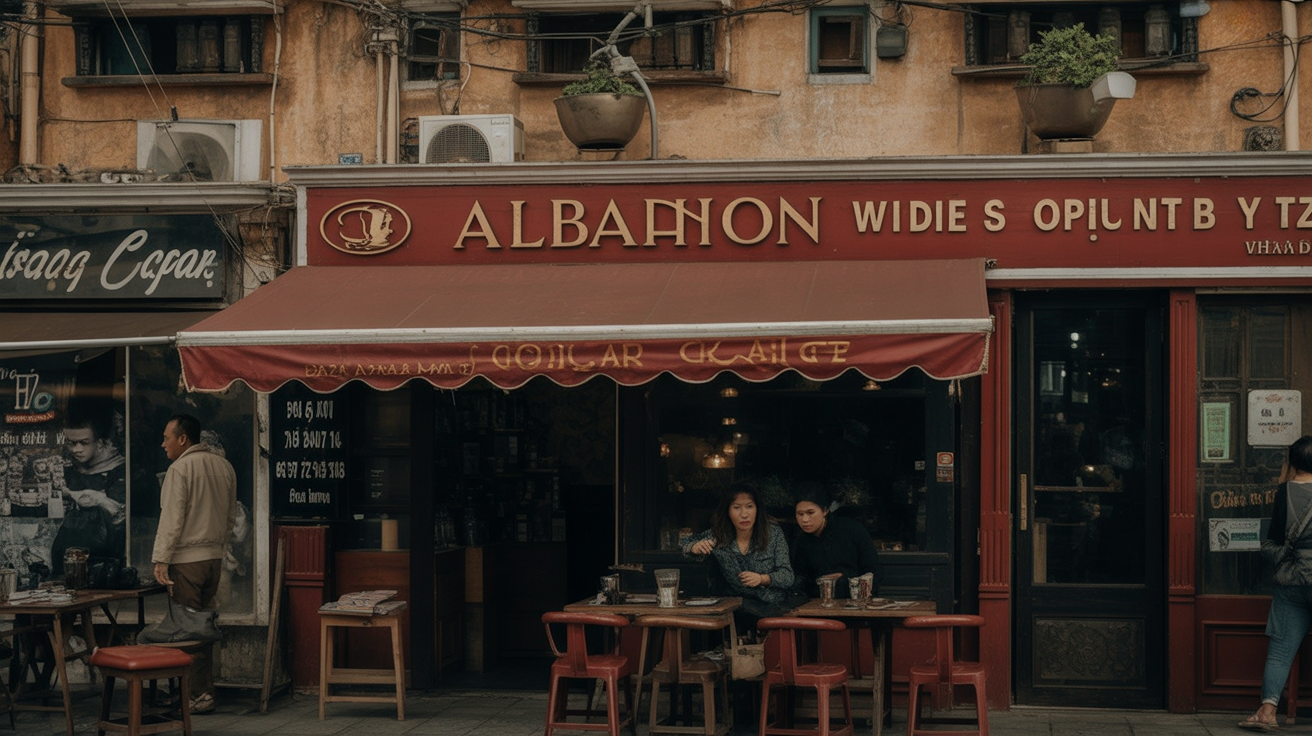
The traditional qaxe has outdoor tables (weather permitting) and moves indoors in winter. There’s no service charge. Tipping is not expected in the traditional sense but rounding up is normal — on a 90 ALL coffee you might leave 100 ALL, not because it’s a tip but because the change isn’t worth counting.
Hours follow the Albanian rhythm: open in the morning (typically from 7–8am), often closing or going quiet in the midday heat (1–3pm), then reopening in the late afternoon and running into the evening. This split-hours pattern catches visitors out — you arrive at 2pm and the café is empty and half-closed. Come back at 5pm. That’s when the coffee drinking is serious.
Albanians rarely drink coffee after dinner as a standalone activity — coffee is morning and afternoon. The exception is if coffee accompanies a longer social gathering, which is its own category of event.
Where to Drink Coffee in Tirana
Tirana is the best city to understand Albanian coffee culture, and the best areas are Blloku (the former communist elite district, now the main entertainment quarter) and the streets around Rruga Myslym Shyri and Rruga Sami Frashëri in the centre.
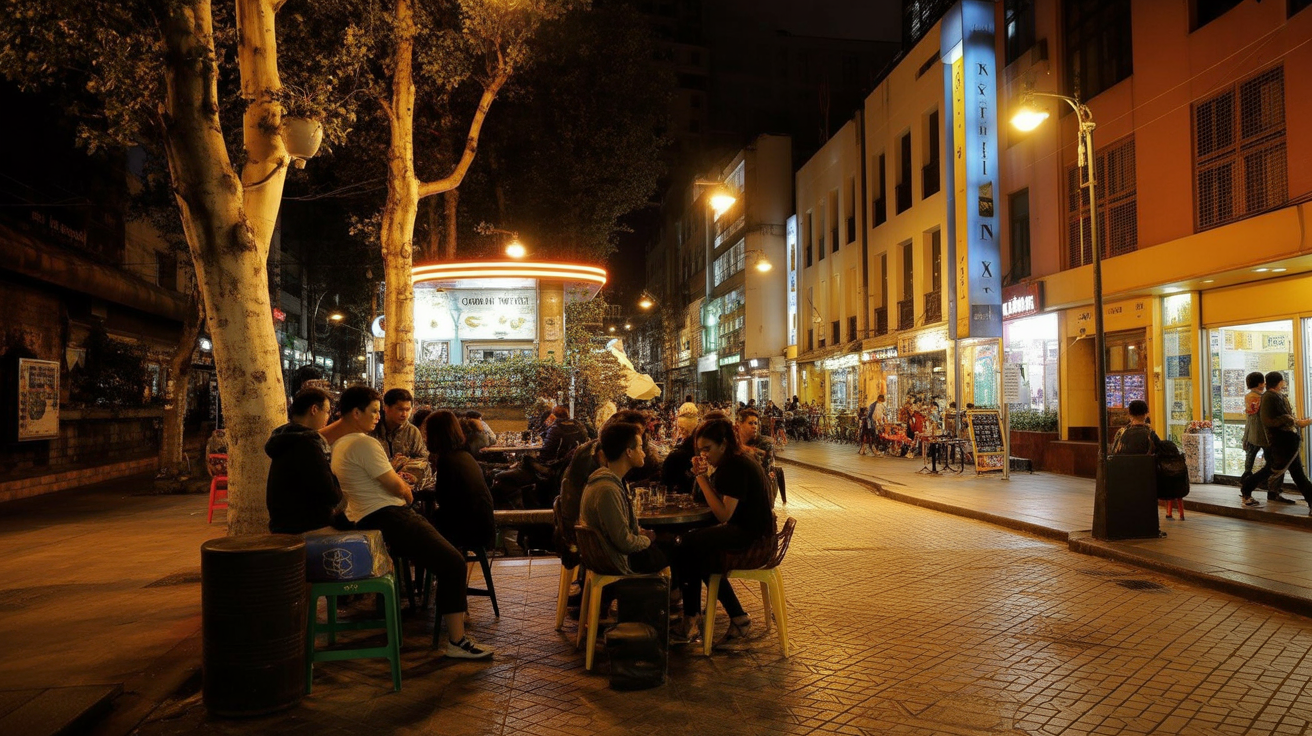
Blloku district: The highest concentration of cafés per square metre in Tirana. A mix of traditional qaxes (older buildings, outdoor tables on narrow streets) and modern coffee bars (better equipment, third-wave sourcing, occasionally oat milk). The afternoon from 4–7pm in Blloku in good weather is one of the great free pleasures of Tirana.
Rruga Myslym Shyri: The traditional café street — a long pedestrian-friendly boulevard lined with outdoor tables. The coffee here is the same as everywhere else; the difference is the setting. One of the best streets in Tirana to sit on and watch the city move.
Skanderbeg Square area: More tourist-facing. The cafés around the main square are decent but priced slightly higher than the residential areas. Fine for a first coffee after arriving; explore further for the real culture.
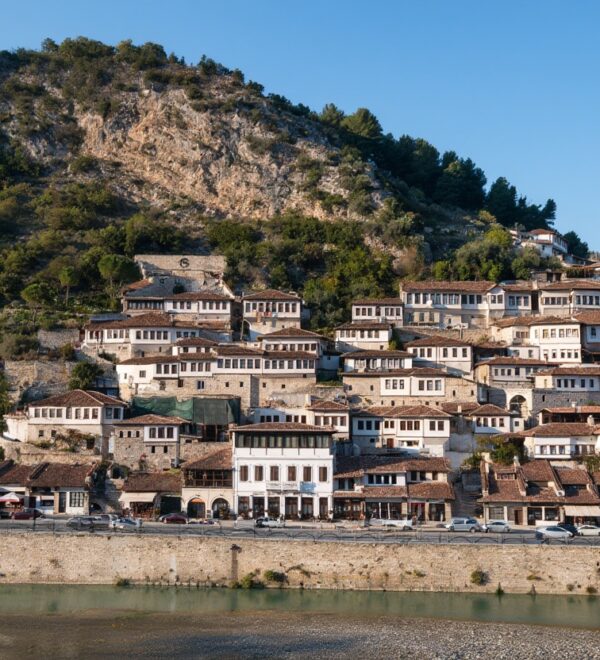
Gjirokaster and Berat: In the Ottoman cities of the south, the qaxe takes on a different character — quieter, older buildings, the specific weight of a place that’s been doing this for centuries. Coffee in Gjirokaster’s bazaar in the morning before the coaches arrive is the best version of what Albanian coffee culture actually is.
Coffee Culture Outside Tirana: Sarandë, Shkodër, Berat
Albanian coffee culture isn’t exclusive to Tirana — the qaxe is national infrastructure. But the character changes by city.
Sarandë: More touristy, particularly in summer. The coffee is still €1 but the pace of the cafés on the promenade is faster and more transactional than inland. Still good. Not the same.
Shkodër: The northern city has a café culture that’s slightly different from Tirana — more traditional, more male-dominated in the older qaxes, still excellent coffee. The pace here is notably slower than the capital.
Berat and Gjirokaster: The heritage cities are where Albanian coffee culture intersects with Ottoman architecture. Sitting with a kafe turke in the bazaar of Gjirokaster, watching a cat operate on a stone wall, hearing nothing but someone’s wood burner — this is as good as it gets.
The Confession: My First Week in Tirana
When I arrived in Tirana in 2022, I spent my first week doing what I’d done in Leeds — ordering coffee, opening my laptop, getting on with things. The café owner watched this with the expression of someone watching a person eat soup with a fork. Technically functional. Obviously wrong.
The person at the next table eventually said, in good English: “You’re in Albania. Put the laptop away. You can work later.” He was right. I closed the laptop. He ordered two more coffees. We talked for two hours. That was the beginning of understanding what the country is actually like.
Albania rewards people who slow down. The coffee culture is the mechanism by which this is enforced. Go with it.
FAQ: Albanian Coffee Culture
- What kind of coffee do Albanians drink?
- Primarily espresso — straight shot or macchiato (espresso with a small amount of milk). Turkish coffee (kafe turke) is the older tradition and still widely available. Iced coffee is common in summer. Cappuccinos and lattes exist but are not the default Albanian order. The macchiato is the right starting point if you want to drink what locals drink.
- How much does coffee cost in Albania?
- An espresso or macchiato costs approximately 80–100 ALL (~€0.75–1 / ~£0.70–0.90). Iced coffee is 150–200 ALL (~€1.40–1.90). This makes Albanian coffee among the cheapest quality café coffee in Europe — and the quality in a traditional qaxe is excellent. There is no tourist premium; locals pay the same price.
- What is a qaxe in Albania?
- A qaxe (say: CHA-zeh) is an Albanian café — functionally similar to a European café but with specific cultural rules around pace, social purpose, and how coffee is consumed. The qaxe is not a co-working space or a quick-service coffee shop; it’s a destination for conversation and time. Most traditional qaxes don’t do takeaway cups. You sit, you drink, you stay as long as you like.
- Can I bring my laptop to a café in Albania?
- In modern third-wave coffee shops in Tirana’s Blloku district and around Rruga Myslym Shyri, yes — these are designed with that in mind. In a traditional qaxe, it’s technically allowed but culturally reads as missing the point. If you need to work, the modern coffee bars are your option. If you want to understand Albanian coffee culture, leave the laptop at the accommodation.
- What is Albanian Turkish coffee?
- Kafe turke (Turkish coffee) is finely ground coffee brewed in a small copper pot (xhezve) with water and sometimes sugar, then poured directly into the cup — grounds and all. You drink it slowly as the grounds settle. It’s richer, thicker, and more bitter than espresso, with a warm depth that grows on you. Still found in traditional qaxes throughout Albania, especially in the southern Ottoman cities of Gjirokaster and Berat.
- What time do Albanians drink coffee?
- Morning and afternoon. Albanian qaxes typically open from 7–8am and are busiest in the morning and late afternoon (4–7pm). Many close or reduce service during the midday heat (1–3pm) — a split-hours pattern that catches visitors out. Coffee is rarely drunk as a standalone activity after dinner. The evening café session is more likely to involve beer or raki.
Coffee and Business in Albania: How Deals Actually Happen
One thing that surprises visitors doing business in Albania: a significant portion of professional relationships are maintained over coffee rather than in offices. This is not an informal aside — it’s a structural fact about how the economy functions. The qaxe is where introductions happen, where trust is established, and where follow-up happens after a formal meeting.
If an Albanian business contact suggests “we should have a coffee,” this is a genuine signal of interest and a mechanism for the relationship to develop. Accept it. Show up on time (which in Tirana means 5–10 minutes late — on the dot is slightly eager). Order coffee. Don’t rush. The meeting is the coffee.
This applies in the south as well as Tirana, and in smaller towns even more so. In Berat and Gjirokaster, the qaxe is the de facto meeting room for everyone from local traders to property owners to municipal officials. If you’re navigating anything in Albania that requires local knowledge, a coffee with the right person is worth more than a day of independent research.
The Third Wave: Tirana’s Modern Coffee Scene
Alongside the traditional qaxe, Tirana has developed a third-wave coffee scene in the last five years — cafés that source specialty beans, use precision brewing equipment, and care about the coffee itself rather than just the ritual around it. This is recent. In 2022 when I arrived, it barely existed. In 2026, it’s an established part of the city’s café landscape.
The modern coffee shops concentrate around Blloku and the area south of Skanderbeg Square. They have pour-overs, aeropress options, and in some cases single-origin espresso. They also have significantly higher prices — 200–350 ALL (~€1.85–3.25) for a specialty coffee — and the laptop-open, headphones-in culture that defines this type of café globally.
My honest take: the traditional qaxe makes better coffee for the context. The slow-brewed kafe turke or a well-pulled macchiato at a neighbourhood qaxe is more interesting than a technically proficient pour-over consumed alone with a laptop. Both exist. The third-wave scene is genuinely good; it’s just not the Albanian coffee experience. Go to both, in that order.
How Much You’ll Spend on Coffee in Albania
Albanian coffee is among the cheapest quality café coffee in Europe. The price has been remarkably stable over the years I’ve been here — the espresso that cost 90 ALL in 2022 costs 90–100 ALL in 2026. Inflation has hit other parts of the Albanian economy; the espresso at the qaxe has held.
A typical morning coffee session — one espresso or macchiato, 30–45 minutes at a table, possibly a second — costs 150–200 ALL total (~€1.40–1.85 / ~£1.25–1.65). That includes no service charge, because there isn’t one in a traditional qaxe. Tipping is informal: if you’re a regular, you round up. If you’re a one-time visitor, you round up or you don’t. Nobody is keeping score in a way that affects your service.
The most you’ll pay for coffee in Albania is at the airport and at the most tourist-facing bars on the waterfront in Sarandë — 200–300 ALL (~€1.85–2.80) for a macchiato. Still cheaper than most European city airports by a significant margin.
For context: a coffee with a friend in a central Tirana qaxe for two people — two macchiatos, two glasses of water, 45 minutes at a table — costs approximately 200–250 ALL total. That’s under £2.30 for two people. You will spend more than this on a single coffee in any major Western European city. This is the Albanian coffee value proposition and it is correct.
Coffee and Raki: The Full Drink Culture Picture
Albanian drink culture has two anchors: coffee and raki. They’re served at different times of day and mean different things socially, but understanding both gives you the complete picture.
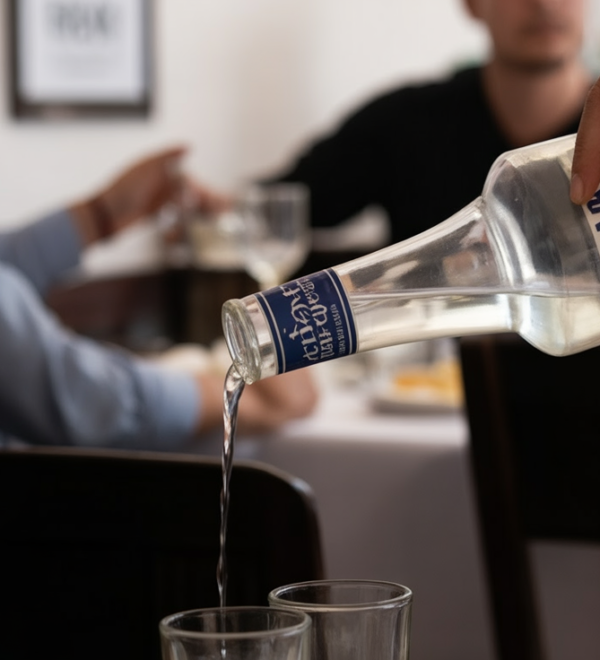
Coffee is morning and afternoon — the daytime social lubricant, the mechanism for keeping relationships warm, the reason people leave their houses before 9am. Raki (the homemade grape or mulberry brandy) is the evening equivalent — poured at family gatherings, offered to guests, consumed at a pace that mirrors the coffee ritual in its deliberateness.
The overlap point: in southern Albania particularly (Gjirokaster, Permet, rural areas), coffee is sometimes accompanied by a small glass of raki in the late morning. This is not a sign of a problem. It’s the oldest form of Albanian hospitality — the two-part welcome. At Besnik’s qaxe, on a Thursday morning once a year, there’s a small bottle of home raki that appears alongside the coffee without explanation. I’ve learned to simply accept this as correct behaviour for the situation. You should too.
For the full raki picture: Albanian Raki: The National Drink Guide.
What to Order on Your First Visit: A Practical Guide
Right, so you’ve sat down at a qaxe and the owner is looking at you. Here’s what to say.
If you want what everyone else is having: “Një macchiato, ju lutem.” (nyuh mah-kya-TO, yoo LOO-tem.) One macchiato, please. The owner nods. In thirty seconds a small cup appears. Drink it slowly. Don’t add sugar unless you see locals adding sugar, which most don’t. Put your phone down for five minutes.
If you want Turkish coffee: “Një kafe turke, ju lutem.” (nyuh KAH-feh TOOR-keh.) Give it three minutes to settle before you drink it. The grounds come with the coffee — don’t drink the last centimetre or you’ll get a mouthful of mud. This is a universally known fact that some people discover the hard way.
If you want iced coffee in summer: “Kafe ftohtë” (KAH-feh FTO-hteh). Points to you for attempting the pronunciation. The owner will probably nod approvingly.
The price: when the coffee arrives, you don’t pay immediately. In a traditional Albanian qaxe, you pay when you leave, not when it arrives. Calling for the bill: “Llogarinë, ju lutem” (lloh-ga-REE-neh, yoo LOO-tem) — though usually just catching the owner’s eye and making a writing gesture will do the job.
The Albanian Coffee Experience Outside of Tirana: What Changes
The coffee culture is consistent across Albania in the ways that matter — the macchiato stays €1, the qaxe stays unhurried, and nobody will try to sell you a sleeve for your cup. But the texture of the experience shifts by city.
In Shkodër, the café culture leans more traditional and slightly more male-dominated in the older establishments near the bazaar. The pace is noticeably slower than Tirana — people seem to be sitting longer, the conversations running deeper. The coffee tastes the same. The rhythm is different.
In Vlorë, the port city at the top of the Riviera, the qaxe scene on the main boulevard has an afternoon culture that peaks around 5–7pm and involves the whole city walking and stopping for coffee simultaneously. The xhiro (evening stroll) and the coffee break are intertwined here in a way specific to Albanian coastal cities.
In the mountain guesthouses of Valbona and Theth, coffee is simpler — usually instant or a basic espresso machine — but it arrives alongside raki in the morning, which is its own kind of Albanian hospitality. The coffee ritual in the north is more functional than ceremonial; what replaces it is the dinner table and the raki poured before the meal. Different mechanism, same social function.
The best coffee I’ve had outside Tirana was in Gjirokaster, at a qaxe in the old bazaar at 8am when the shutters were just coming up. A kafe turke, a cat on the windowsill, and the castle above me catching early light. Besnik’s macchiato is better as a regular habit. The Gjirokaster version wins on atmosphere.
The Bottom Line on Albanian Coffee
Albanian coffee culture is the best €1 available in Europe and the most genuine introduction to how the country actually functions socially. The qaxe is where business gets done, relationships are maintained, and time is spent with the weight it deserves. The slowness is not inefficiency — it’s a cultural value that’s been refined over generations of Ottoman café culture, communist-era restriction, and post-1991 opening. What survived all of that is a relationship with coffee and conversation that most of the world has traded for convenience, and Albania hasn’t. Come here, sit down, and remember what a macchiato can do when you give it an hour instead of seven minutes.
If you take one habit from a visit to Albania, take this: find a qaxe, order a macchiato, and sit with it until you’ve finished having the conversation you’re having. Don’t rush. The country is still there when you’re done. And if Besnik is working that morning — corner of Rruga Sami Frashëri, the qaxe with the blue awning — tell him Marcus says hello. He’ll make you a good macchiato. He always does. Four years and counting, and I still don’t know how he gets the foam right every single time without asking what I want.
For what to do while you’re sitting there in Tirana: Things to Do in Tirana. For the raki side of Albanian drink culture: Albanian Raki: The National Drink Guide.