Last updated: June 2026 — prices and logistics verified June 2026.
I’ve lived in Tirana for four years. I’ve done both cities a dozen times each, at different times of year and with different groups of people. The “Berat or Gjirokaster?” question comes up constantly and the correct answer is usually “both” but rarely gets received as such. Here’s the honest version of the comparison.
The Quick Verdict by Trip Type
Before the detail: the practical answer for different situations.
The Case for Berat
Berat is easier. That’s not a criticism. It means the terrain is gentler, the layout is more compact, and a visitor without specific local knowledge can navigate it in a day without the navigational confusion that Gjirokaster’s steep stone lanes tend to produce.
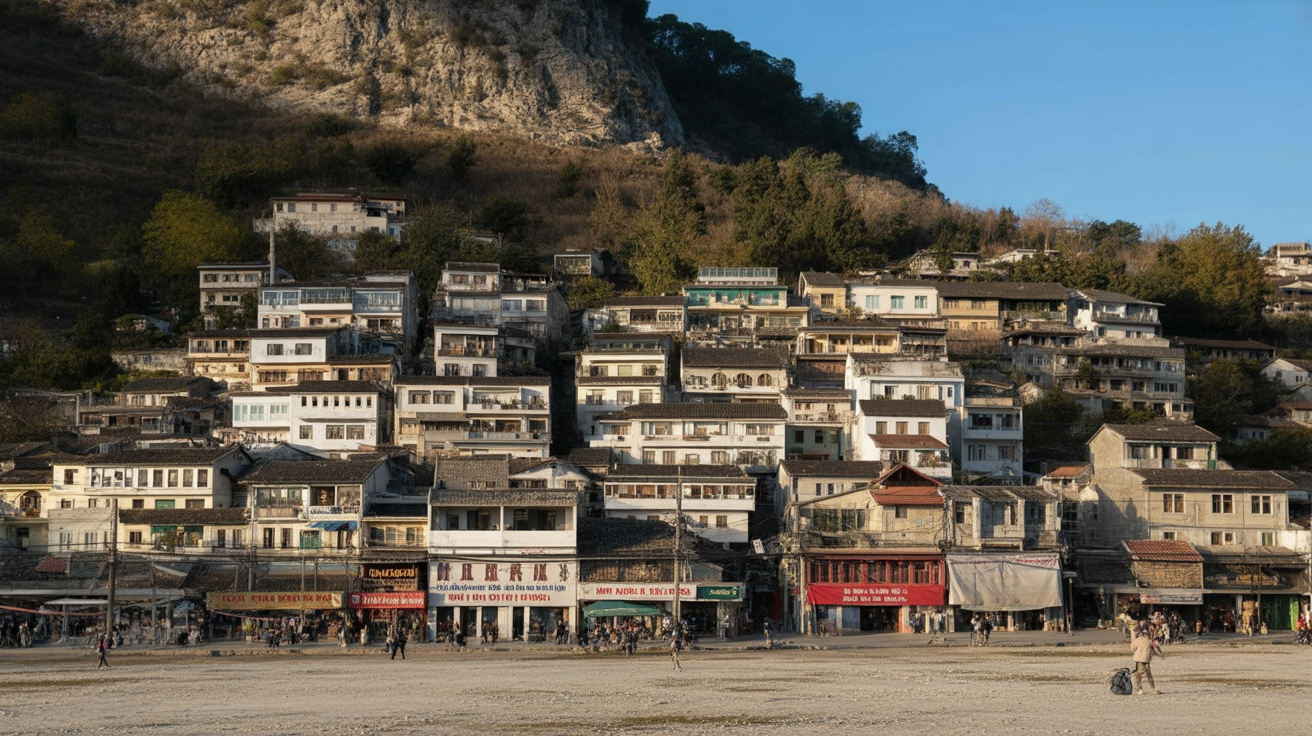
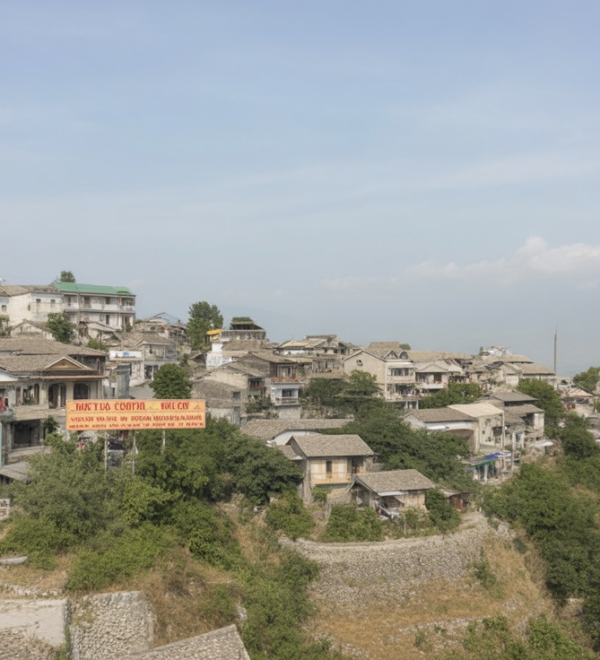
The “City of a Thousand Windows” label refers to the Ottoman houses in the Mangalem quarter — large windows facing the hill, stacked up the terraced slope, creating the distinctive visual that every Albania travel photograph uses. It’s real, and it’s better in person than in photographs. The stone is warm by 7am and the morning light through the Osum valley is worth the early start.
Berat has three distinct areas: Mangalem (the Muslim Ottoman quarter with the famous windows), Gorica (the Christian quarter across the river), and Kalaja (the castle area at the top, still inhabited). All three are accessible from the town centre. The terrain between them involves climbing, but less of the sheer-drop cobblestoned alleys that Gjirokaster specialises in.
The Onufri Museum inside the castle — 16th-century Albanian icon paintings, UNESCO-significant, housed in a Byzantine church — is genuinely excellent and not something Gjirokaster can match. For the full Berat breakdown: Berat Travel Guide.
Berat’s advantages in summary: closer to Tirana (120km, ~2h bus), easier terrain, the Onufri Museum, the famous window-lined Mangalem quarter, and a river walk that gives the city a relaxed character Gjirokaster doesn’t have.
⚠Real Talk
One TripAdvisor commenter wrote “Berat was very, very okay, and Gjirokaster was fabulous.” This is the opinion of someone who probably arrived in Berat on a hot afternoon, walked the main street, photographed the windows, and left. Berat requires an overnight — the early morning version of the castle and the Mangalem quarter is genuinely excellent. The three-hour version is, yes, “very, very okay.” Budget two nights.
The Case for Gjirokaster
Gjirokaster is more dramatic. Every stone in the city was cut and laid by hand, including the roofs — this is an all-stone city that took centuries to build on a steep hillside and still looks like it could be taking centuries more. The castle sits at 320 metres above sea level and the old bazaar drops below it in a series of steep lanes that require either good shoes or very short steps.
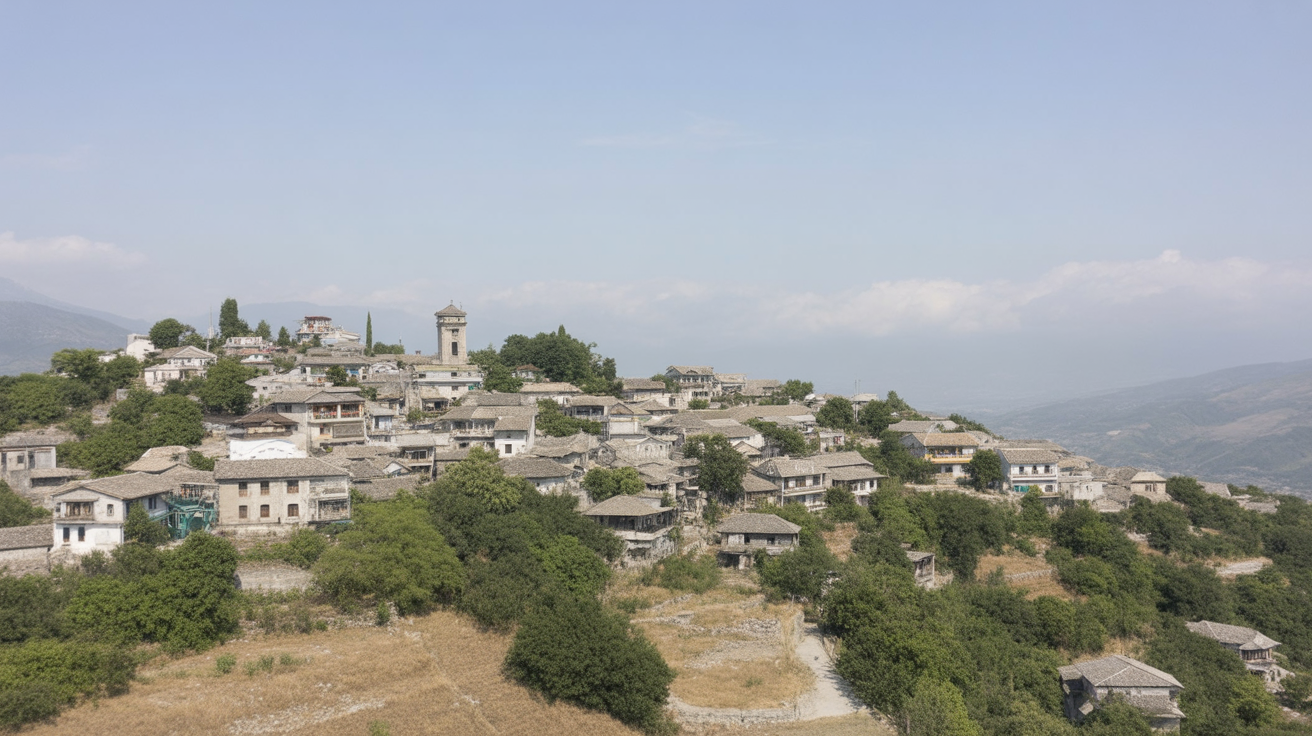
The castle is the main attraction and it’s better than most Albanian fortresses — a functioning citadel that’s partly ruined, partly museum, with Albanian military equipment (including a captured American spy plane from the Cold War era) in the courtyard and views over the valley that extend 30km on a clear day. Entry: 700 ALL (~€6.50 / ~£5.50).
Gjirokaster also has:
The old bazaar: A 18th-century covered bazaar on the main street below the castle — still functioning, less touristy than the main square. The cheese shop halfway through the bazaar sells local white cheese that costs 200 ALL (~€1.85) per 100g and is worth carrying in a bag for lunch.
The Zekate House: An 18th-century Ottoman mansion preserved as a museum. Two floors, original furniture, the kind of carved wooden ceilings that take several minutes to understand. Entry: 300 ALL (~€2.80). One of the best individual houses in Albania.
The food: Gjirokaster benefits from its proximity to the Greek border (40km) — the cuisine has a Greek-Albanian fusion character that produces better lamb dishes, more olive oil, and a restaurant quality that’s above what you’d find in Berat’s equivalent price bracket. Budget 1,000–1,500 ALL (~€9.25–13.90) for a proper dinner with a carafe of house wine.
The Cold War bunker: Below the castle, the tunnels of the former communist-era munitions depot are open as a museum. Slightly chaotic, genuinely interesting, gives context for how seriously Enver Hoxha took the idea that Albania was about to be invaded. Entry included with the castle ticket.
Gjirokaster’s advantages in summary: more dramatic visual setting, better food, the Zekate House, a stronger sense of historic depth, and a position on the route south that makes it the natural stop between Tirana/Berat and the Albanian Riviera. If you’re crossing into Albania from Greece via the Kakavija border crossing — which thousands of travellers do in summer — Gjirokaster is the first city you should stop at, and it earns that first impression.
•MARCUS’S PICK
Gjirokaster in the early morning — before the tour coaches from Saranda arrive at around 10am — is quieter than you’d expect for a UNESCO city. The old bazaar at 8am, the smell of bread from the bakery at the bottom of the castle hill, the sound of nothing much happening yet. Then the castle gates open at 9am and you have it largely to yourself for an hour. This is the version worth waking up for.
Getting Between Berat and Gjirokaster
There is no direct bus between Berat and Gjirokaster. You go via Fier, on the coast road.
Berat → Fier: bus, ~1 hour, around 300 ALL (~€2.80). Buses run regularly through the morning.
Fier → Gjirokaster: bus, ~3 hours, around 500 ALL (~€4.65). Buses are less frequent — morning services only in many cases. Check when you arrive in Fier.
Total: ~4 hours and around 800 ALL (~€7.40 / ~£6.30). Entirely doable in a morning, arriving in Gjirokaster by early afternoon if you leave Berat by 8am.
By hire car: SH73 from Berat south to Fier, then the SH4 south to Gjirokaster. About 3.5 hours. The road through the Muzina Pass (before Gjirokaster) gives the first view of the castle from the valley — this is the approach that makes the dramatic entrance. Watch for the junction where the old road splits from the new — follow the SH4 unless you want to add 45 minutes on a mountain route.
From Tirana to Gjirokaster directly: bus, ~5 hours, around 700 ALL (~€6.50). Leaves from the South Bus Terminal in Tirana. Worth the longer journey to go directly if Gjirokaster is your first Albanian heritage city stop.
Day Trips from Each City: What’s Within Range
Both cities work as bases for day trips, but in different directions and for different things.
Day trips from Berat:
Bogovë Waterfall (34km northeast): the easiest and best day trip from Berat — a slow mountain drive to a 25-metre waterfall in a limestone gorge, turquoise water, completely worth the drive. The road deteriorates after about 20km and requires patience; a regular car handles it if you’re not in a hurry. Allow a full day including the drive. Morning bus toward Çorovodë stops at Bogovë if you’re not driving.
Apollonia (45km northwest toward Fier): the ruins of an ancient Greek city — one of the most significant archaeological sites in Albania, founded in 588 BC by Greek colonists and later a major Roman settlement. Julius Caesar mentions it in his writings. Entry: 500 ALL (~€4.65). Well-maintained site, mostly outdoor, takes about 2 hours. Combine with a stop in Fier for lunch.
Permet (80km southeast): a small town on the Vjosa River, known for its syrup liqueur (gliko), the warm springs at Bënja, and access to the Osumi Canyon. A longer day trip — allow 4 hours of driving total — but Permet on a quiet weekday is one of the least-visited gems in southern Albania. The market on Saturday mornings is the kind of thing that shows up on food photography accounts three years later.
Day trips from Gjirokaster:
Saranda and Ksamil (90km south): a full day to the Albanian Riviera — Saranda’s Blue Eye Spring (Syri i Kaltër), the Butrint UNESCO archaeological site, and Ksamil beach in early June when it’s still manageable. This is the natural southward extension from Gjirokaster and the reason most people use Gjirokaster as a stopping point rather than a destination. Allow a full day; Butrint alone takes 2 hours.
Blue Eye Spring (Syri i Kaltër, 20km southwest): Albania’s most famous natural spring — a deep karst pool where the water is a specific shade of blue that doesn’t photograph correctly, surrounded by a nature reserve. Entry: 100 ALL (~€0.93). Takes about an hour to see properly. Easily combined with a Gjirokaster day, leaving mid-morning.
Mesopotam Monastery and Labova e Kryqit (30km northwest): a Byzantine monastery and one of the oldest churches in Albania — a 6th-century church built by Justinian’s wife, still standing and still used. The road is rough but passable. Worth the detour for anyone interested in Byzantine architecture who has exhausted the castle and the Zekate House.
Accommodation: What to Expect in Each City
Neither city has a large accommodation market, and both book out in advance during July–August. The good guesthouses in both cities are family-run, typically include breakfast, and have owners with strong opinions about the local restaurants — opinions worth soliciting.
In Berat: Budget guesthouses: 2,000–3,500 ALL/night (~€18.50–32.40). Mid-range: 4,000–6,500 ALL/night (~€37–60). The Mangalem and Gorica districts have the best options for location — you want to be walking distance from the Onufri Museum and the river bridge. The guesthouses inside Kalaja (the castle) are atmospheric but isolated for evening dining. Book 2–3 weeks ahead in July–August.
In Gjirokaster: Budget: 1,500–2,500 ALL/night (~€13.90–23.15). Mid-range: 3,000–5,000 ALL/night (~€27.75–46.25). Stone City Hostel consistently ranks highly for budget travellers and offers local tour connections. Hotel Kalemi is the most-cited mid-range option — an Ottoman-era building converted to a guesthouse, in the old bazaar. Book 3–4 weeks ahead in summer; Gjirokaster has fewer beds than Berat relative to visitor numbers.
Both cities see a 30–50% accommodation price increase in the peak of July–August. Shoulder season (May–June, September–October) is when the prices reflect actual market value. For the full Albania budget picture: Albania Budget Per Day.
The Confession: What I Got Wrong in Gjirokaster
I drove to the wrong entrance of Gjirokaster castle and added 40 minutes and a genuinely embarrassing three-point turn on a cobbled lane to what should have been a straightforward morning visit.
The correct entrance to Gjirokaster castle is on the north side, accessed from the main road above the old bazaar. This is obvious when you know it. It is not obvious from Google Maps, which routes you through the old bazaar to a southern approach that involves a lane barely wide enough for a 2006 Dacia and a very sharp left turn that I managed incorrectly twice.
The castle entrance: from the main bazaar street, follow the road uphill toward the north — the castle gate is on the road that runs along the top of the old town. Walk up from the bazaar square and follow the signs. Don’t follow Google Maps to the letter, and don’t take a car past the bazaar unless you’re comfortable reversing on cobblestones.
Which to Visit If You Can Only Do One
If you have one week in Albania based in Tirana: go to Berat. It’s 2 hours closer, requires less travel logistics, and gives you the most distinctive Albanian Ottoman city experience — the windows, the castle, the river — without using three days of your limited time on the road.
If you’re doing a longer Albania trip that includes the Riviera: go to Gjirokaster first (stopping there on the way south from Tirana or on the way back from Saranda), then add Berat on a separate trip from Tirana or as a stop on the way north. The two cities sit on different routes — Gjirokaster is on the road south to Saranda, Berat is the road south to the central lowlands — and trying to include both on the same southern route adds significant backtracking.
If you’re genuinely limited to one day: Gjirokaster is marginally more rewarding for a day visit because the castle, the Zekate House, and the old bazaar fill a day at a natural pace. Berat in one day is rushed — the Berat guide makes the case for two nights minimum, and that case is correct.
FAQ: Berat vs Gjirokaster
- Which is better — Berat or Gjirokaster?
- They’re different rather than one being better. Berat is more relaxed, easier terrain, the distinctive Ottoman windows, the Onufri Museum. Gjirokaster is more dramatic visually, steeper, better food, better castle. If forced to choose for a first Albania trip based in Tirana: Berat (closer, easier). If heading south toward the Riviera: Gjirokaster (natural position on the route). Ten days or more: both.
- How far is Berat from Gjirokaster?
- About 120km by road via Fier — approximately 3.5 hours by hire car or 4 hours by public bus (with a change in Fier). There’s no direct bus service between the two cities. By car, the route goes Berat → SH73 south to Fier → SH4 south through the Muzina Pass to Gjirokaster. The pass approach gives the best first view of the Gjirokaster castle.
- Can you visit both Berat and Gjirokaster in one day?
- Technically possible with a hire car and an early start; comfortably, no. You’d have 3–4 hours at each city after accounting for the 3.5-hour drive between them. Neither gets enough time at that pace. Two days — one night at each — is the correct minimum. If you’re on a tight schedule, pick one and give it a proper visit rather than rushing through both.
- Is Gjirokaster worth visiting?
- Yes — more than most Albania guides suggest. The castle is genuinely impressive, the Zekate House is one of the best-preserved Ottoman mansions in the Balkans, the food scene is better than you’d expect, and the visual drama of the stone city on the hillside is unlike anything else in Albania. Two nights minimum, castle in the morning, bazaar in the afternoon, good lamb for dinner.
- Which is closer to Tirana — Berat or Gjirokaster?
- Berat: 120km south of Tirana, about 2 hours by bus (400 ALL, ~€3.70). Gjirokaster: 230km south of Tirana, about 5 hours by bus (700 ALL, ~€6.50). If you’re based in Tirana on a short trip, Berat is the practical choice. Gjirokaster makes more sense as part of a southern Albania loop that includes the Riviera.
- Is Berat or Gjirokaster better for families with children?
- Berat — significantly easier terrain for children and anyone who finds steep cobblestones difficult. Gjirokaster’s streets are sharply graded and the old city is genuinely exhausting for anyone not used to hillside walking. The Berat castle walk is also long but more gradual. If you’re visiting with young children or reduced mobility, Berat is the clear choice between the two.
The Honest Conclusion
Both cities are worth it. They’re different enough that visiting both doesn’t feel repetitive — Berat gives you one thing, Gjirokaster gives you another, and the four hours of bus between them is not the obstacle it sounds like once you’re already in southern Albania.
If your time is genuinely limited: Berat first, Gjirokaster on a return visit. If your time isn’t limited: build a southern Albania route that takes in both, and give each at least two nights.
The worst outcome is rushing through one to tick it off. The second-worst outcome is skipping Gjirokaster entirely because it’s further away. It’s worth the extra hours on the bus. The stone city at 8am with the castle catching the first light is the kind of thing that doesn’t photograph and doesn’t leave.
If you’re building a 10-day Albania itinerary and want a structure that includes both cities without unnecessary backtracking: Tirana (2 nights) → Berat (2 nights) → Gjirokaster (2 nights) → Saranda/Riviera (2–3 nights) → back to Tirana. This is the southern loop that most independent travellers settle on, and it puts Berat and Gjirokaster in the correct sequence — closer city first, further city as part of the southward progress.
Or: Tirana (2 nights) → Valbona/North (2–3 nights) → Tirana → Berat (2 nights) → Gjirokaster (2 nights) → Saranda (2 nights) → fly out from Saranda or return to Tirana. This is the 14-day version that gives you north and south without repeating ground. The north is covered in the Valbona Valley guide and the southern Riviera planning is in the best time to visit guide which covers the seasonal differences between coast and mountains. Questions below — I check comments most days.