Last updated: June 2026 — information verified June 2026.
Besnik, who runs the qaxe (say: CHA-zeh — café) on the corner of Rruga Sami Frashëri where I’ve had my morning coffee for four years, poured me raki one Tuesday at 10am without asking. He just put it on the table. That’s how you know you’ve been coming long enough. It cost nothing. I drank it. This is Albania.
What Albanian Raki Actually Is
Raki is a fruit spirit — distilled from fermented fruit, no sugar added in the traditional production, no herbs, no anise. The word comes from the Arabic “araqi” via Ottoman Turkish, and versions of it exist across the Balkans and the Middle East. Albanian raki is the unflavoured, fruit-forward version: what you’re tasting is the fermented fruit itself, concentrated through distillation.
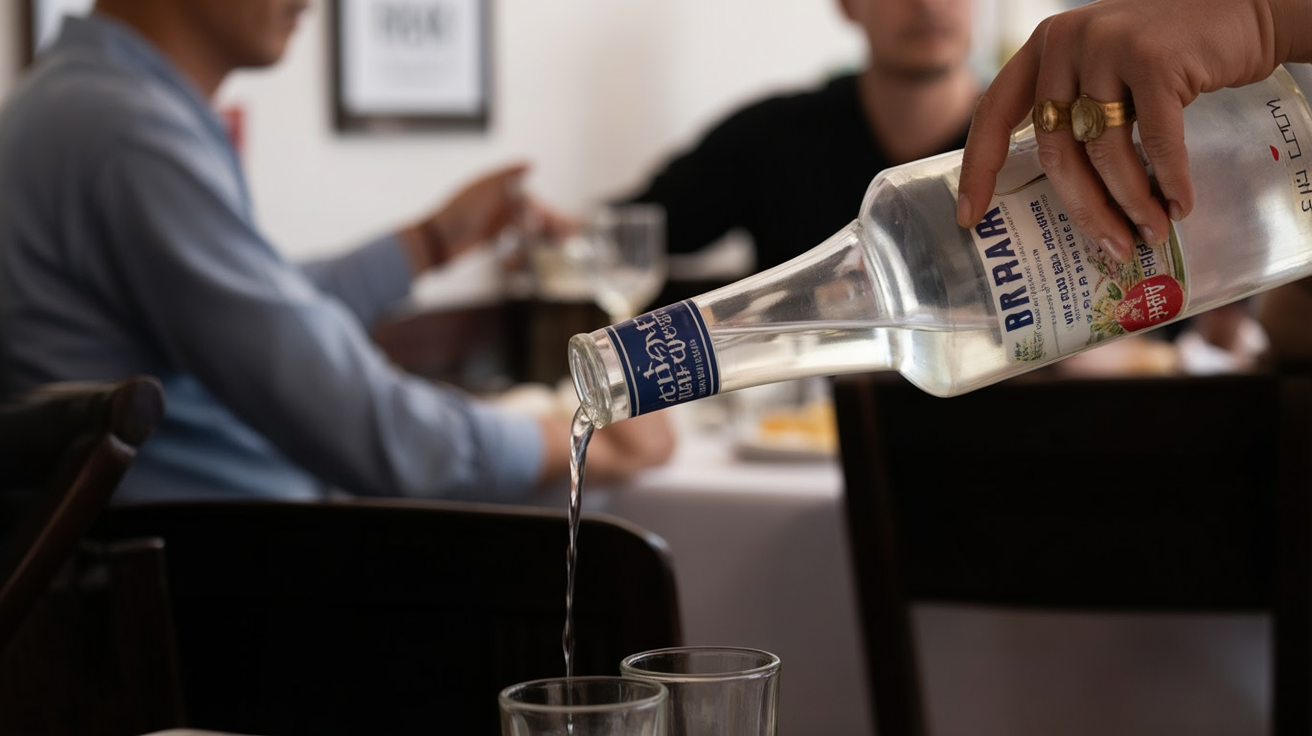
The most common base is grape — specifically the skins and pulp left over from winemaking (this version is called grosha raki, the rough equivalent of Italian grappa). It’s the default. When someone offers you “raki,” this is what they mean unless they specify otherwise.
Alcohol content: officially 40–45% ABV for commercial versions; homemade frequently runs higher, sometimes considerably. If someone’s uncle made it in the mountains and it’s in an unlabelled bottle, approach the second glass with more caution than the first.
⚠Real Talk
Albanian raki is not the same as Turkish rakı. Turkish rakı is anise-flavoured and turns milky white when you add water — the famous “lion’s milk” effect. Albanian raki is clear, unflavoured, and turns into a social obligation when someone offers it to you. Confusing the two is the kind of mistake you only make once.
The Varieties: What You’ll Actually Encounter
Grape raki is the baseline. Everything else is regional and seasonal.
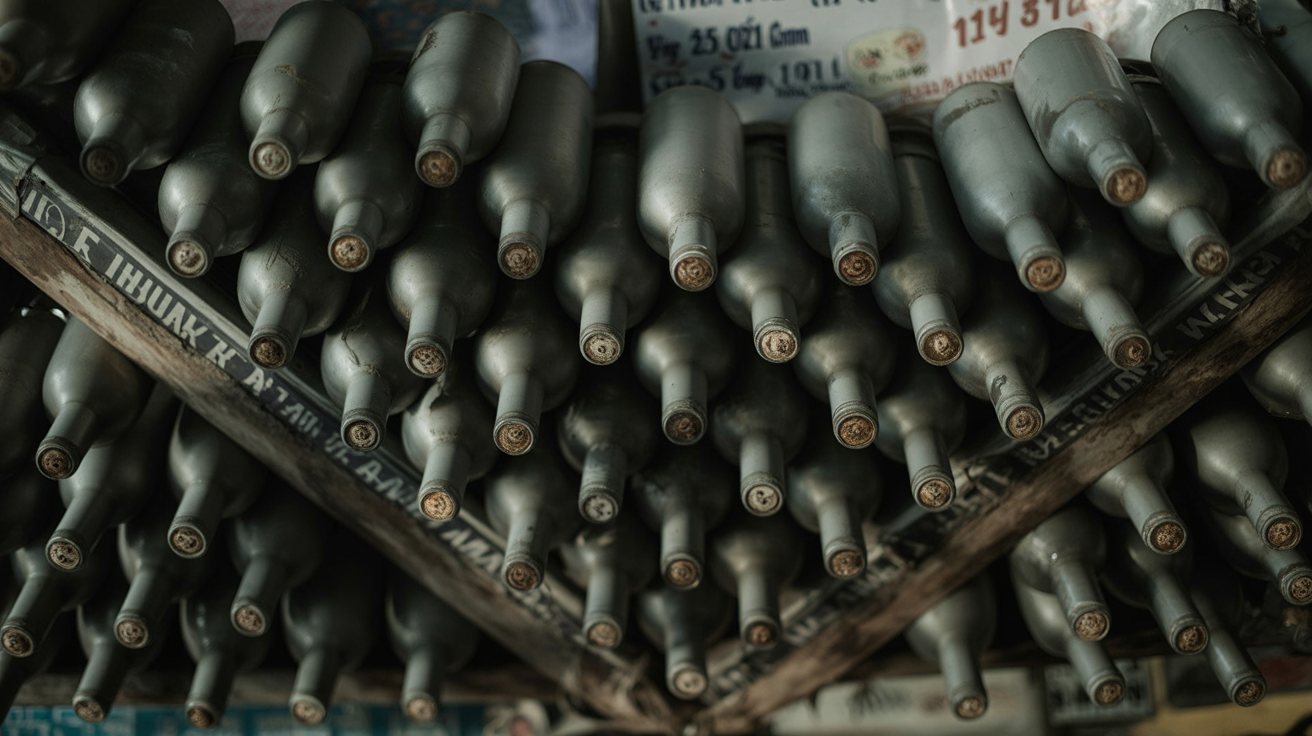
Raki rrushi (grape raki): The standard. Made from the pomace — the solid remains after pressing grapes for wine. Distilled twice for the better versions. This is what fills most unlabelled bottles in Albanian homes.
Raki kumbullë (plum raki): The second most common. Richer and slightly sweeter than grape, with a distinct plum character in the better versions. Common in the areas around Elbasan and the central highlands. This is the one that tends to sneak up on you — the fruit softens the initial hit and makes the second glass seem more reasonable than it is.
Raki dude (mulberry raki): Rarer, seasonal, and the most distinctive of the three. Mulberry raki has a deep, almost jammy quality that sets it apart from grape versions. Found mainly in southern Albania and the Berat region. Worth seeking out specifically if you come across it — it won’t be on a menu.
Raki fiku (fig raki): Even rarer. Produced in small quantities in the Vlora and Riviera regions where fig trees are abundant. Fragrant, unusual, and not the raki you’ll encounter by default anywhere.
Mountain raki from the north: The Valbona Valley and the Albanian Alps produce a rougher, higher-ABV raki made from whatever fruit grows there — mostly grape and berry mixes. Less refined than lowland versions, considerably more memorable. I had one glass of Valbona mountain raki at a guesthouse near Valbona that tasted like the forest smelled. The second glass was inadvisable. I had it anyway.
How Albanian Raki Is Made: The Family Tradition
Most Albanian raki is not made in a factory. It’s made in a garden, in a shed, in a basement, or on a hillside — by families who’ve been doing it the same way for generations and see no particular reason to change.
The basic process: harvest the fruit, ferment it in large clay or wooden vessels for several weeks, then distil twice through a copper pot still (called a kazan — say: kah-ZAN) over a wood fire. The first distillation produces a raw spirit at around 20–30% ABV. The second distillation concentrates it to the finished product at 45–55%.
The kazan is the family’s most important piece of equipment. Old kazans are inherited and treated with care. Neighbours share kazans, particularly in villages where not every family owns one. A raki-making day — typically in autumn after the grape harvest, or whenever the plums are ready — is a community event: several families will gather, bring their fermented fruit in turn, distil together, share the first glass from the new batch, and eat something. The social structure of the production is as important as the production itself.
The first glass from a new batch is drunk warm, straight from the still. This is called “raki i nxehtë” (hot raki) and is considered auspicious. It’s not particularly good — it’s rough, impure, high-ABV spirit at around 60°C. It is drunk anyway, because it means the year’s production has started, and that’s worth marking.
Ageing: traditional Albanian raki is not aged in barrels. It’s stored in glass bottles, clay jugs, or whatever clean vessel is available, in a cool cellar. Some families do age in oak barrels — the result is a darker, mellower spirit sometimes called “raki i vjetër” (old raki). This version is rarer and treated with more respect. If someone offers you aged raki from a specific year, they’re showing you something they value.
Raki at Albanian Occasions: When It Appears and Why
Raki is not just a drink. It’s a marker. Understanding when it appears tells you a great deal about what an occasion means.
Hospitality upon arrival: The standard welcome drink in an Albanian home, particularly in rural areas, is raki. Before coffee, before water, before food. Refusing it here is the equivalent of refusing a handshake — technically possible, but it changes the room. A guest who accepts the welcome raki has accepted the host’s hospitality, which in Albanian culture is a meaningful exchange.
Weddings: Albanian weddings involve significant raki consumption over multiple days. The bride’s family and the groom’s family each produce their own for the occasion, and the quality of each family’s raki is quietly discussed by guests who’ve been attending Albanian weddings long enough to have an opinion. This is taken seriously. The groom’s mother’s raki at a northern Albanian wedding I attended in 2024 was the finest thing I drank all year — mulberry, three years in the making, served only to people the family had decided deserved it.
Funerals and memorials: Raki appears at Albanian funerals and at the forty-day memorial following a death. This use is solemn rather than celebratory — the shared drink acknowledges the community’s shared loss. It’s not drunk heavily. It’s drunk slowly, with the conversation it requires.
Business occasions: Meeting an Albanian counterpart for the first time, in a formal business context, often involves an offer of raki before discussion begins. This is not about getting anyone drunk. It’s about establishing that you’re willing to share something personal before you share something professional. Accepting puts the conversation on a different footing than refusing.
Morning raki in the mountains: Visitors who spend time in northern Albanian guesthouses — particularly in Berat or the mountains — sometimes encounter morning raki as a matter of course. This is the tradition of taking a small glass before work or before the day’s first meal. It’s a stomach-settler, a social ritual, and a reminder that the guesthouses in rural Albania operate on their own timetable. Go with it.
Homemade vs Commercial: Which to Drink
Homemade. Always homemade, when the option exists.
This is not anti-commercial snobbery. It’s a factual observation from four years of comparing them: the best Albanian raki is made by families who’ve been refining their family recipe across generations, using fruit from their own orchards, distilling in small batches. The commercial versions — Skënderbeu is the most widely available brand, appearing in every supermarket and many bars — are consistent, drinkable, and missing whatever it is that makes homemade raki worth travelling for.
Skënderbeu commercial raki runs about 800–1,500 ALL (~€7.40–13.90 / ~£6.30–11.80) for a 0.5 or 0.7 litre bottle in supermarkets. A glass in a bar is 200–350 ALL (~€1.85–3.25). These are fine. They’re not the point.
The point is the unlabelled bottle that Besnik keeps under the counter that his brother made in Peshkopi. The point is the guesthouse owner in Theth who pours you a glass before dinner and watches to see if you understand what you’re drinking. The point is accepting homemade raki when it’s offered — which brings us to the etiquette.
•MARCUS’S PICK
If you’re doing a structured raki introduction: the tasting experience in Tirana at IN ALB (on Rruga Ibrahim Rugova near Blloku district) runs about €20–35 per person for seven different rakis with traditional meze. Good starting point if you want to taste the range before deciding what you like. A Viator review described it accurately: “Fun evening tasting raki in cool bar. Seven raki samples with a small plate of mezze.” It’s a sensible way to understand the spectrum before you start accepting whatever’s in the unlabelled bottles.
How to Drink Raki: The Actual Rules
Not a shot. Not a mixer. Not with ice. Not knocked back.
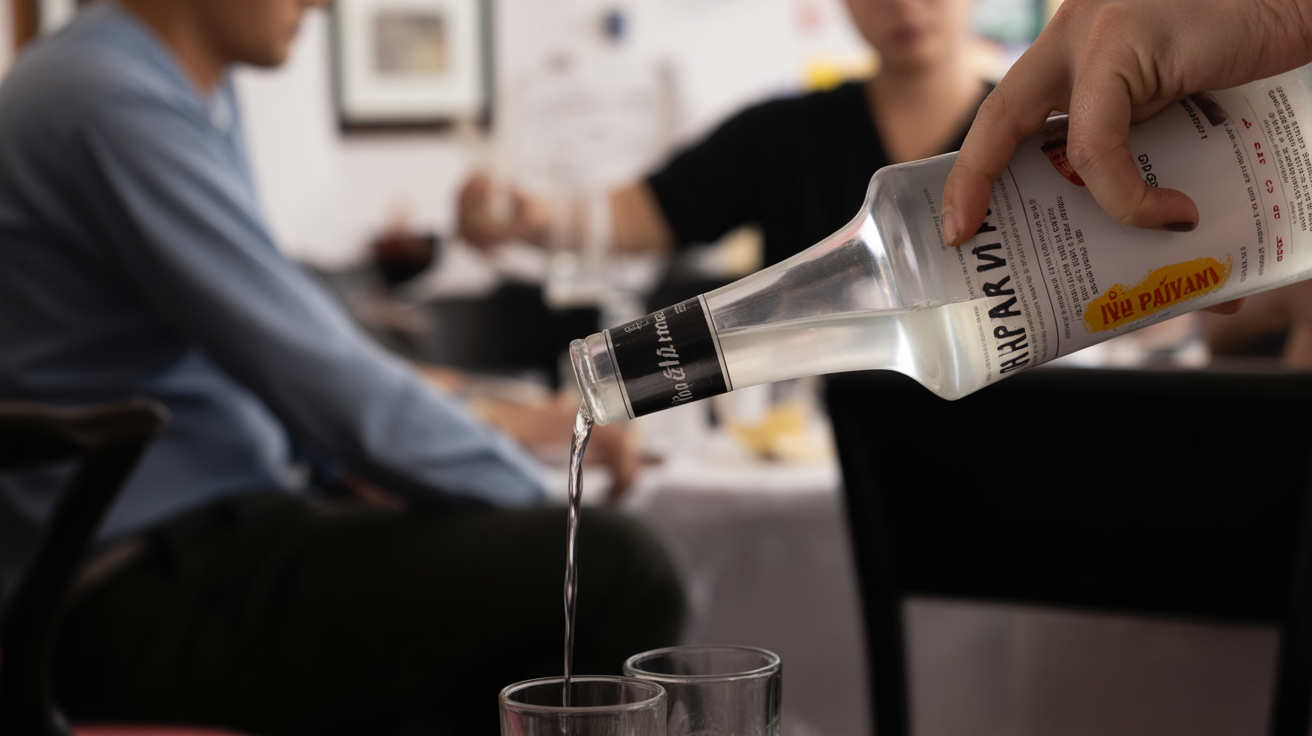
Raki is served at room temperature in a small glass — typically 25–50ml. You sip it. You’re not racing to finish it. You’re not adding anything to it. The correct pace is determined by the conversation you’re having while drinking it.
The toast is “Gëzuar!” (say: GUH-zu-ar — cheers). You make eye contact when you clink glasses. Both of these matter more than you’d think, and failing to make eye contact will get you gently corrected by an Albanian of any age.
Raki is typically accompanied by food — meze (small plates), bread, olives, pickled vegetables. In a traditional setting, you don’t drink raki alone without something to eat alongside it. The food isn’t optional; it’s part of the pace management.
In villages and mountain guesthouses, morning raki is normal — 9am or 10am, before or with a meal, as a digestif from the night before, as a wake-up, as hospitality. This is not a sign of a problem. It’s a sign that you’re in northern Albania and the day has started. Accept it graciously and sip slowly.
The Culture: Why Raki Is About More Than the Drink
Albanian raki carries two things that make it more than just a spirit: hospitality and trust.
When an Albanian offers you their homemade raki, they’re offering something they made, something they’re proud of, and something that costs real time and effort to produce. Refusing it — particularly in a home or a village setting — is a social miss that will be noticed, even if nothing is said. You don’t need to drink the whole glass. You do need to accept the offer, take a sip, and say something honest about it.
The second dimension is that raki is a social leveller. Business negotiations in Albania often happen over raki. Family disputes get discussed over raki. The fact that you’re drinking the same thing as the person across the table — homemade, same quality, same portion — removes a certain kind of pretension from the conversation. Everyone knows what it is.
This cultural weight is why “morning raki” works the way it does. It’s not about alcohol. It’s about the ritual of shared time. Besnik’s 10am raki wasn’t an offer to drink. It was a statement: you belong here now. Four years in, I understand the difference.
Where to Try Raki in Albania
Three realistic options, in order of authenticity:
1. Accept it when offered. The most authentic raki experience in Albania is the one you don’t plan. If you’re at a guesthouse in the mountains, eating at a family restaurant, or talking to someone long enough that they decide you deserve it, they’ll pour you one. This is the version to prioritise.
2. Ask specifically in mountain guesthouses. Guesthouses in Valbona, Theth, and the Accursed Mountains region often have family-produced raki available for guests. Ask if they make their own. They almost certainly do. A glass is usually 100–200 ALL (~€0.90–1.85) or sometimes simply included in the hospitality without charge.
3. The Tirana tasting experience. Several Tirana operators now offer structured raki tastings — typically 7 different varieties with meze, guided by a sommelier or raki specialist. IN ALB on Rruga Ibrahim Rugova is the most reputable. Price: approximately €20–35 per person depending on session. For visitors who want to understand the range rather than discovering it piecemeal, this is a legitimate and well-run introduction.
For more on Tirana’s food and drink scene: Things to Do in Tirana covers the full picture. The broader Albanian food context: Albanian Food: What’s Actually Worth Eating.
The Confession: What I Got Wrong at a Village Wedding
I was invited to a wedding in a village north of Shkodër. Four years in, conversational Albanian, someone’s cousin’s friend — I was treated as a guest of honour, which in northern Albanian hospitality means you’re served first, refilled frequently, and watched to see if you’re keeping up.
I kept up. This was the mistake.
Homemade wedding raki in northern Albania is not the same as the raki I drink with Besnik at 10am. The wedding raki was triple-distilled, from grapes and mulberries mixed, made by the groom’s grandfather, and approximately 58% ABV. I learned this after the third glass, not before. I had planned to drive back to Tirana that evening. I stayed in the village. The groom’s grandmother found this very funny. I am not entirely sure I’ve forgiven myself.
The lesson: ask what it is before you commit to keeping pace. “Sa fuqi ka?” (sa FOO-kee ha — “how strong is it?”) is the most useful sentence I learned that year.
FAQ: Albanian Raki
- What is Albanian raki made from?
- Most commonly grape pomace — the solid material left after pressing grapes for wine, distilled into a clear brandy. Plum (kumbullë), mulberry (dude), fig, and apple versions also exist depending on the region and what the family grows. The Albanian version is unflavoured fruit brandy, distinct from Turkish rakı which is anise-flavoured.
- How strong is Albanian raki?
- Commercial versions run 40–45% ABV. Homemade versions vary — typically 45–55%, sometimes higher in mountain regions where triple distillation is common. Always ask before assuming the second glass will hit the same way as the first. Wedding raki from a village in northern Albania is its own category entirely.
- Is Albanian raki the same as Turkish rakı?
- No. Turkish rakı is anise-flavoured — it turns milky white when water is added, and has a strong liquorice character. Albanian raki is unflavoured fruit brandy, clear, with no anise whatsoever. The names share an etymology but the drinks are different products. Confusing them will puzzle any Albanian you say it to.
- Where can I buy Albanian raki?
- Commercial brands (Skënderbeu, Skanderbeg) are in every supermarket and most bars in Albania — 800–1,500 ALL (~€7–14) for a bottle. Homemade raki is usually not sold formally; it’s offered as hospitality or exchanged between people. Some mountain guesthouses sell their own production — ask. Tirana airport shops also stock commercial raki if you want to take some home.
- How do you drink Albanian raki correctly?
- Room temperature, small glass, slow sip. Toast “Gëzuar!” with eye contact when you clink. Don’t add ice or mixers. Drink it with food — meze, bread, something. Don’t knock it back like a shot. The correct pace is unhurried and social, not efficient.
- Is it rude to refuse raki in Albania?
- In a home or village setting, refusing homemade raki when offered is a social miss — nothing catastrophic, but noticeable. The polite approach if you genuinely don’t drink: accept the glass, hold it, take a token sip or gesture toward it, and explain briefly (a simple “nuk pi” — “I don’t drink” — is understood and accepted). The offer matters more than the consumption.
Raki and Albanian Food: What to Eat Alongside It
Albanian raki is not designed to be drunk alone. The tradition pairs it with meze — small plates that slow the pace and balance the alcohol. If you’re offered raki at a family home or at a mountain guesthouse, there will almost certainly be food alongside it. If you’re choosing for yourself, here’s what works.
Djathë i bardhë (dyath ee BAR-dheh — white cheese): The default accompaniment. A simple slab of local white cheese — somewhere between feta and fresh mozzarella in texture, saltier than either. Raki cuts through the fat; the cheese softens the spirit. This pairing exists because it works, and it works because generations of people who drank raki with dinner arrived at it empirically.
Elba (olives): Green olives, often marinated with herbs or simply brined, are ubiquitous alongside raki in southern Albania and on the Riviera. The region around Vlorë and Berat produces excellent olive oil and the olives are correspondingly good. A small bowl of olives and a macchiato-sized glass of raki is technically breakfast in parts of Gjirokaster and this is not a thing I’m judging.
Tavë (baked dishes): Raki before a main meal of tavë kosi (the national dish — lamb baked slowly with egg-and-yoghurt custard) is the standard sequence at Albanian family gatherings. The raki opens the appetite; the tavë absorbs it. The combination makes physiological sense.
Byrek (BEE-rek — layered filo pastry with feta or spinach): Not traditional meze but practical for anyone drinking raki at a café or qaxe without a kitchen. A byrek from any Albanian bakery costs 80–150 ALL (~€0.75–1.40) and is the fastest way to put something substantial in your stomach before a glass of mountain raki from an unmarked bottle.
What not to eat alongside raki: anything sweet. Raki is not a dessert drink. The combination of fruit spirits and sweet food produces an unpleasant outcome that I can describe from experience at a village celebration in 2023 where someone produced a fruit cake after four glasses of mulberry raki. Don’t.
How to Buy Raki to Take Home
Bringing Albanian raki back from a trip is a reasonable impulse. A few practical notes.
Commercial brands — Skënderbeu (also spelled Skanderbeg), which is the most widely available — are in every Tirana supermarket (Albi Market, Spar, Conad) for 800–1,500 ALL (~€7.40–13.90) for a 500ml or 700ml bottle. The packaging is straightforward. It travels fine in checked luggage wrapped in clothes.
The duty-free shops at Tirana Rinas Airport also stock commercial raki. Prices are slightly higher than city supermarkets but the selection is curated and the bottles are proper export packaging. If you’re departing from Tirana, this is a reliable option.
Homemade raki from a mountain guesthouse or village family — the stuff worth having — is harder to transport. It comes in unlabelled plastic bottles or recycled glass bottles. Albanian customs doesn’t restrict it for domestic travel; international airline restrictions on liquids apply to the same rules as any spirit. Seal it well. Declare it if asked. Nobody is going to confiscate your guesthouse owner’s plum raki at passport control.
One thing to note: the best raki you’ll drink in Albania is not available for purchase in any shop. It exists in someone’s cellar, in an unlabelled bottle, and the only way to have it is to be offered it. Plan accordingly.
A Note on Raki and Your Safety
Albanian raki, particularly homemade versions, is strong. 55% ABV on an empty stomach at 10am in the mountains is not the same as a glass of wine with dinner. A few practical notes that will save you a difficult afternoon.
Eat something before accepting raki in the morning — any food, even bread. The kazan-fresh, unfiltered versions can be 60%+ ABV and hit faster than you expect. Pace yourself against the Albanian doing the pouring, not against your usual tolerance for spirits at home. Albanian hospitality means your glass will be refilled before it’s empty; this is not pressure to drink more, it’s just courtesy. You can leave a glass full and nobody will say anything.
Mountain raki — particularly anything from northern Albania, from the Accursed Mountains region, or from small family producers in the Valbona Valley — tends to run stronger than southern or lowland versions. This is the one that produces the stories. It’s also the one worth respecting most carefully.
None of this is a warning against drinking raki. It’s context for drinking it well. The people who make it drink it their whole lives and are fine. The visitors who approach it like it’s the same as what they drink at home are the ones who have interesting stories to tell later.
The Last Word on Raki
The best Albanian raki experience you’ll have is the one you didn’t plan. It will be from an unlabelled bottle. It will be poured by someone who is watching to see if you appreciate it. It will be at a time of day that makes no particular sense by Northern European standards.
Sip it slowly. Say something honest about it. Say “Gëzuar” and make eye contact. Don’t make the mistake I made at the wedding in Shkodër — ask what’s in the bottle before you commit to keeping pace with the groom’s grandfather.
Questions below — I check them. Gëzuar.