Last updated: June 2026 — beach access, prices, and furgon routes verified June 2026.
Albania’s best beaches run along the Ionian coast between Vlorë and Sarandë — the Albanian Riviera. The water is clear, the pebble coves are small, and in June it costs roughly half what you’d pay in Greece. In July and August, Ksamil and Dhërmiu get genuinely busy and prices climb 30-40%. The smartest move: come in June, base yourself in Himarë, and do Ksamil as a day trip rather than a home base.
Everyone goes to Greece. That’s fine. This is for the rest of you.
I live in Tirana. I’ve done the Albanian coast every summer for four years, including one genuinely ill-advised August week in Ksamil that I’ll get to shortly. The Albanian Riviera is real — the water is the colour you’ve seen in the photos, the prices are lower than comparable Mediterranean coasts, and the drive down the SH8 highway via the Llogara Pass is one of the better road trips you can do in Europe.
But it’s not undiscovered. It’s not the Maldives of Europe. And some of it, in high season, is disappointing in the specific way that over-photographed places tend to be disappointing when you arrive in person.
Here’s what the Albanian coast is actually like in 2026.
The Albanian Riviera: What the Hype Gets Right (And Wrong)
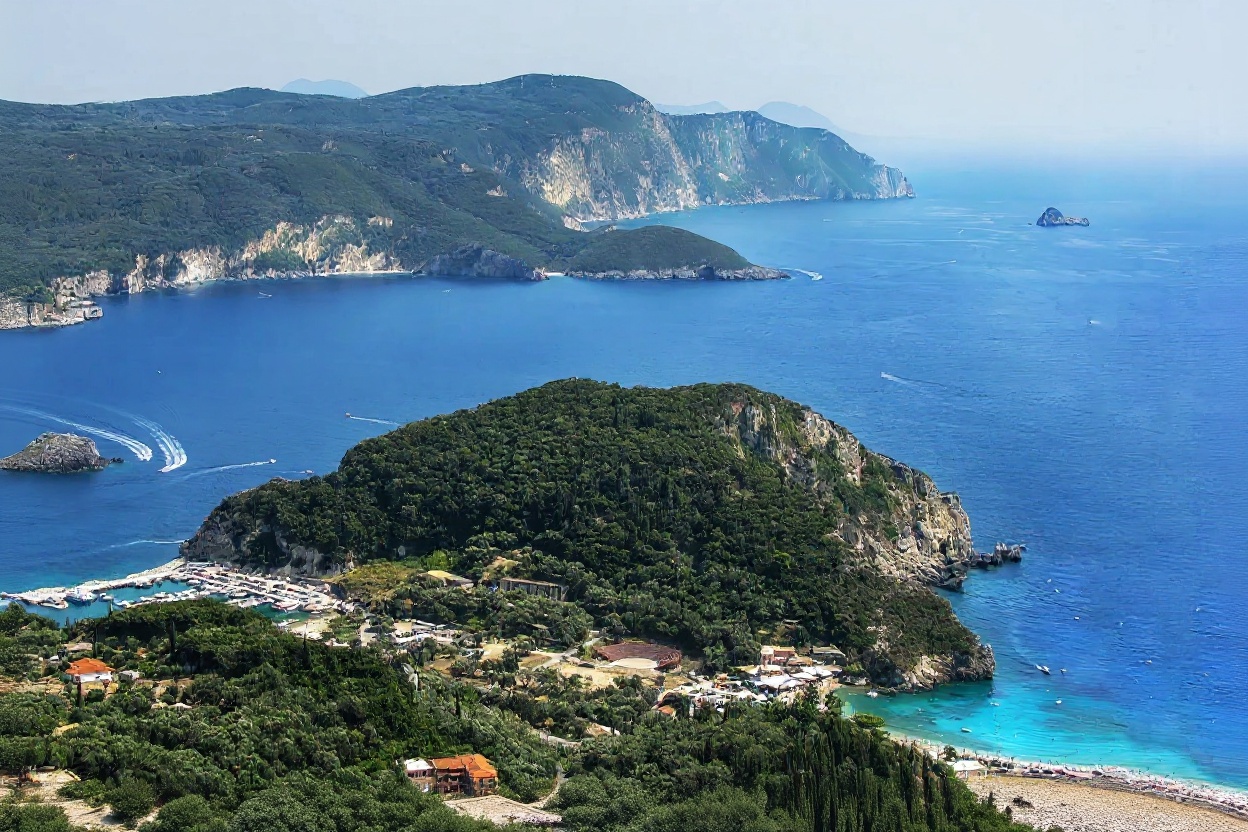
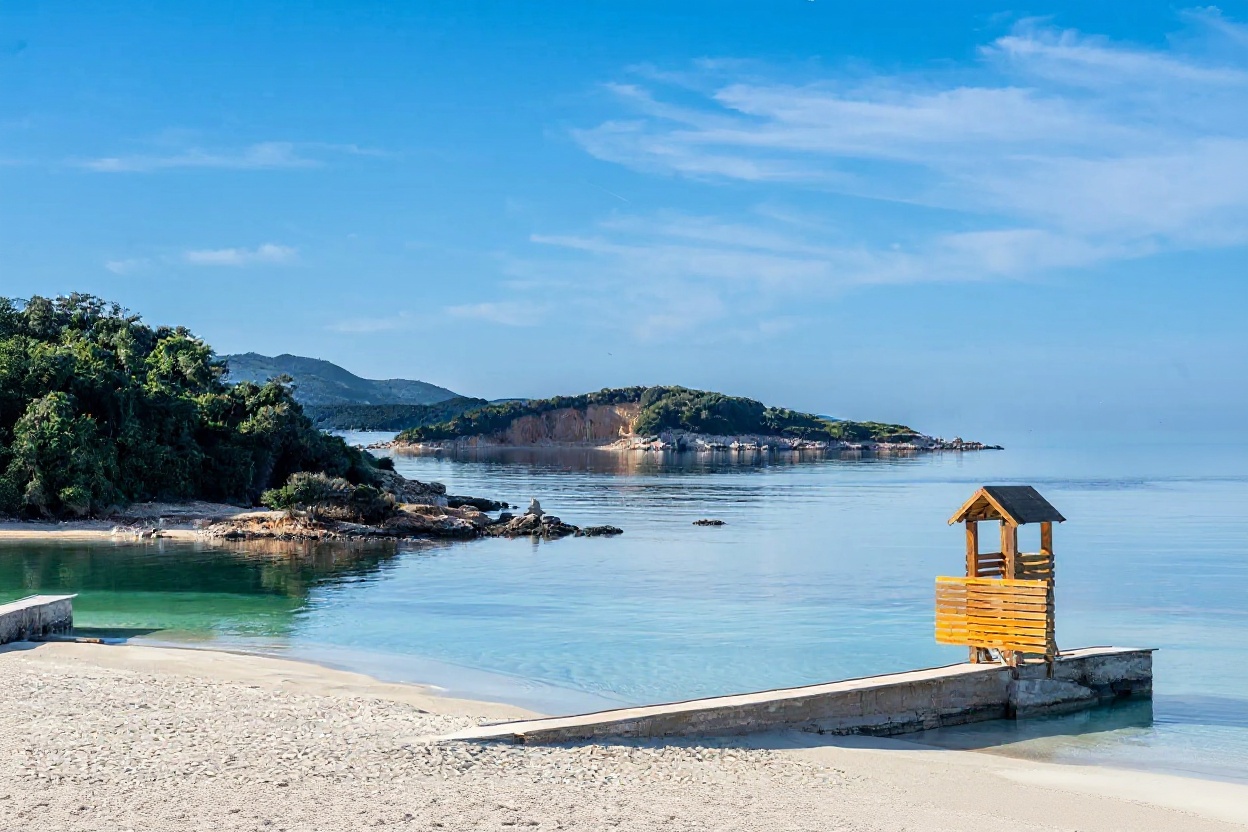
The Riviera runs from Vlorë south to Sarandë — about 160km of coastline along the Ionian Sea. It’s mostly pebble beaches rather than sand. The water is clear, blue-green in the coves, and genuinely impressive. The backdrop is mountains coming straight down to the coast. The road snakes along cliffs with views that would cost you €200 a night in Croatia.
So far, so correct.
What the viral videos skip: the main beaches — Ksamil, Dhërmiu, Jale — are privately operated. Public beach access is technically free, but the organised sections (which is most of what you can access without clambering over rocks) charge €10-20 for a sunbed and umbrella. At peak beach clubs in July-August, that jumps to €30-50. This is no longer dramatically cheaper than Montenegro or Croatia for the beach itself.
The other thing: the road infrastructure is genuinely poor on some stretches. The Albanian Riviera is developing fast — new hotels, half-finished apartment blocks, beach bars materialising between seasons — but the roads to some of the best beaches are either steep, narrow, or require a 30-minute walk. This is what keeps them good.
> **Real Talk**
> Albania is no longer 40-60% cheaper than Greece across the board. On the Riviera in July-August, you will pay comparable prices to Corfu for accommodation and beach clubs, and the infrastructure (roads, water, waste disposal) is not yet comparable. Come in June or September and that price gap opens up again. This is not a criticism — it’s a timing note.
The Best Beaches in Albania: An Honest Ranking
Not every beach on the Albanian coast is worth your time. Here’s how they actually compare, from someone who’s been to all of them.
Gjipe Beach — the best beach nobody reaches easily. Gjipe (say: JEE-peh) is at the end of a narrow canyon gorge, accessible by a 40-minute hike from the road or by water taxi from Dhërmiu (about 800 ALL / ~€7 return). The beach is a small pebble cove at the canyon’s mouth. There are no sunbed operators, no beach bars — just the water, the rock walls either side, and whoever else made the walk. The water is extraordinary: cold, clear, deep blue where the canyon meets the sea. This is the beach you came for.
Borsh — longest beach in Albania, least crowded per metre. Borsh stretches for roughly 7km of dark grey pebble between Himarë and Sarandë. It never fills up the way Ksamil or Dhërmiu do. Sunbeds run 600-800 ALL (~€5-7) per day — lower than anywhere else on the coast. The town of Borsh above the beach is pleasant and almost entirely tourist-free. An hour from Sarandë by furgon (say: FOOR-gon — the shared minibus), about 300-400 ALL.
Drymades — the best beach accessible from the road. Between Dhërmiu and the village of Vuno, Drymades sits at the bottom of a steep descent from the main road. Less famous than Dhërmiu, half as busy, same quality water. A small beach bar operates here in season — they charge around 1,000 ALL (~€8.50) for a sunbed pair and umbrella. Come for a morning session and leave before the heat peaks.
Livadhi Beach — the local’s choice near Himarë. A 10-minute walk north of Himarë town, Livadhi is where the locals go. Calmer than the main beaches, pebble, and with good tavernas right on the water where a full seafood meal runs 1,200-1,500 ALL (~€10-13) per person including wine.
> **MARCUS’S PICK**
> Gjipe. Full stop. Yes, it requires effort. Yes, the hike is 40 minutes in the heat and you’ll be sweating through your shirt before you arrive. The moment you turn the corner and see the canyon opening onto the sea, you’ll understand why I’ve done it three times and recommended it to everyone who’s asked. Take water. Wear shoes you don’t mind getting wet.
Dhërmiu — The Most Hyped Beach on the Riviera
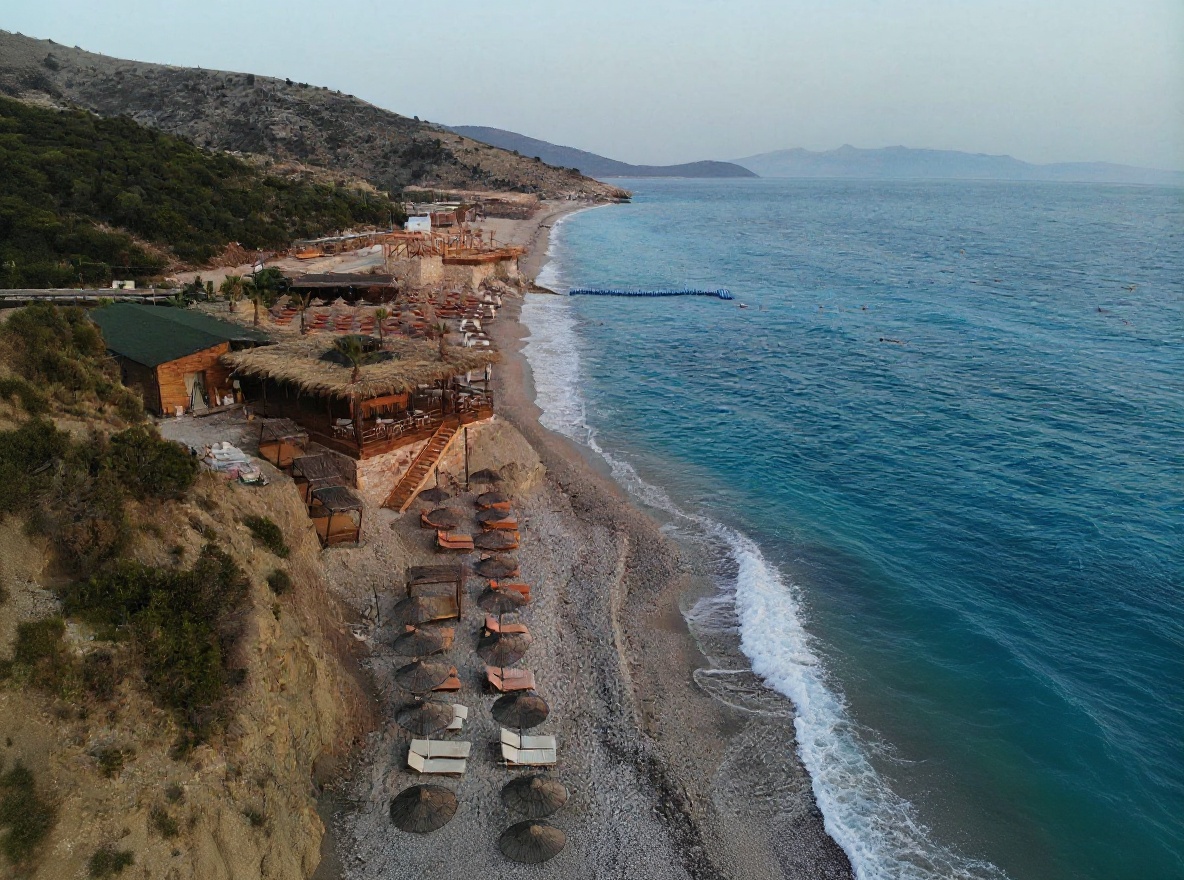
I’ll give Dhërmiu (say: d-HEH-r-mee-oo) its due: it’s genuinely good. The bay is wide, the water is multi-coloured from shallow to deep, and the village above has one of the better settings on the whole coast. At 7am before anyone arrives — stone streets still cool, the sound of goat bells from somewhere up the hill — Dhërmiu old village is worth half an hour of your morning.
By 11am in July, the beach is at capacity. Sunbed operators charge 1,200-1,500 ALL (~€10-13) for a pair and umbrella at the main sections, up to 2,500-3,500 ALL (~€21-30) at the beach club end. The access road from the main highway is steep and the parking situation in peak season is genuinely unpleasant.
June or September Dhërmiu is a different proposition. The water is the same. The prices drop 20-30%. You can walk freely on the public section. The furgon from Sarandë runs all morning (about 500 ALL / ~€4.30) and doesn’t involve fighting for space in a car park.
> **Insider Tip**
> The old village of Dhërmiu, perched above the beach, is worth 30 minutes of your morning before you head down to the water. The church of St Theodore has been there since the 14th century. Most people drive straight past it on the way to the beach. The family-run qaxe (say: CHA-zeh — café) near the church square does Turkish coffee for 50 ALL (~€0.43) and opens around 7am.
Ksamil: The One Everyone Photographs and Half of Everyone Regrets
Here’s my confession. Summer 2022, first year in Albania, I drove to Ksamil in the second week of August. My Albanian was limited. My expectations were high. I’d seen the photos of the turquoise islands and the impossibly clear water.
All of that is real. The water is the right colour. The small islands just offshore are exactly as they appear. Ksamil earns its reputation for the actual thing — the sea.
What nobody told me: in the second week of August, every sun lounger on every beach was taken by 9am. The road into town was gridlocked. Parking didn’t exist. I paid €15 for a sunbed pair and shared 40 metres of beach with approximately 300 other people. I left after one day and drove to Borsh, which was a third as busy and cost half as much.
I went back to Ksamil in June the following year. Different place. The water is the same colour. The islands are the same size. The price for a sunbed was 1,000 ALL (~€8.50). The beach was maybe a third full. I stayed three days.
The verdict: Ksamil in June — go, it’s excellent. Ksamil in July-August — go if you genuinely don’t mind crowds, budget accordingly, book your accommodation weeks in advance. Ksamil in August expecting the social-media version — adjust expectations or you’ll be disappointed.
The Ksamil Islands — three small islands 200 metres offshore — are accessible by water taxi (about 500 ALL / ~€4.30 return) or by swimming if you’re a confident swimmer in calm conditions. They have public beach sections. In June, they’re genuinely wonderful: small, pine-shaded, water so clear you can see the bottom at 4 metres.
> **Know Before You Go**
> Ksamil is 3km from Butrint National Park — a UNESCO-listed ancient Greek and Roman site that most Ksamil visitors don’t bother with. Entry is 700 ALL (~€6). The ruins are extensive, the site is uncrowded, and spending 2 hours there in the morning before the beach is the best use of your time in the area.
Himarë and the Quieter Stretch South
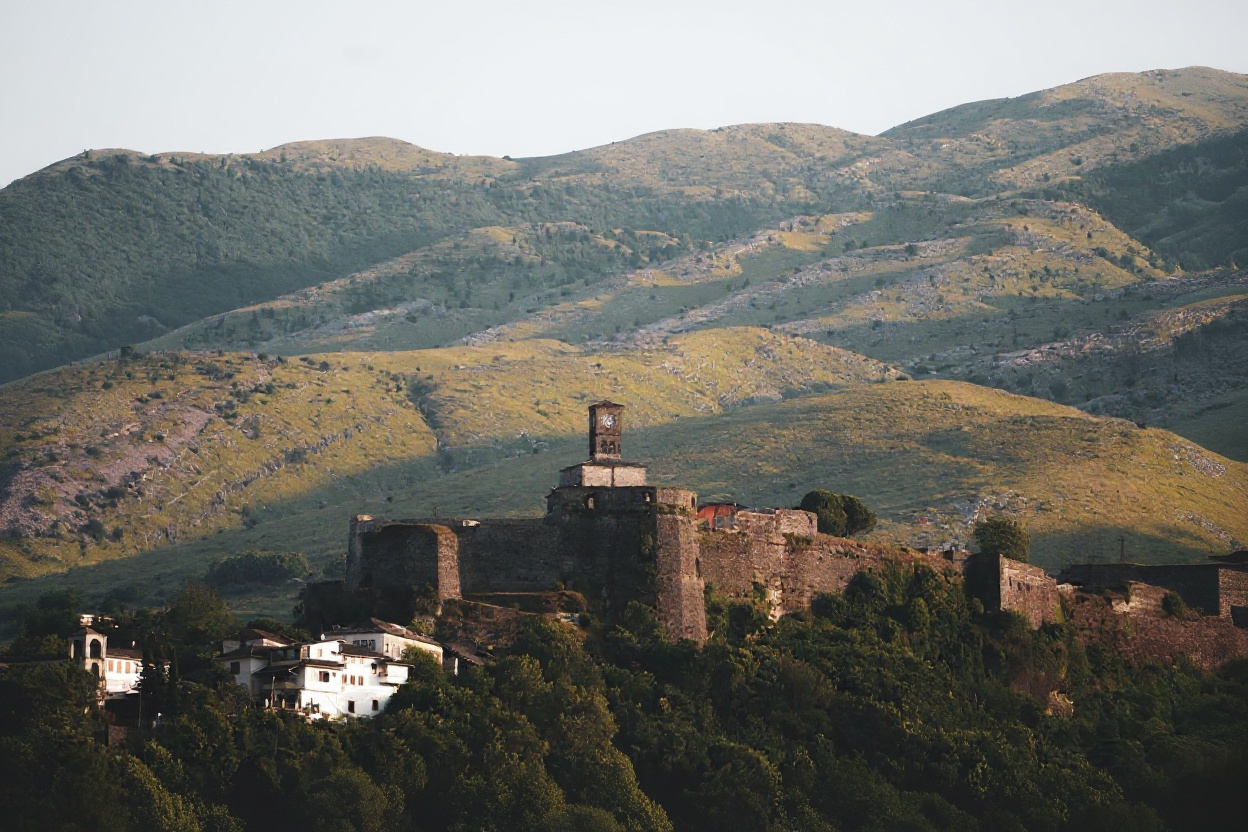
Himarë (say: HEE-mah-reh) is the best base on the Albanian Riviera. I’ve said this to everyone who asks and it remains true. It’s a real town — not just a beach — with a castle above it, a Greek Orthodox community, a functioning market, and accommodation at genuinely lower prices than Ksamil or Dhërmiu.
The Himarë beaches — Himarë City Beach and Livadhi — are good without being exceptional. The value is in the town itself: you can eat a proper meal for 800-1,200 ALL (~€7-10.50), stay in a guesthouse for 5,000-7,000 ALL/night (~€43-60) including breakfast, and do day trips to Gjipe, Dhërmiu, Borsh, and Ksamil from a central position.
Porto Palermo, about 12km south of Himarë, is worth a detour. A Venetian-era castle sits on a small peninsula at the edge of a circular bay. Ali Pasha of Ioannina used it as a fortress in the early 19th century; the communist government used the tunnels underneath as a submarine base. You can walk the castle for free. The bay is sheltered and swimmable. The turnoff from the main road has approximately zero signage — take the SH8 south from Himarë and watch for a small sign about 500m before the bridge over the bay.
Getting to the Albanian Riviera from Tirana
Three realistic options: furgon, bus, or car hire. A fourth option — driving your own hire car — is the best option if the budget allows.
Furgon to Sarandë: From Tirana’s southern bus terminal (take a taxi from the centre, about 1,000 ALL / ~€8.50), furgons and coaches run throughout the morning. Journey time is 7-8 hours on the coastal route via Fier, Vlorë, and the Riviera road. Cost: 1,500-1,800 ALL (~€13-16). The route goes via the Llogara Pass — a 1,000-metre mountain crossing on a road that switches back with more commitment than seems necessary. It’s not dangerous if you’re a passenger. The views over the coast when you descend are worth the queasy 40 minutes.
Furgon to Sarandë via Gjirokastra: The eastern route is faster (6 hours) and misses the coastal scenery entirely. Use it if you’ve already done the Llogara Pass and need to get somewhere quickly.
Car hire: The correct choice if you want access to Gjipe, Borsh, Drymades, Porto Palermo, and the smaller coves without depending on local taxis. Hire from Tirana runs €30-50/day for a basic car. The road from Vlorë south to Sarandë is mostly fine — some rough stretches around the Llogara Pass, some sections where you’ll encounter oncoming traffic and only one of you fits. The access roads to individual beaches vary from fine to genuinely steep. You do not need a 4×4 for any of the main Riviera beaches. Gjipe is car-then-hike regardless of vehicle.
From Sarandë, local furgons connect the Riviera towns — Ksamil (200 ALL / ~€1.70), Himarë (800 ALL / ~€7), Dhërmiu (500 ALL / ~€4.30). They run frequently in the morning, less reliably in the afternoon. They leave when full.
When to Visit Albania’s Beaches
June is the correct answer. I’ll explain why and then tell you when the other months work.
June: water temperature is 22-24°C — perfectly swimmable. Prices are 20-40% lower than July-August. The beaches are at maybe 30-40% capacity. You can get a sunbed without booking. Guesthouses have availability. The wildflowers on the Llogara Pass are still out. Come in June.
July-August: the coast is busy, prices are high, and the best spots (Ksamil, Dhërmiu beach clubs) are crowded. The water is warmer (26°C). Not bad — just not the bargain or the quiet experience that the viral videos imply. Come if this is your only option; just calibrate expectations and book everything in advance.
September: the second-best month. The water is still warm (24-25°C), the crowds have thinned, and the prices drop back. The mornings start getting cool by late September. The light is different — lower, warmer, less harsh. I’ve had better beach days in September than most of July.
May: the water is cold (18-20°C) for all but the most committed swimmers. The beaches are open, guesthouses are running, and the prices are at their lowest. Good for the drive and the towns; slightly less good for actually swimming.
For the full seasonal breakdown of Albania — including the mountain season up north and the best weather windows for Tirana — the Albania best time to visit guide covers it in detail.
Where to Stay on the Albanian Riviera
My recommendation: base yourself in Himarë for the middle stretch, or Sarandë if you’re focused on Ksamil and the south. Both have proper towns — shops, restaurants, ATMs — rather than just beach infrastructure.
Himarë: guesthouses run 4,000-7,000 ALL/night (~€34-60) in June, up to 8,000-10,000 (~€69-86) in August. Most include breakfast. The family-run guesthouses on the hill above the old town have sea views. Book directly where possible — Booking.com commission is 15% and you’ll often get a better rate calling the number on the sign.
Sarandë: more hotel options, wider price range. Budget hotels from 3,500 ALL (~€30); mid-range with a sea view 6,000-10,000 ALL (~€52-86). Sarandë is more built-up than Himarë — it’s a proper resort town with a promenade and evening life — but the beach itself is not the Riviera’s best. Use it as a base for Ksamil day trips.
Ksamil itself: staying in Ksamil in June is excellent — small, quiet, genuinely pleasant. In August, accommodation books out weeks in advance at peak prices and you’re stuck on roads that gridlock. The island views from a Ksamil guesthouse at dawn, before anyone’s awake, are genuinely good.
Dhërmiu: the guesthouses in the old village above the beach are the most atmospheric on the whole coast. Slightly more expensive than Himarë. The walk down to the beach is 20-25 minutes; the walk back up in 35°C heat is character-building. There are scooter rental options for about 2,500 ALL/day (~€21.50).
> **WHO IT’S FOR**
> The Albanian Riviera is for independent travelers who want Mediterranean water at European-adjacent prices, aren’t allergic to pebble beaches, and can handle some logistical roughness in exchange for a coastline that hasn’t been entirely standardised yet. It’s not for people who want the full beach club experience — for that, Montenegro or Greece does it more smoothly. It’s not for people who need sandy beaches — the Adriatic coast near Durrës has sand, but the water quality doesn’t compare to the south.
What to Eat on the Albanian Riviera
The seafood is the reason to eat on the Albanian coast rather than buying something from a beach bar.
A plate of fresh grilled fish at a proper taverna in Himarë or Borsh runs 1,000-1,400 ALL (~€8.50-12) — whole fish, grilled over wood, served with salad and bread. At Ksamil and Dhërmiu beach bars you’ll pay 1,500-2,500 ALL (~€13-21.50) for something smaller and less fresh. The taverna version is better in every way.
Grilled octopus drying on a line outside a Himarë restaurant is not a set dressing — it’s lunch. Order it. About 800-1,000 ALL (~€7-8.50) for a plate.
Byrek (say: BEE-rek) — the flaky pastry filled with feta, spinach, or minced meat that appears everywhere in Albania — is available from bakeries in all the Riviera towns for 100-200 ALL (~€0.85-1.70). It’s not beach food, technically. It is, in practice, perfect beach food. Buy two in the morning on the way down to the water.
Raki — the Albanian spirit, grape-based, taken at room temperature — appears at most guesthouse dinners as a free pour. It is not optional. This is the custom. The family-made raki is genuinely excellent and genuinely strong. Don’t make my mistake of treating it like a digestif. It is not a digestif.
For the full guide to Albanian food across the country, the Albanian food guide covers everything from byrek to fërgesë.
- What are the best beaches in Albania?
- Gjipe Canyon Beach is the best if you’re willing to hike 40 minutes to reach it. Borsh is the best low-effort beach — 7km long, rarely crowded, cheapest sunbeds on the Riviera. Ksamil Islands are the most visually striking. Drymades is the best-kept Riviera beach that most people drive past.
- Is Ksamil worth visiting?
- Yes — in June or September. The water really is that colour and the small islands offshore are genuinely lovely. In July-August it fills up completely, prices double, and the access roads gridlock. If you can only go in August, book accommodation weeks ahead, arrive by 8am to get a sunbed, and do Butrint UNESCO site in the morning before the beach.
- How do I get from Tirana to the Albanian Riviera?
- Furgon from Tirana’s southern bus terminal to Sarandë — 1,500-1,800 ALL (~€13-16), 7-8 hours via the coastal Llogara Pass route. Car hire from Tirana is €30-50/day and gives you access to smaller beaches not served by furgons (Gjipe, Drymades, Porto Palermo). From Sarandë, local furgons run to Ksamil (200 ALL), Himarë (800 ALL), Dhërmiu (500 ALL).
- Is the Albanian Riviera cheaper than Greece?
- In June and September: meaningfully cheaper, yes — accommodation runs 30-50% less for comparable quality, and food is noticeably cheaper. In July-August peak season, the gap closes significantly, especially at beach clubs and tourist restaurants in Ksamil and Dhërmiu. The value case for Albania is strongest in shoulder season.
- Is Albania safe for solo female travelers?
- Generally yes, with some specific caveats. The Riviera towns are well-trodden tourist territory and straightforward. Albanian men can be persistently chatty in a way some solo female travelers find tiring rather than threatening. The safety guide covers this in detail — short answer is that the coast is safe, basic awareness applies, and the main irritation is attention rather than any real risk. For the full picture, read the Albania safety guide.
- What is the water like at Albania’s beaches?
- Clear, cold, and deep blue-green in the coves. The Ionian water on the south coast is some of the clearest in the Mediterranean. Pebble beaches (most of the Riviera) mean the water stays cleaner than sandy beaches — no stirred-up sediment. Water temperature: 22-24°C in June, 26°C in August, 24-25°C in September. The Ksamil Islands area has shallow sections that warm up more in summer.
The Bottom Line on Albania’s Beaches
The Albanian Riviera earns its reputation — not the viral-video version of it, but the real one. The water is excellent. The scenery is the best coastline per kilometre I’ve found that doesn’t require a flight to somewhere expensive. The food is worth eating. The prices, at the right time of year, are genuinely lower than anywhere comparable in Europe.
Go in June. Hire a car for at least half the trip. Do Gjipe. Eat fish in a proper taverna rather than a beach bar. Skip Ksamil in August and go to Borsh instead.
Questions in the comments — I check them most days. If you’re putting together a wider Albania itinerary, the best time to visit Albania guide covers the full seasonal picture for the coast, the mountains, and everything in between.